




Ready to Hit the Road in Style?
Save money and reduce emissions with vehicles designed to deliver exceptional mileage. Visit our inventory and find a car that fits your lifestyle.
Ready to Hit the Road in Style?
Save money and reduce emissions with vehicles designed to deliver exceptional mileage. Visit our inventory and find a car that fits your lifestyle.
Two rotaries, one decision. If you've been comparing the Mazda RX-7 FD3S vs RX-8 in Australia, you already know both run a Wankel engine, both come in under SEVS — the Specialist and Enthusiast Vehicle Scheme — from Japan, and both attract the same sort of buyer: someone who has read the forums and is ready to commit. But in 2026 these two cars have pulled well apart. The FD3S eligible build window closed in December 2002, and clean examples are being picked off internationally. The RX-8 runs to June 2012, has far more lots at auction, and seats four adults. The real question isn't which is better. It's which one matches what you actually need.
Quick Answer
- FD3S (Sept 1999 – Dec 2002): SEVS-eligible under the Performance Criterion, twin-turbocharged, increasingly collector-focused. The eligible build window is roughly three years, so Japan sourcing is competitive.
- RX-8 SE3P (Feb 2003 – June 2012): SEVS-eligible across a nine-year run, naturally aspirated, four genuine seats and freestyle rear doors.
- Fixed costs are identical: a $1,500 service fee and a $1,540 compliance package. The shipping invoice (freight, duty, GST, LCT if applicable) moves with the actual auction result.
- Sourcing gap is real: at the time of writing, one eligible FD3S lot was showing at Japanese auction against ten eligible RX-8 lots.
What Does Rotary Ownership Actually Demand?
Rotary ownership is a habit set, not a gamble. The 13B-REW is a twin-rotor Wankel engine with sequential twin-turbocharging, fitted to the FD3S. The 13B Renesis is its naturally aspirated twin-rotor successor in the SE3P. Both burn a small amount of oil by design — Mazda built them that way to lubricate the apex seals, the triangular contact tips on each rotor face that maintain the combustion chamber seal. JDMBUYSELL's RX-8 buyer's guide puts the recommended top-up cadence at roughly a quart every 2,000 to 3,000 miles — a more conservative interval than Mazda's owner's manual rated consumption of around one quart per 3,800 miles, but a sensible practical guide. Plan for top-ups between services and the engine looks after you.
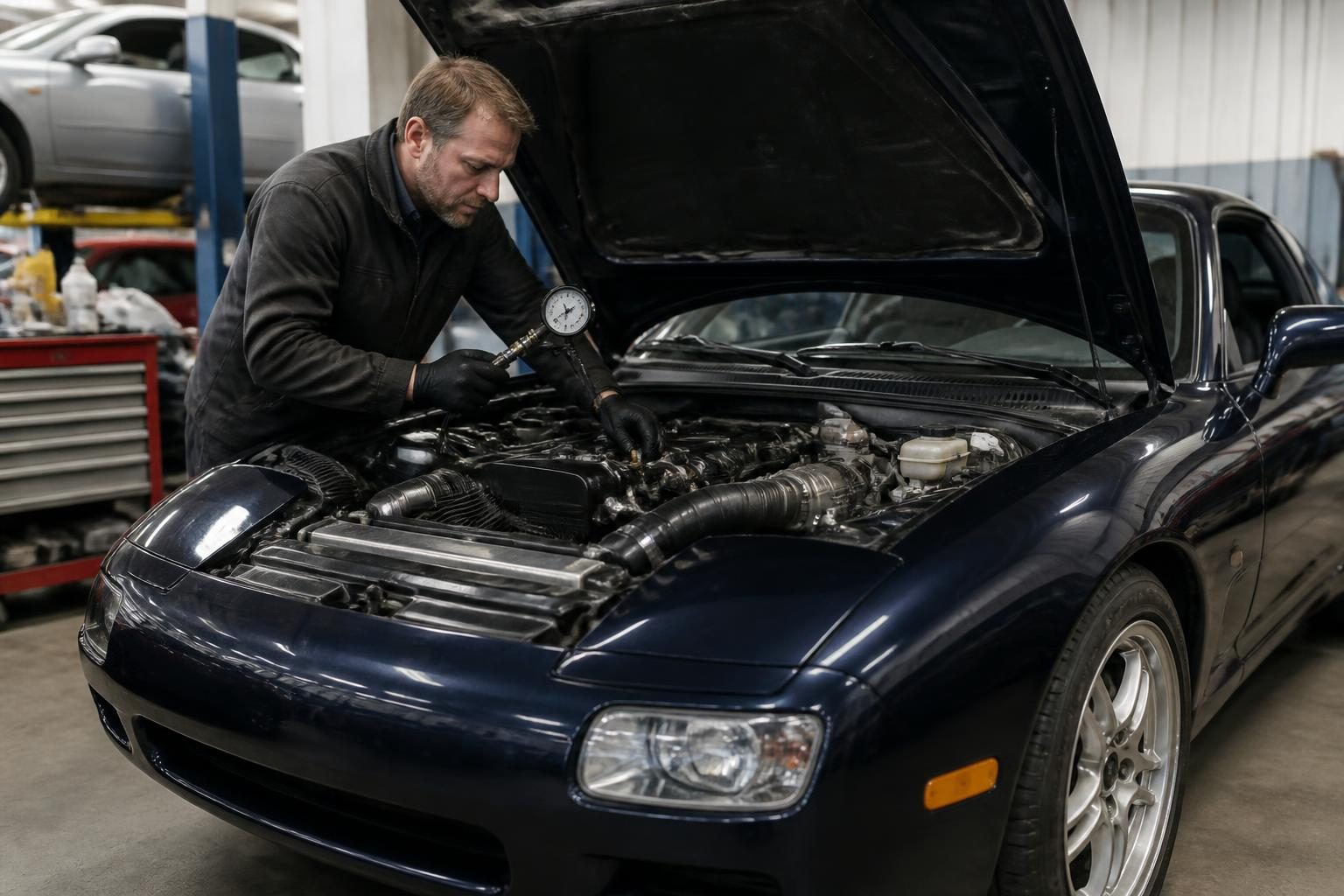 A pre-purchase compression test is the single most useful check on any used rotary.
The non-negotiable check is compression. A healthy rotary shows roughly 100 to 120 psi per rotor face, with no more than about 15 psi variance between faces (JDMBUYSELL's RX-8 buyer's guide). Wide variance points to tired apex seals and a rebuild in your future.
Beyond that, it's mostly discipline. Let the engine warm properly before you use the revs. Short, cold trips are harder on a rotary than a long highway run. Neither of these cars is set-and-forget, and that's worth knowing before you compare them, not after.
FD3S vs RX-8 SE3P: How Do the Specs Compare?
Both cars sit on the same SEVS pathway under the Performance Criterion, but the hardware diverges completely. The FD3S runs a sequentially turbocharged 13B-REW that peaked at 280 PS in JDM Series 8 form (Wikipedia, Mazda RX-7). The Renesis in the SE3P is naturally aspirated, and the 6-port manual made 231 PS at 8,500 rpm with a 9,000 rpm redline (Wikipedia, Mazda RX-8).
| Spec | RX-7 FD3S | RX-8 SE3P |
|---|---|---|
| Eligible build years | Sept 1999 – Dec 2002 | Feb 2003 – June 2012 |
| Engine | 13B-REW twin-rotor turbocharged petrol | 13B Renesis Wankel, 1.3 L (1,308 cc), petrol |
| Forced induction | Yes, sequential twin-turbo | No |
| JDM power (top spec) | 280 PS (Series 8) | 231 PS @ 8,500 rpm (6-port manual) |
| Transmission | Manual (automatic rare within SEVS window) | 6-speed manual or automatic |
| Drivetrain | Rear-wheel drive | Rear-wheel drive |
| Seating | 2 or 4 seats, variant-dependent | 4 seats |
| Body | 2-door coupe | 4-door with freestyle rear doors |
| SEVS criterion | Performance Criterion | Performance Criterion |
| SEVS approvals | SEV-000749, SEV-000158 | SEV-000283, SEV-001077, SEV-001078 |
The eligibility windows are the numbers worth staring at. Three years and three months for the FD3S against nine years and four months for the SE3P. That single difference drives almost everything below.
Is the FD3S Worth the Collector's Premium?
The Mazda RX-7 FD3S is eligible for Australian import across builds from September 1999 to December 2002, and that closed window is the whole story. FD3S production ended in 2002, so the eligible pool is a fixed, finite set that only shrinks as cars are crashed, exported or parked in collections. At the time of writing, one eligible lot was showing at Japanese auction, graded 3.5 with 110,000 km on it. One.
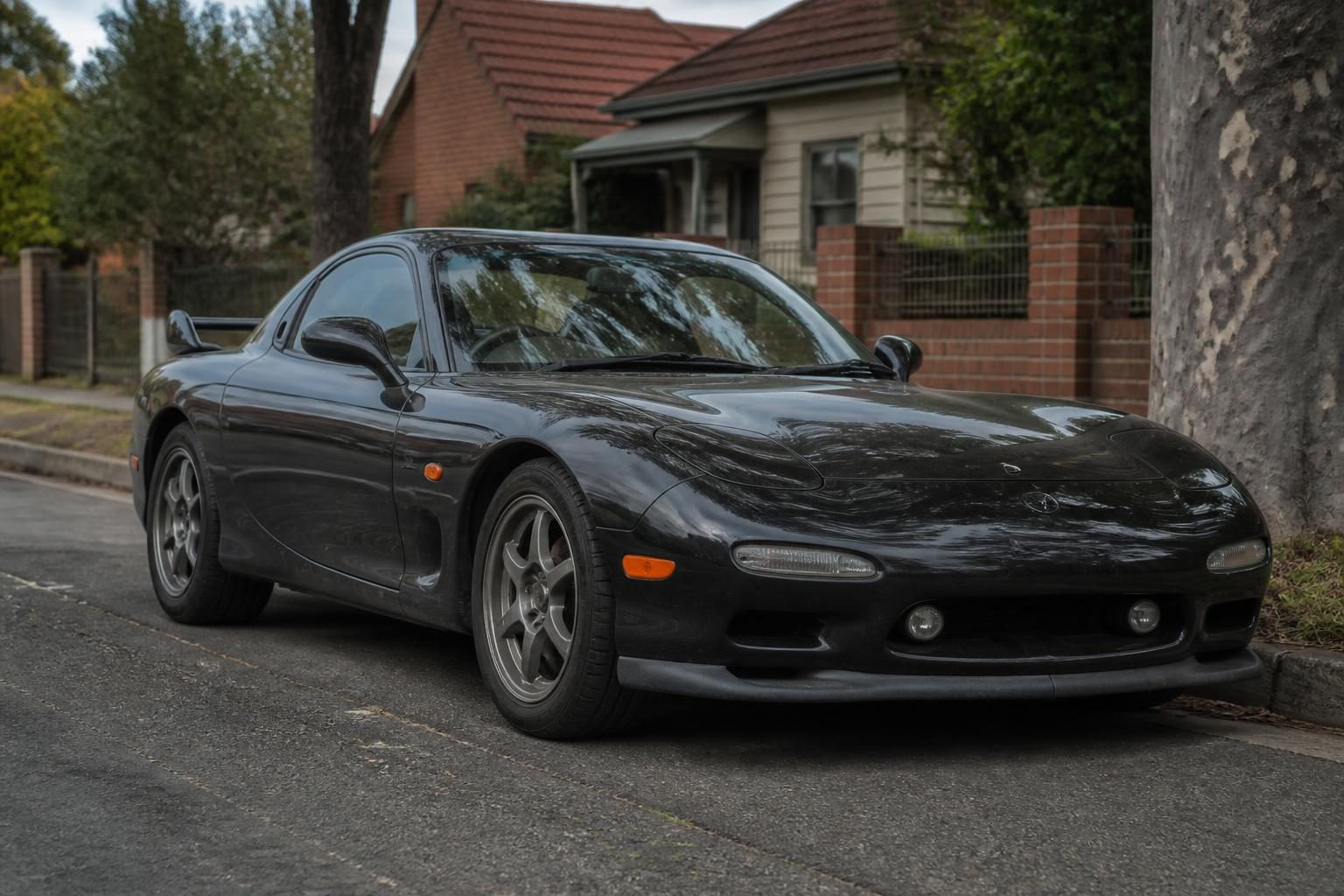 1999 Mazda RX-7 FD3S
Mechanically it's a twin-rotor 13B-REW with a sequential turbo arrangement: the primary turbo builds boost from low in the rev range — around 10 psi — then the secondary comes in higher up, lifting output from 255 PS in JDM Series 6 form to 280 PS by Series 8 (Wikipedia, Mazda RX-7). It's a manual, rear-wheel-drive coupe with either two seats or a token 2+2 layout depending on the variant, and it rewards mechanical sympathy rather than flattering a lazy driver. If you want smooth, the RX-8 is smoother.
The variant that collectors chase is the Spirit R, built in 2002 for Japan only. Total production reached 1,504 units (Wikipedia, Mazda RX-7 — Spirit R): 1,044 Type A two-seaters with the five-speed manual, 420 Type B four-seat manuals, and 40 Type C automatics. It's factually the highest-specification FD3S, not a magic ticket. If you're chasing one, confirm the variant from auction sheet data before anyone bids.
Timing matters too. As JDMBUYSELL's 2026 FD3S guide notes, cars from these exact years have become progressively eligible for US import under the 25-year rule from 2024 onward. That means Australian buyers aren't just competing with each other for clean Japanese-market cars. The FD3S suits weekend and track use, or someone comfortable holding a car that may hold or grow its value. It's the wrong pick if you need a commuter or want to keep your financial exposure small.
Why Does the RX-8 Make Sense for Everyday Use?
The Mazda RX-8 SE3P covers eligible builds from February 2003 to June 2012, and nine years of production changes the sourcing picture entirely. Ten eligible lots were showing at Japanese auction when this was written, spanning 2003 to 2009 builds, grades 3.5 to 4, and roughly 20,000 to 255,000 km. More lots means more choice, and more room to be patient rather than bidding on the only car in the country.
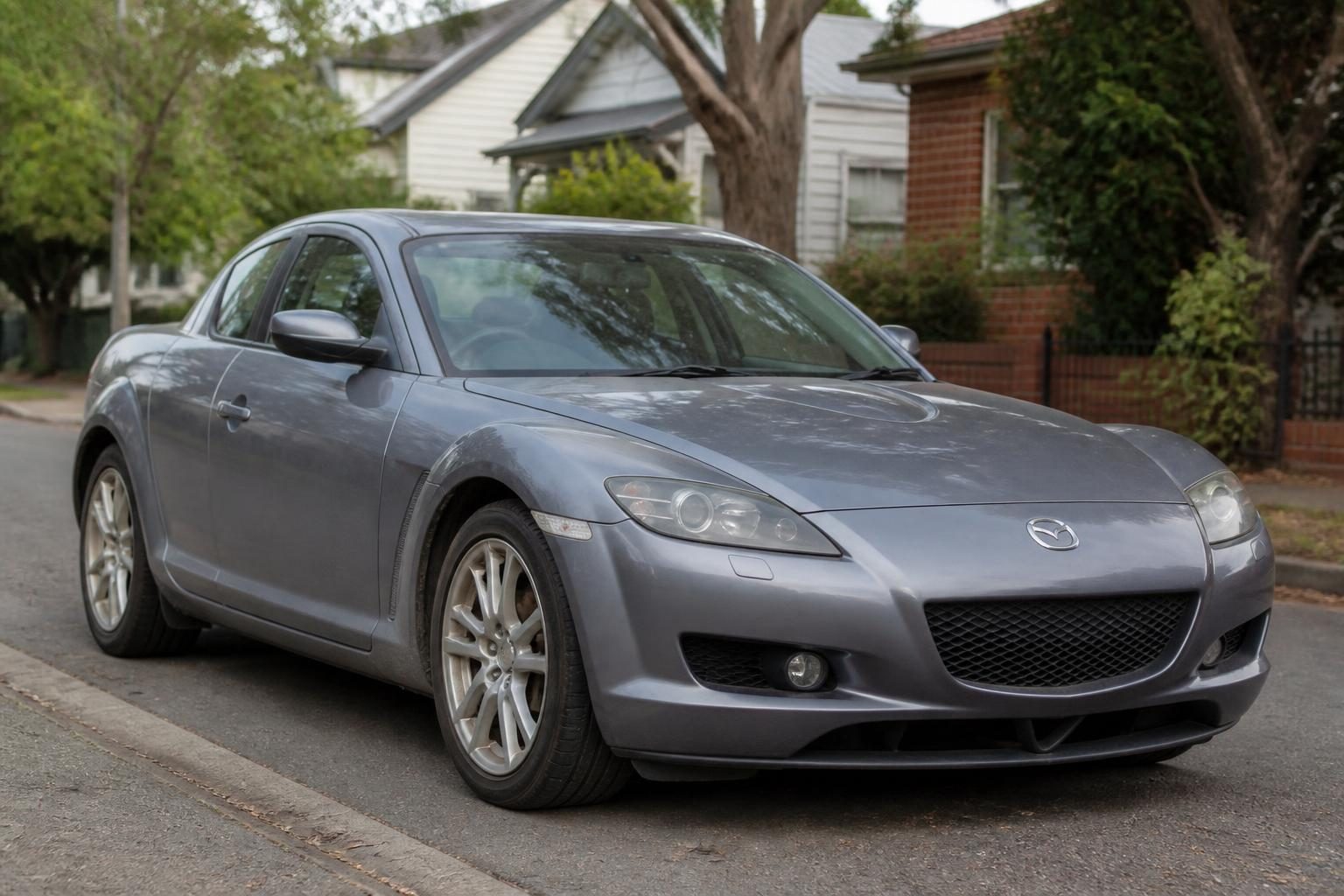 2003 Mazda RX-8 SE3P
The 13B Renesis is a 1.3 L (1,308 cc) naturally aspirated Wankel, available with a 6-speed manual or an automatic, driving the rear wheels. The 6-port manual made 231 PS at 8,500 rpm and revs to 9,000; the 4-port automatic produced 189 to 192 hp at 7,000 rpm (Wikipedia, Mazda RX-8). Series 2 cars from 2009 got the revised Renesis II with reworked apex seals and updated oil metering pump mapping, rated at 212 to 232 hp (Wikipedia, Mazda RX-8). That distinction matters at inspection time, so check which one you're bidding on.
Then there's the packaging, which is where the RX-8 genuinely separates itself. It's a four-door with rear-hinged freestyle doors and four proper seats. You can put an adult in the back without an apology. The FD3S is a two-seat sports car with, at best, a pair of shelves behind you. If a passenger or a kid needs to come along, that's not a close contest.
Who it suits: someone who wants rotary character with real day-to-day usability, and who has more sourcing options to work with. Who it doesn't suit: anyone expecting economy-car running costs, or anyone who hasn't budgeted for the ownership habits above.
Import Cost Structure: What Are You Actually Paying For?
Both models follow the same SEVS pathway, and two line items are fixed and identical across them: a $1,500 service fee and a $1,540 compliance package, or $3,040 confirmed between them. The auction result drives everything else on your invoice — which is why no honest figure can be quoted upfront.
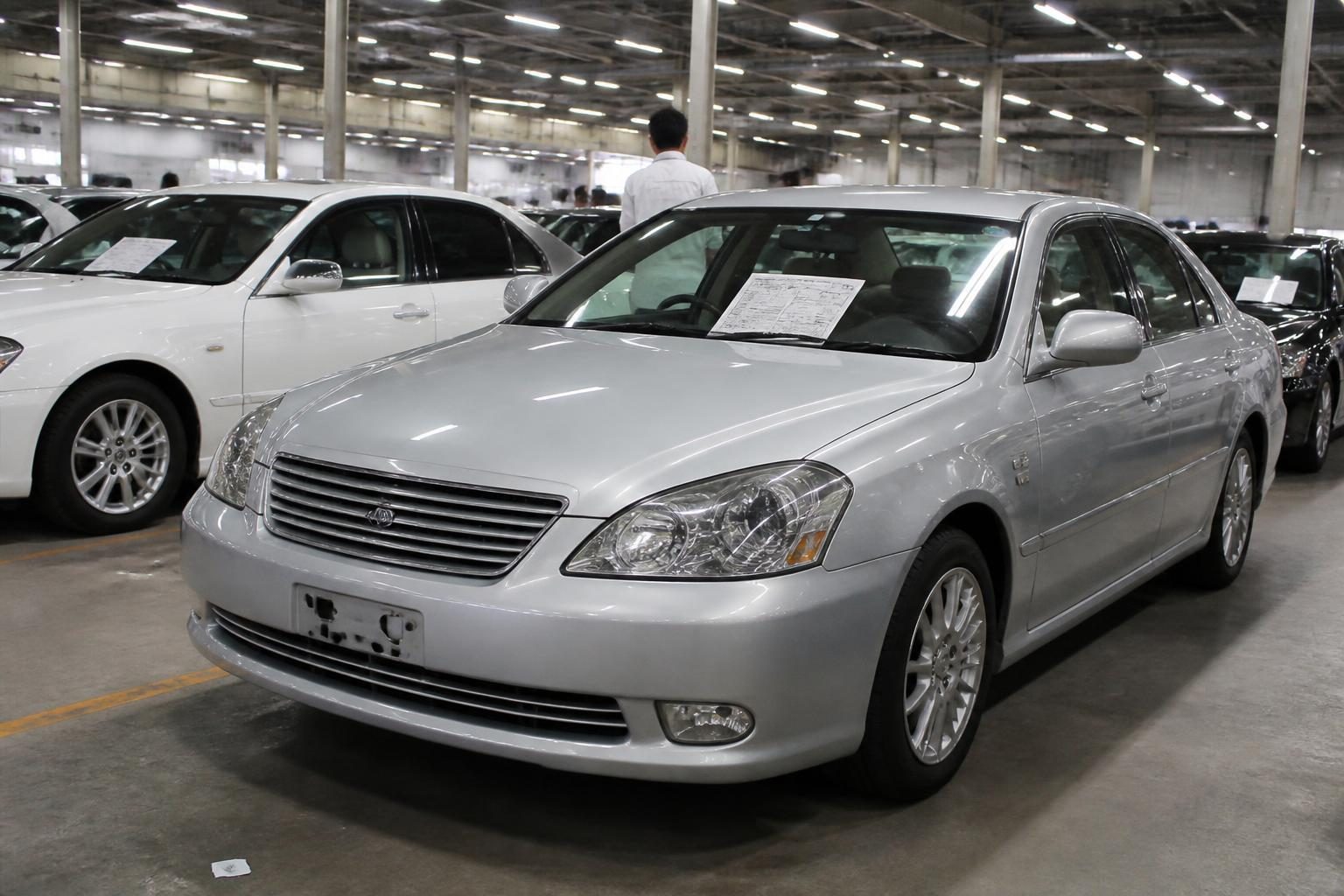 Japanese auction lots are graded and sheeted before bidding opens, and that result decides the variable side of your import cost.
The $1,540 compliance package covers the compliance work itself, the AVV (Approved Vehicle Verifier) inspection, RAV (Register of Approved Vehicles) entry and the VIA approval cost. Same scope for the FD3S and the SE3P.
The shipping invoice is a set of rules, not a number:
- International freight from Japan to Sydney, which moves with route and season.
- Import duty: normally 5% of the customs value (the MFN rate), but 0% under the Japan-Australia Economic Partnership Agreement (JAEPA) — a free trade agreement between Japan and Australia — for vehicles manufactured in Japan when a Statement on Origin or JAEPA Certificate of Origin accompanies the customs declaration. All vehicles Carbarn sources carry origin documentation, so the effective rate is 0%. The 5% rate applies only if documentation is absent.
- GST at 10% on the value of taxable importation (VoTI) — customs value plus international freight and insurance, plus duty (if any).
- Luxury Car Tax, if the customs value crosses the threshold. The ATO sets an annual LCT threshold with a separate, higher one for fuel-efficient vehicles; neither rotary qualifies as fuel-efficient, so the standard threshold is the one that applies.
- Port and local charges.
Here's the part that catches people out. Every percentage-based charge compounds from whatever you win the car for. FD3S lots sit in a materially higher tier than SE3P lots, driven by that three-year eligible window, growing collector interest and US buyers entering the market from 2024. A higher hammer price doesn't just cost more at the auction. It lifts duty, GST and your LCT exposure with it.
A refundable deposit is required before bidding starts, and it returns in full if no car is secured. No bid goes in until you've set a maximum cap. For a current indicative breakdown against live auction data, the FD3S import page and RX-8 SE3P import page both publish one.
Which One Should You Import?
| If you… | Consider… |
|---|---|
| Want a dedicated weekend or track rotary, can handle competitive Japan sourcing, and are comfortable holding a car that may appreciate | RX-7 FD3S |
| Want rotary character with four usable seats, a much broader sourcing pool and a lower entry point at auction | RX-8 SE3P |
| Haven't yet made peace with warm-up discipline, oil top-ups and a pre-purchase compression test | Neither, for now |
For most buyers reading this, the RX-8 makes a lot of sense: you get the rotary experience, four doors, and enough lots at auction to walk away from a bad one. The FD3S is the enthusiast's long game, and it asks more of you financially and mechanically. Both are worth it if you go in clear-eyed.
How Does Carbarn Handle the Import?
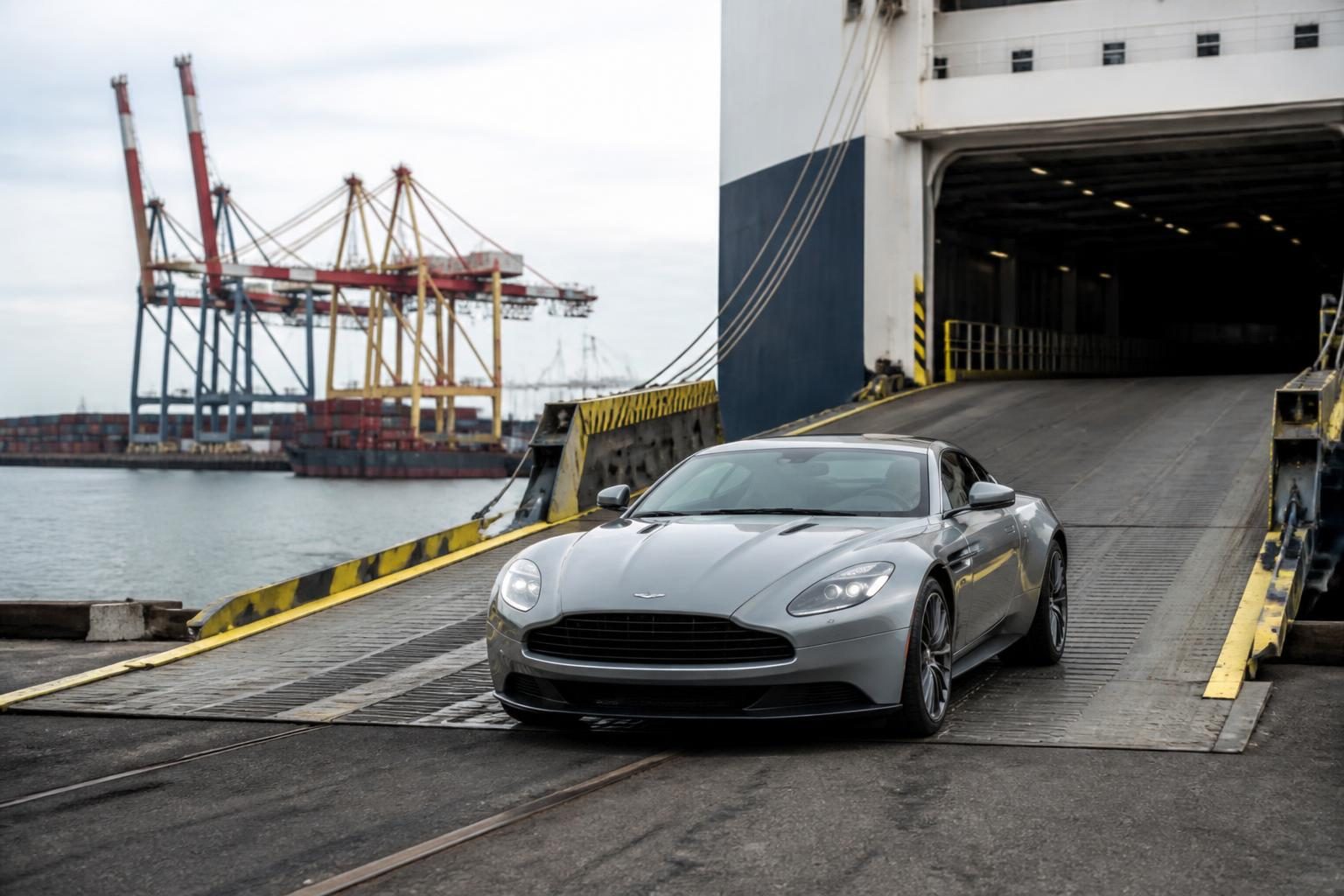 Vehicles arrive by roll-on/roll-off freight before customs clearance and compliance work in Sydney.
Both models source through Carbarn's Japan auction service, and the process is deliberately unhurried. A pre-bid physical inspection covers the car wherever the auction format allows, and the auction sheet, photos and inspector notes go to you over WhatsApp before any bid. You set the maximum cap and bidding never goes past it. Fixed fees are the $1,500 service fee and the $1,540 compliance package. Carbarn issues the shipping invoice — covering freight, GST, import duty, LCT if applicable and port charges — when the car reaches Sydney.
Carbarn completes compliance, AVV inspection and RAV entry in-house at the RAW-certified Lidcombe workshop, alongside finance, extended warranty eligibility checks, door delivery and registration-ready paperwork. Sourcing to compliance-ready runs about 6 to 10 weeks across three phases. General enquiries start at Carbarn's import enquiry page.
Two very different cars for two very different buyers, and neither choice is wrong if the expectations are right. The FD3S is a closing window and a collector's commitment. The RX-8 is the rotary you can genuinely use. Have a look at the current sourcing detail on either import page and work out which side of that line you sit on.