



Ready to Hit the Road in Style?
Save money and reduce emissions with vehicles designed to deliver exceptional mileage. Visit our inventory and find a car that fits your lifestyle.
Ready to Hit the Road in Style?
Save money and reduce emissions with vehicles designed to deliver exceptional mileage. Visit our inventory and find a car that fits your lifestyle.
Australia hit 13.1% combined EV market share in 2025, up from 9.6% the year before, according to the Electric Vehicle Council's January 2026 sales report. Plenty of new EVs, then. Affordable used ones? Still thin on the ground. So you've probably seen the Japanese auction listings, noticed how cheap a low-kilometre LEAF looks, and wondered what the catch is.
The catch is that importing works brilliantly for some models and is an expensive mistake for others. This article runs the landed numbers on six Japan-eligible EVs and gives each one a plain verdict, including one where the honest answer is to walk into an Australian dealership instead.
The short version:
- The Nissan LEAF ZE1 is the clearest case for importing, landing around $19,898 against $25,000–$32,000 for comparable local used examples
- The Nissan Ariya FE0 lands at $73,086, about $23,000 more than buying one new here with a 10-year warranty
- Japan's Shaken inspection system raises the cost of keeping older vehicles, which prompts owners to sell relatively low-mileage cars into export channels earlier than in most economies
- Start to finish, the import process runs about 6–10 weeks
- CHAdeMO fast charging, used by the LEAF and i-MiEV, is being wound back on Australian public networks (NRMA, May 2026)
What Do You Actually Pay to Import an EV from Japan?
Under the Japan–Australia Economic Partnership Agreement, Japanese-origin vehicles attract 0% import duty, not the 5% rate that applies to non-FTA countries. That surprises most first-time importers. Duty isn't the cost that bites. GST, freight and compliance are, and they're all calculable before you bid.
Here's the full stack. The auction price itself, bid in Japanese yen and converted at the Wise rate on the day you pay. A Japan agent fee and an importer service fee. Freight, port charges and local charges. GST, applied across the whole landed cost. Then the compliance package: VIA approval, workshop compliance, AVV inspection and RAV entry.
Luxury Car Tax only kicks in above $91,387 under the fuel-efficient threshold for 2025–26. Every EV in this article sits well under it, so LCT isn't your problem.
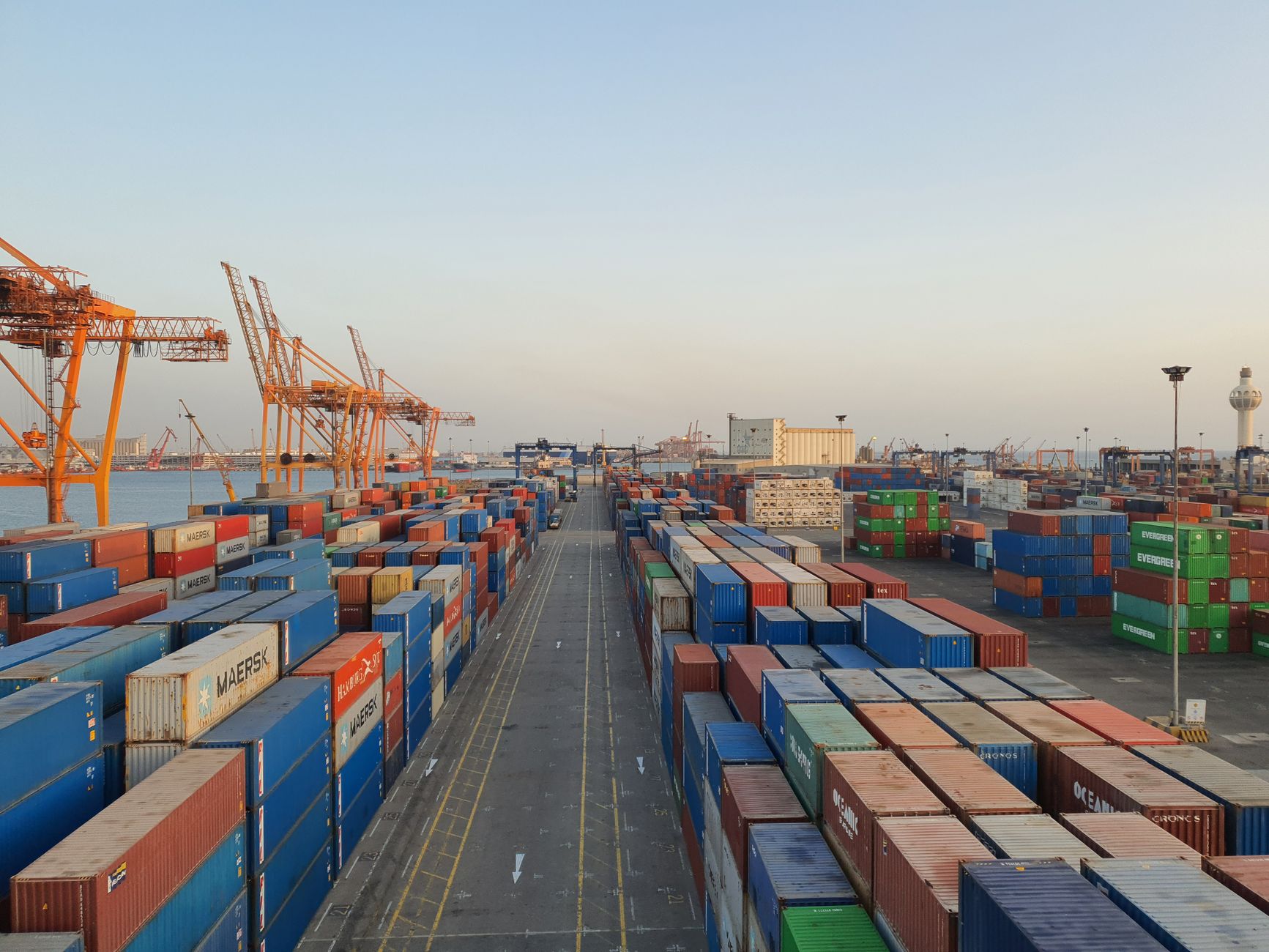 Freight, port charges and GST all land before the car does.
One rule is specific to EVs. Since 1 January 2026, vehicles with batteries over 100Wh must ship at a maximum 30% State of Charge and are handled as Class 9 Dangerous Goods (Garage Apex, 2026). Not every carrier accepts lithium-ion. Confirm yours does before any money moves.
The timeline breaks into three phases: sourcing and VIA approval in Japan (1–6 weeks), sea transit (4–6 weeks), then compliance, AVV inspection, RAV entry and delivery here (2–3 weeks).
And why do French cars appear on a Japan import list? Because European models sold in Japan enter the same auction channels, and they come to Australia under the SEVS Environmental Criterion just like Japanese-built cars. Same pathway, slightly higher compliance cost.
Which Japan-Import EVs Are Worth It?
Every model below gets asked the same three things: what it costs to land here, what your local alternative is, and who it genuinely suits. Each ends with a one-line verdict. No hedging.
Nissan LEAF ZE1 (2017–2020)
The Nissan LEAF ZE1 is the benchmark case for importing an electric car from Japan, and it isn't close. Landed cost sits at $19,898. Comparable local used ZE1s trade between $25,000 and $32,000, so you're looking at a $5,000–$12,000 gap for the same auction grade and a similar kilometre reading.
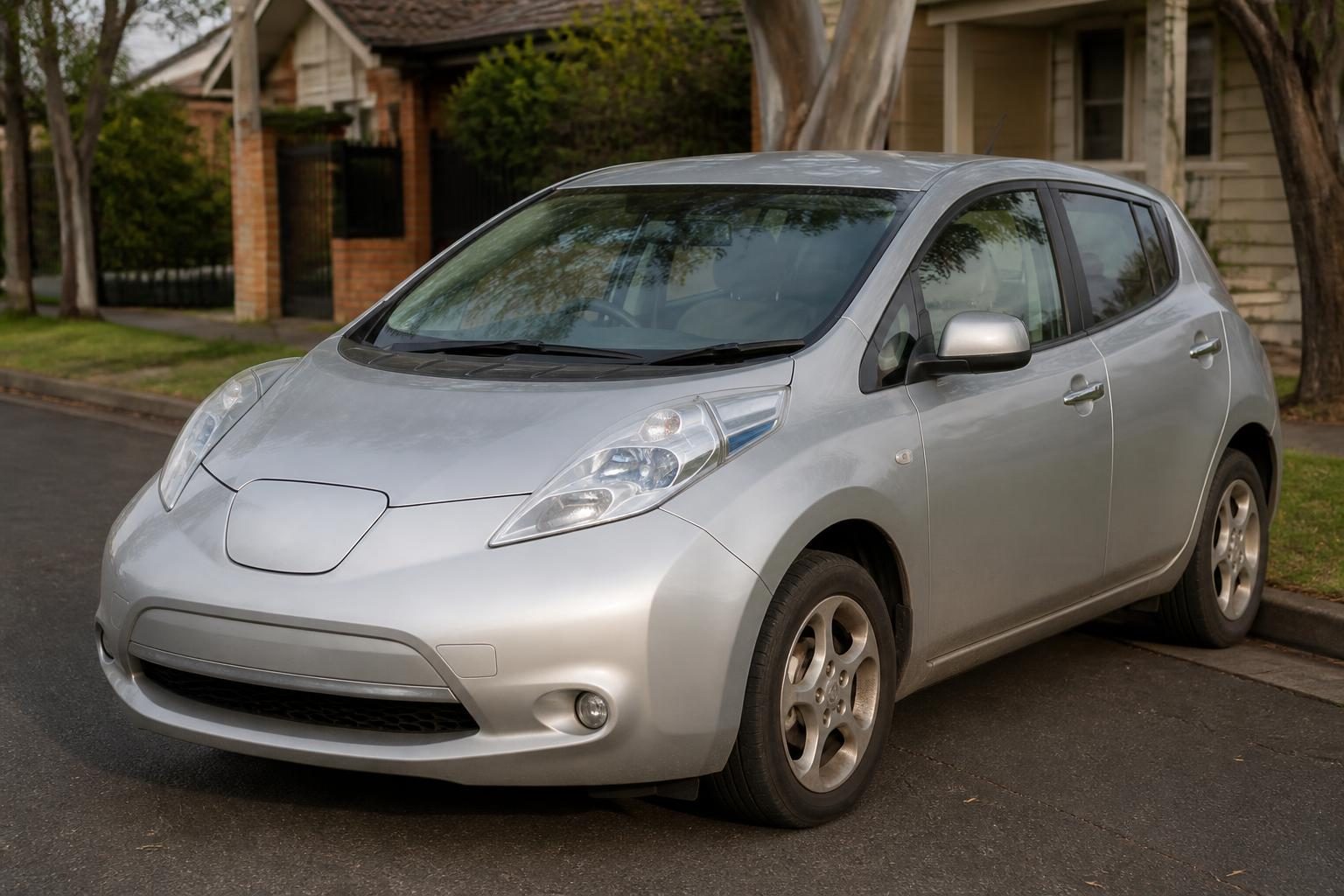 1201 Nissan LEAF
Specs are straightforward. The 40kWh ZE1 runs a single front-mounted synchronous motor producing 110kW and 320Nm, good for a WLTP range near 270km. The 62kWh e+ variant lifts that to 160kW and 340Nm with range closer to 385km. Both use a Type 1 AC socket and CHAdeMO for DC fast charging. Kerb weight is around 1,580kg for the 40kWh car. The e-Pedal one-pedal drive mode is genuinely good in stop-start traffic, and Nissan's ProPILOT adaptive cruise appears on higher Japanese trims.
Who's it for? First-time EV buyers who want something proven. The LEAF has more independently documented battery degradation data than any other EV on the road, Nissan dealers service it, and independent EV specialists know it inside out. Two caveats worth carrying into the next section: no active battery cooling, and CHAdeMO fast charging.
Verdict: worth it. The maths works clearly, and nothing else on this list is as easy to live with.
Peugeot e-208 P21 (2019–2024)
The Peugeot e-208 lands at $33,732 and solves a problem Australians have had for years: this car keeps getting announced here, then delayed. Reports have put a local launch price near $49,990 (Zecar, 2025), assuming it arrives at all. Importing means you drive one now, at a meaningful discount to that figure.
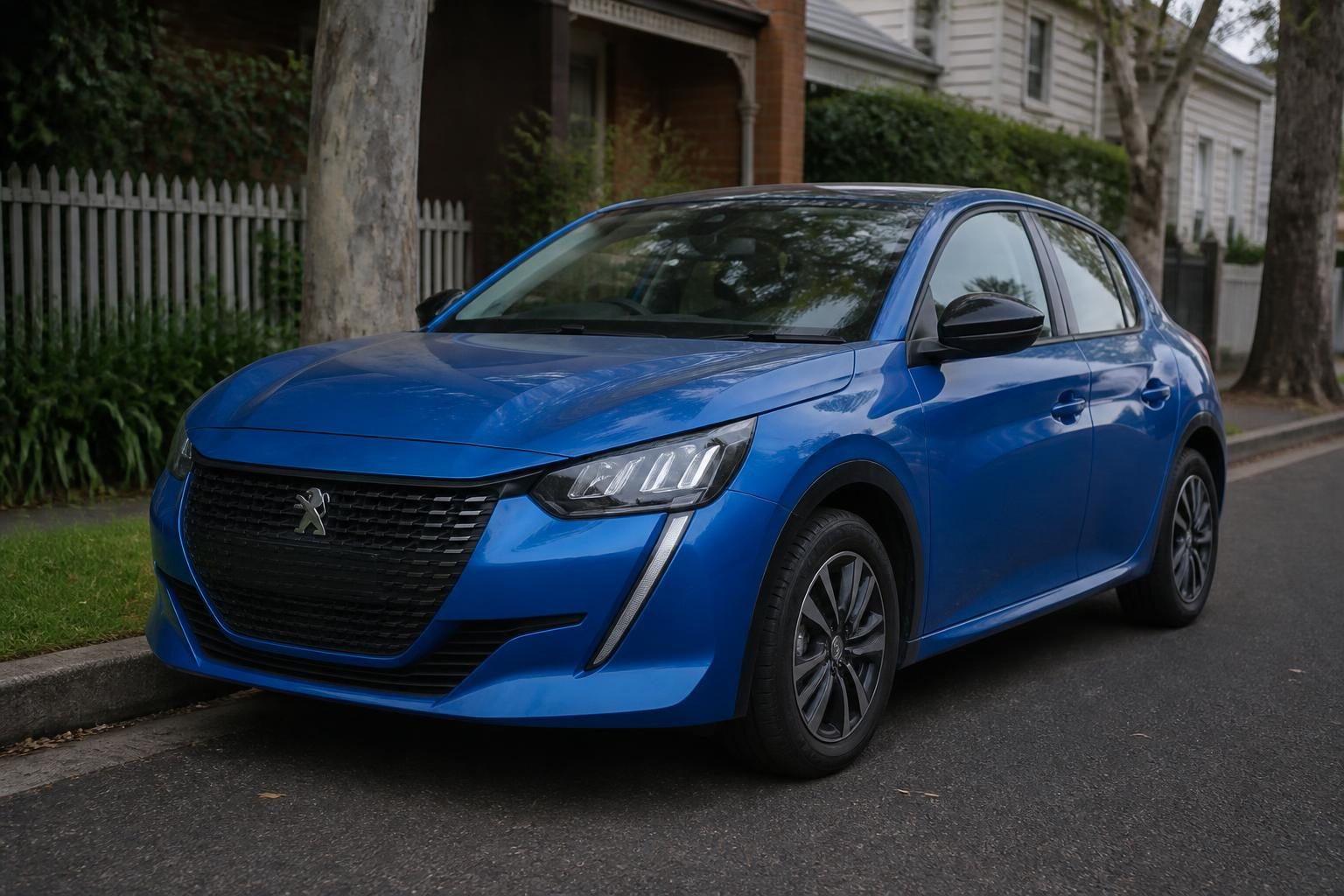 2120 Peugeot e-208
The later 51kWh cars produce 115kW and 260Nm, with WLTP range up to about 400km. Earlier 50kWh builds make 100kW and the same 260Nm with roughly 340km of range. DC charging is CCS2 at up to 100kW, so a 20–80% top-up takes under half an hour on a decent charger. Peugeot's i-Cockpit layout puts a small steering wheel below a 3D instrument display, which people either love or find awkward. Sit in one before you commit. Active battery thermal management is standard, which matters more in Australian summers than most buyers realise.
Compliance for a European-origin car runs higher than for a Japanese-built one, so factor that in rather than assuming the LEAF's numbers carry across.
Verdict: worth it. A modern compact EV, correct charging standard, priced well below where it would land new.
Peugeot e-2008 P24 (2019–2023)
The Peugeot e-2008 lands at $35,387, which is a striking number given it launched in Australia at $59,990 in 2023 before Peugeot withdrew it. There's no current new-car equivalent here, and local used examples are rare enough that pricing is inconsistent.
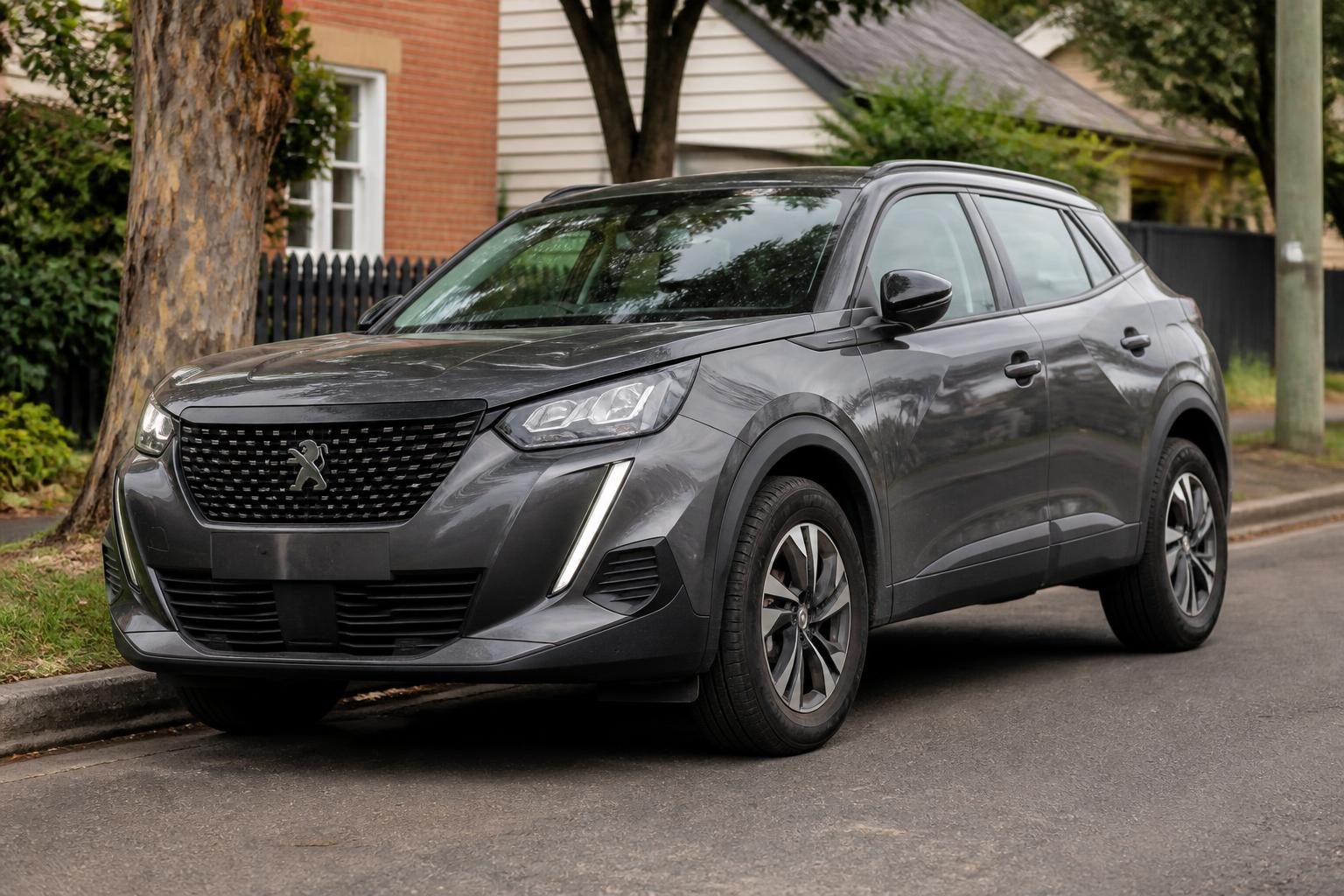 2420 Peugeot e-2008
Mechanically it shares the e-208's front-drive electric platform in a taller body. The 50kWh version makes 100kW and 260Nm with WLTP range around 320km; the updated 54kWh car lifts output to 115kW and range to roughly 400km. Boot space is 434 litres with the seats up, which is the practical argument over the hatch. CCS2 DC charging at up to 100kW, active battery cooling, and a raised driving position that suits people stepping across from a small SUV.
It suits families who wanted the e-2008 during that brief Australian window and missed it, or anyone who doesn't want to pay an electric-SUV premium for something that came and went.
Verdict: worth it. Sold here once, priced well below launch, and no charging compromise.
Honda e ZAA/ZC7 (2020–2024)
The Honda e lands around $39,300, and it's the only model in this article that was never sold new in Australia. That's the whole pitch. There's no local used market, no new-car price to measure against, and importing isn't saving you money. It's the only way to have one.
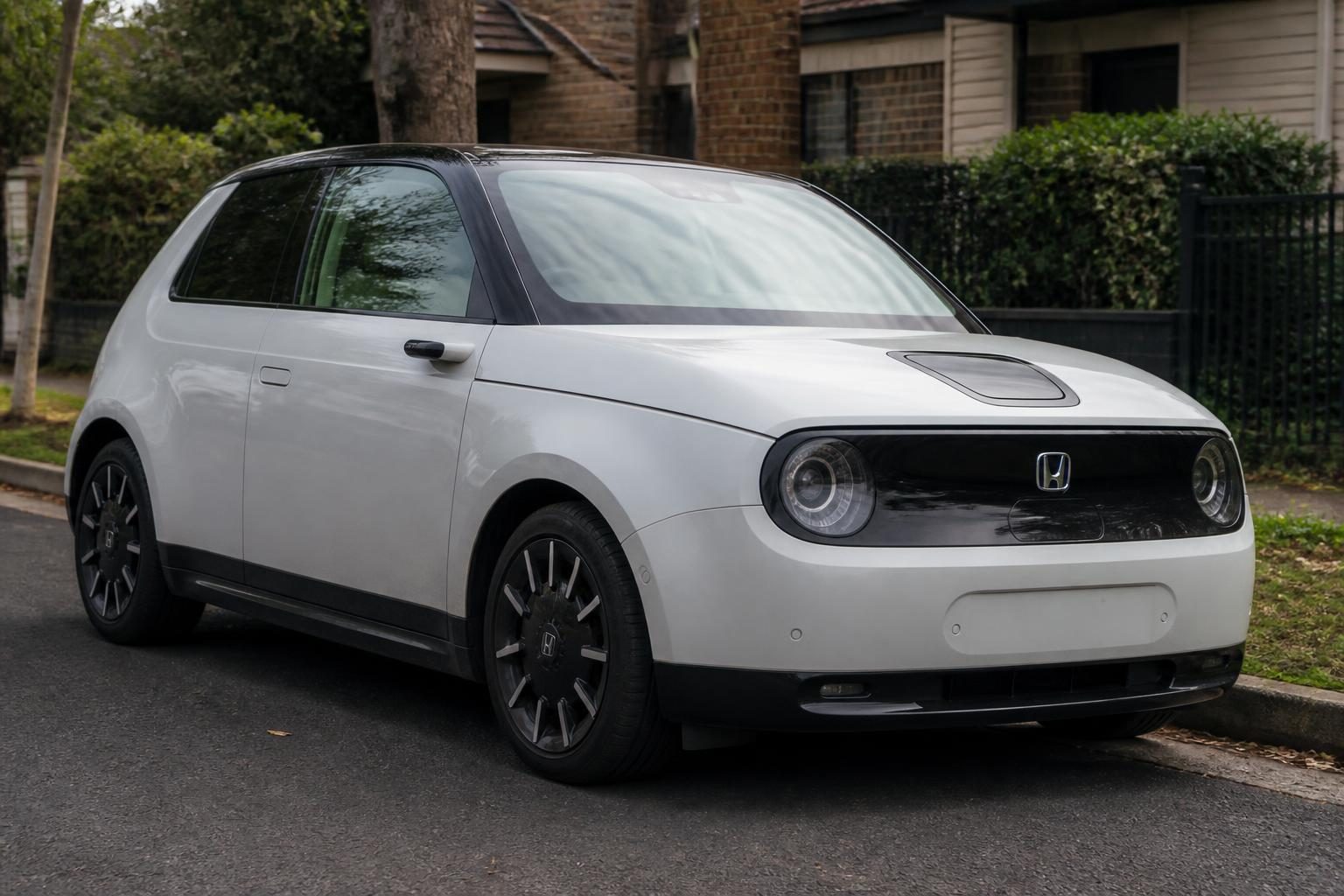 7202 Honda e
The specs explain both the charm and the limits. A 35.5kWh battery feeds a rear-mounted motor making 100kW in the standard car or 113kW in the Advance, with 315Nm from a standstill and rear-wheel drive. WLTP range is about 222km, and real-world use tends to land near 200km. It's short. What you get instead is a 4.3-metre turning circle, near 50:50 weight distribution, camera side mirrors feeding two in-cabin screens, and a dashboard that's essentially one continuous display wall. CCS2 charging up to 50kW, plus active thermal management.
Be honest with yourself here. This is a design and rarity purchase, not a value play. If range per dollar is your metric, look at the Peugeots.
Verdict: worth it only if the Honda e is specifically the car you want. Buy it because nothing else looks or drives like it.
Mitsubishi i-MiEV HA (2016–2021)
The Mitsubishi i-MiEV is the cheapest entry on this list at $17,682 landed, and cheap is doing a lot of work in that sentence. Mitsubishi sold the i-MiEV in Australia from around 2010 before discontinuing it locally, so used examples do surface, but they're scarce and priced all over the place.
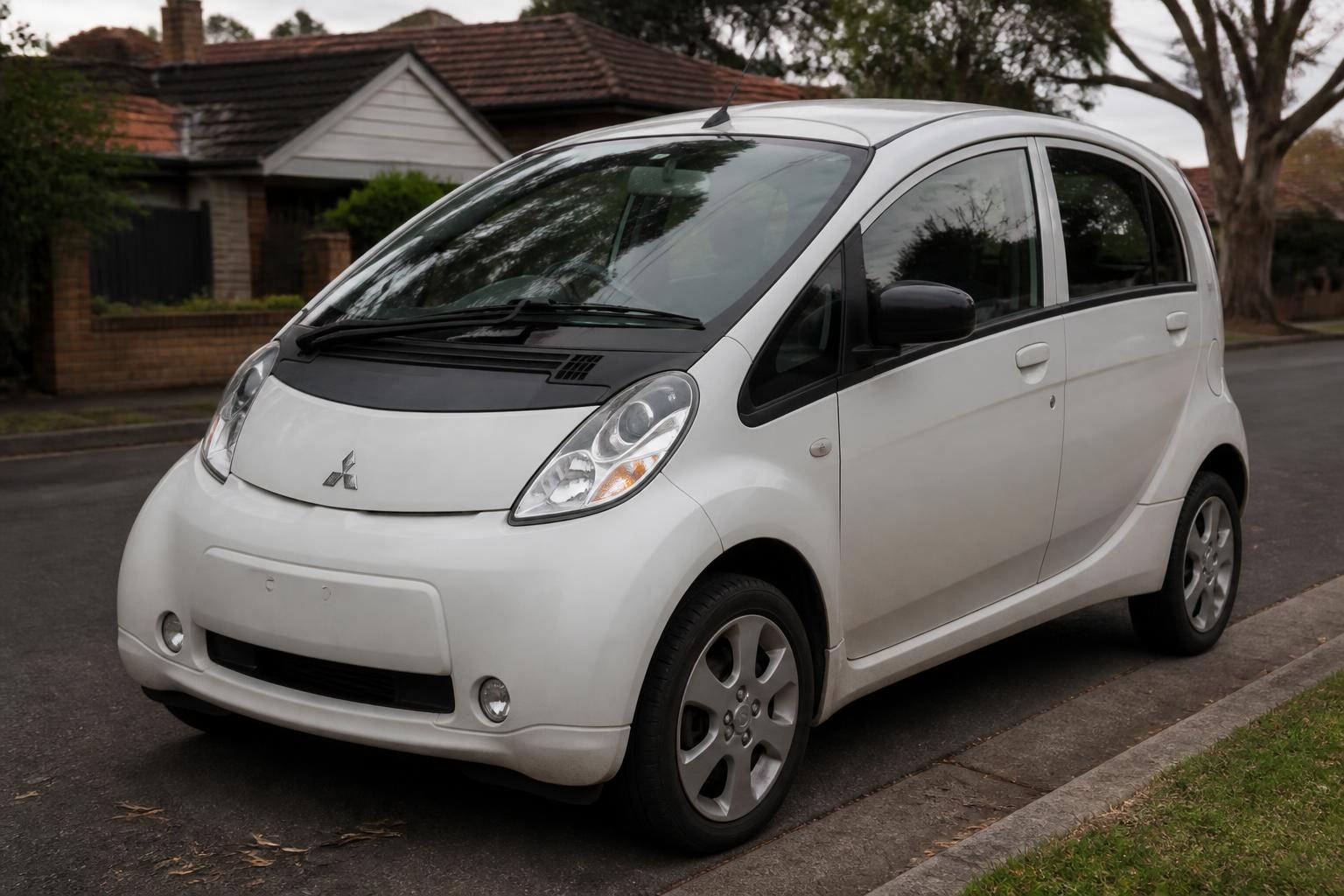 2016 Mitsubishi i-MiEV
The numbers are modest by design. A 16kWh battery, a rear-mounted 47kW motor (30kW continuous) with 180Nm, rear-wheel drive, and a kerb weight near 1,100kg. ADR-rated range is 155km (Drive), but on a degraded pack that realistically becomes 70–100km. DC fast charging is CHAdeMO only and takes about 30 minutes to 80%. There's no active battery cooling, and the platform is more than a decade old now. On the upside, the narrow body and tiny turning circle make it genuinely easy in tight city streets and undercover car parks.
It works as a second car for short, genuinely urban trips. It does not work as a household's only vehicle.
Verdict: marginal. Fine if budget is the deciding factor and your commute is short, but know exactly what you're buying.
Nissan Ariya FE0 (2022–2025)
The Nissan Ariya FE0 lands at $73,086, and this is the section that should stop you. Recent Japanese auction data across 61 sales puts the Ariya near ¥5,924,495, so once agent fees, freight, compliance and GST are added, the total sits above $70,000 with consistency.
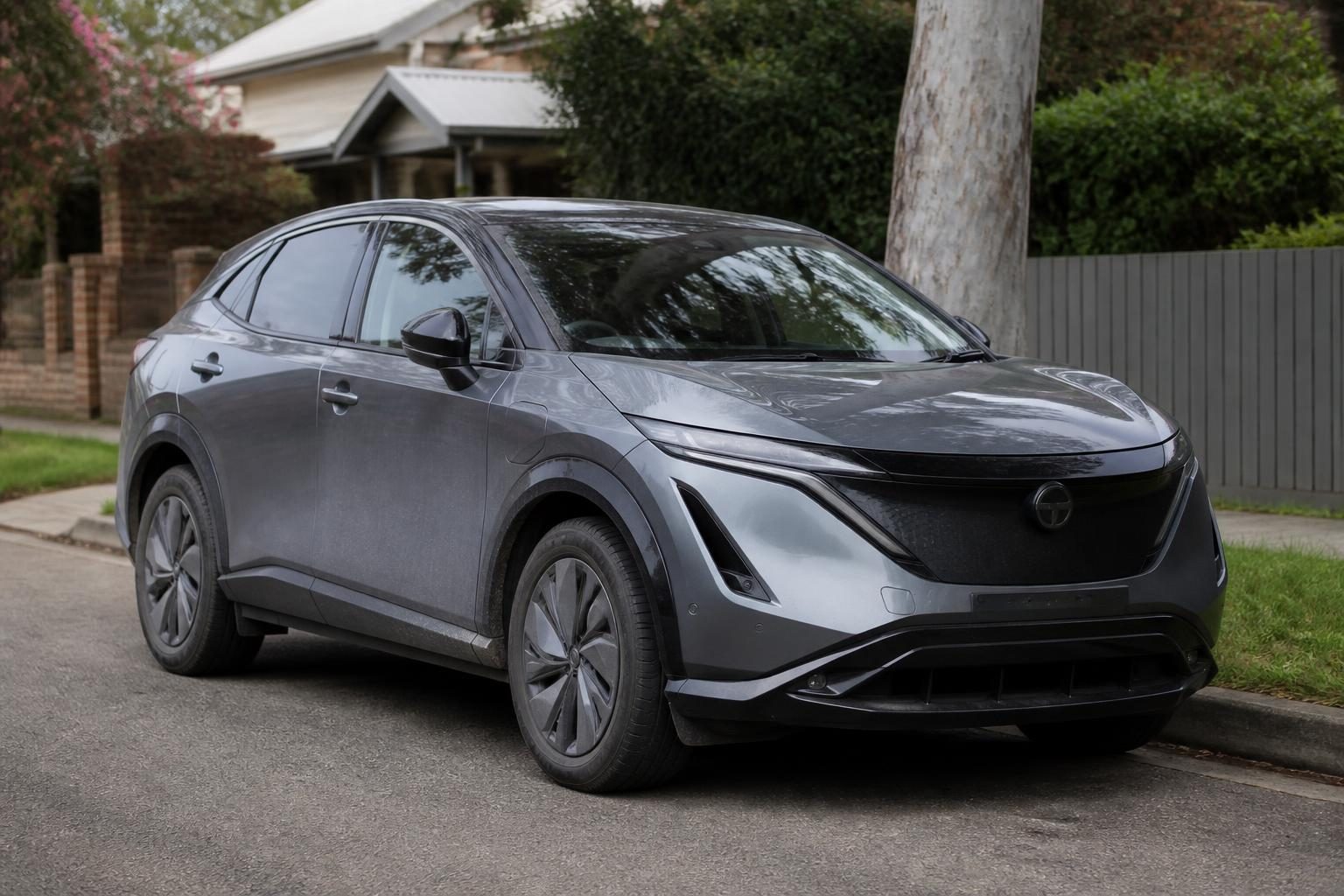 0202 Nissan Ariya
Now the local alternative. The Ariya has been on sale in Australia since September 2025, from $49,990 for the Engage 2WD 63kWh, with the 87kWh Advance+ 2WD from $61,990 (Nissan Australia, July 2025), and a 10-year/300,000km battery and powertrain warranty. The car itself is impressive: 160kW and 300Nm from the 63kWh front-drive version, 178kW from the 87kWh, CCS2 charging up to 130kW, and around 500km of WLTP range on the big battery.
None of that changes the arithmetic. Importing costs roughly $23,000 more than buying new locally, and the imported car carries no manufacturer warranty. Who is that for? Nobody, on financial grounds.
Verdict: don't import the Ariya. Buy one new in Australia.
How Do All Six EVs Compare?
Still weighing them up? Here's the whole picture in one place.
| Model | Landed cost | Local alternative | Charging | Verdict |
|---|---|---|---|---|
| Nissan LEAF ZE1 | $19,898 | $25,000–$32,000 used locally | CHAdeMO | ✅ Worth it |
| Peugeot e-208 P21 | $33,732 | ~$49,990 if released here | CCS2 | ✅ Worth it |
| Peugeot e-2008 P24 | $35,387 | $59,990 at 2023 launch, withdrawn | CCS2 | ✅ Worth it |
| Honda e ZAA/ZC7 | ~$39,300 | Never sold in Australia | CCS2 | ⚠️ Only if you want it |
| Mitsubishi i-MiEV HA | $17,682 | Rare used examples | CHAdeMO | ⚠️ Marginal |
| Nissan Ariya FE0 | $73,086 | $49,990 new (63kWh), $61,990 (87kWh), 10yr warranty | CCS2 | ❌ Not worth it |
What Should Every EV Importer Know Before Committing?
Four things separate a good import from a regrettable one, and none of them are on the auction sheet. Charging standard, warranty position, battery state of health, and parts supply. Work through all four before you place a deposit.
Why CHAdeMO Is Being Wound Down
The LEAF ZE1 and i-MiEV both use CHAdeMO for DC fast charging, and that standard is shrinking in Australia. In May 2026, the NRMA began removing CHAdeMO plugs from selected fast-charge sites, noting they are "severely under-utilised because relatively few EVs in Australia now rely on the standard" (NRMA, 18 May 2026). In the new-car market, CHAdeMO now survives on little more than the Mitsubishi Outlander and Eclipse Cross PHEVs and the Lexus UX 300e.
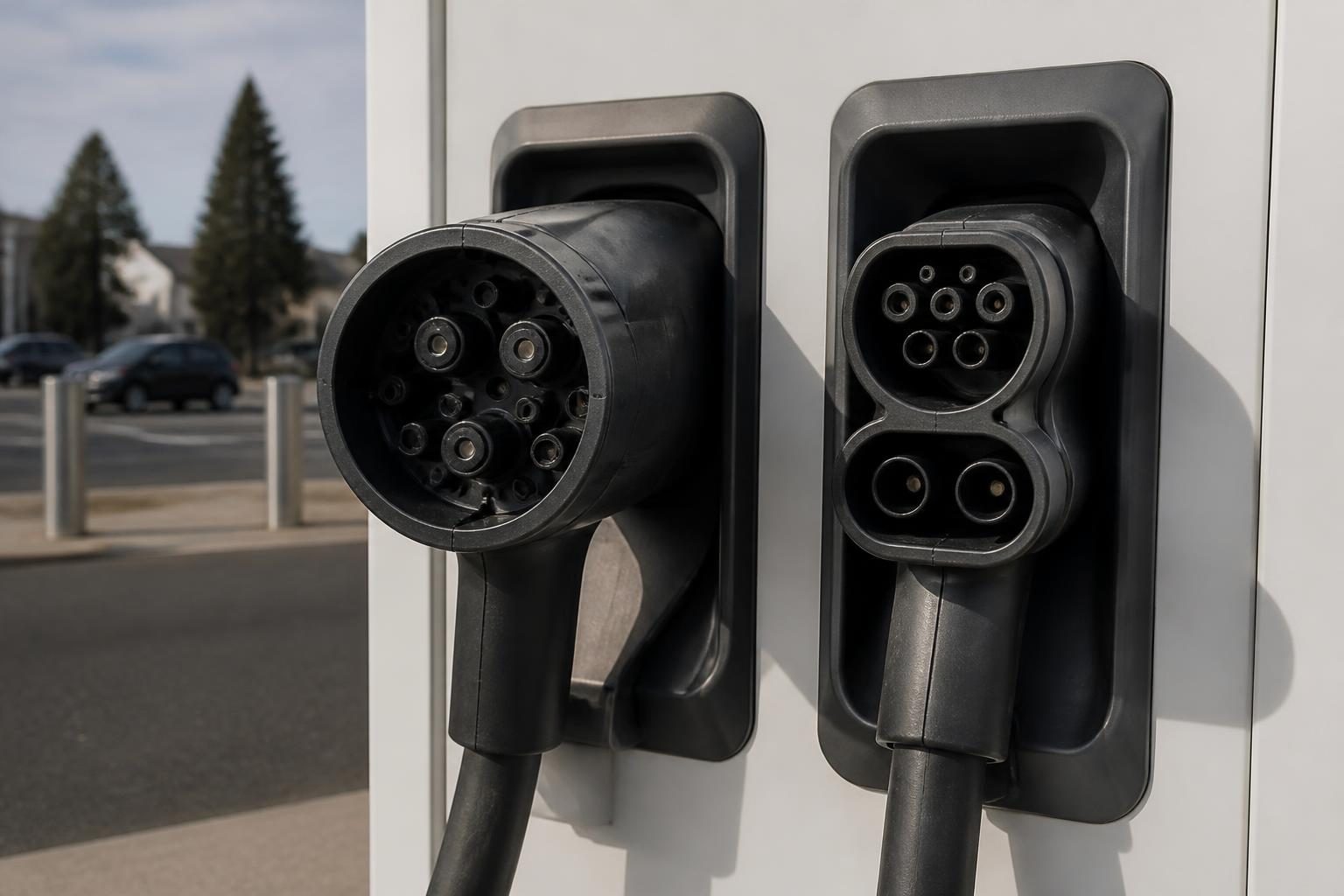 CHAdeMO on the left, CCS2 on the right. Which one your car uses matters more than it used to.
Don't panic about it. AC charging is completely unaffected, so your home wallbox and any public AC charger work normally through a Type 1 to Type 2 adaptor. If you charge at home overnight and drive city distances, this changes nothing. If you road-trip regularly, check the plug types along your usual routes first. The Peugeots and the Ariya use CCS2 and face none of this.
No Local Manufacturer Warranty
No Japanese or European manufacturer honours Australian warranty claims on a privately imported car. That's a fixed condition of importing, not a reason to avoid it, but it does mean budgeting for servicing and any battery-related work yourself. Aftermarket extended warranty products exist for eligible vehicles. Ask precisely what's covered and what's excluded before you sign anything.
Check Battery State of Health Before You Buy
State of health is the single biggest variable in a used EV's real value, and it's measurable. SOH varies significantly between vehicles of the same age and mileage. That variability is exactly why you test rather than assume.
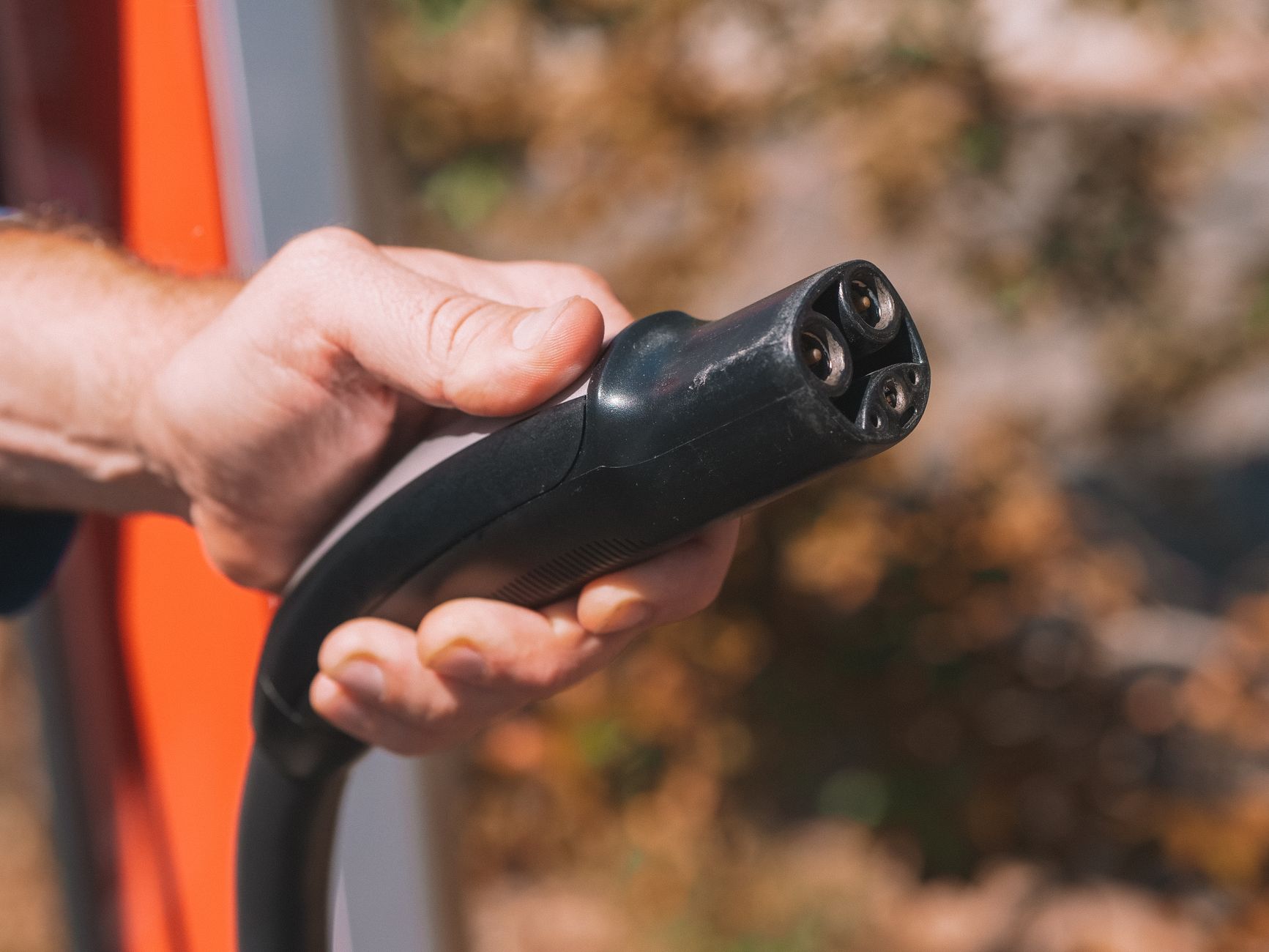 Battery state of health is the single biggest variable in a used EV's value.
For a LEAF, the 12-bar capacity gauge is your quick read: 12 bars is full health, and anything below 9 bars is worth walking away from. Better still, request a Leaf Spy report, which reads individual cell voltages alongside overall pack health. On the 40kWh 2018–2019 ZE1 you'd expect 82–92%, and 85–95% on the 62kWh e+ built 2019–2022.
One climate note worth taking seriously. The LEAF and i-MiEV have no active battery cooling, so degradation in a warm Australian climate can run faster than UK or European datasets suggest. The Peugeots and the Honda e both have active thermal management.
Parts and Servicing
Servicing depth varies more than buyers expect. The LEAF ZE1 is the easy one: Nissan dealers handle it, independent EV specialists across the country know the platform well, and parts supply is strong. Honda e cars are dealer-serviceable, though some parts need lead time through Honda's supply chain. Peugeot's dealer network covers the e-208 and e-2008, with occasional European sourcing delays on specific components. The i-MiEV is the weak link given the platform's age, so treat parts availability as a real risk on that one.
How Carbarn Sources and Imports These EVs
Carbarn is a Sydney-based importer working out of Lidcombe, specialising in Japanese-market vehicles. The process runs the same way for every model above: shortlist suitable cars from Japanese auction on grade, mileage and condition, arrange a pre-bid physical inspection where possible, bid only on your written approval and within an agreed cap, then handle VIA approval, freight, workshop compliance, AVV inspection and RAV entry in-house.
There are four ways to buy: sourcing an import-eligible model via auction (lowest cost, around 6–10 weeks), bidding live on lots you choose yourself, selecting from stock already sitting in Japan (roughly 6–8 weeks, fixed price), or buying from the Sydney warehouse. Auction deposits are refundable if no vehicle is secured. Optional extras quoted separately include a 5-year extended warranty for eligible vehicles, Blue Slip and NSW registration, door-to-door delivery Australia-wide, and pre-delivery servicing through the Carbarn workshop. Full cost breakdowns sit on each model's import page.
For the end-to-end process, including payment stages and deposit rules, see how importing works. To browse eligible models, start at browse import-eligible EV models.