



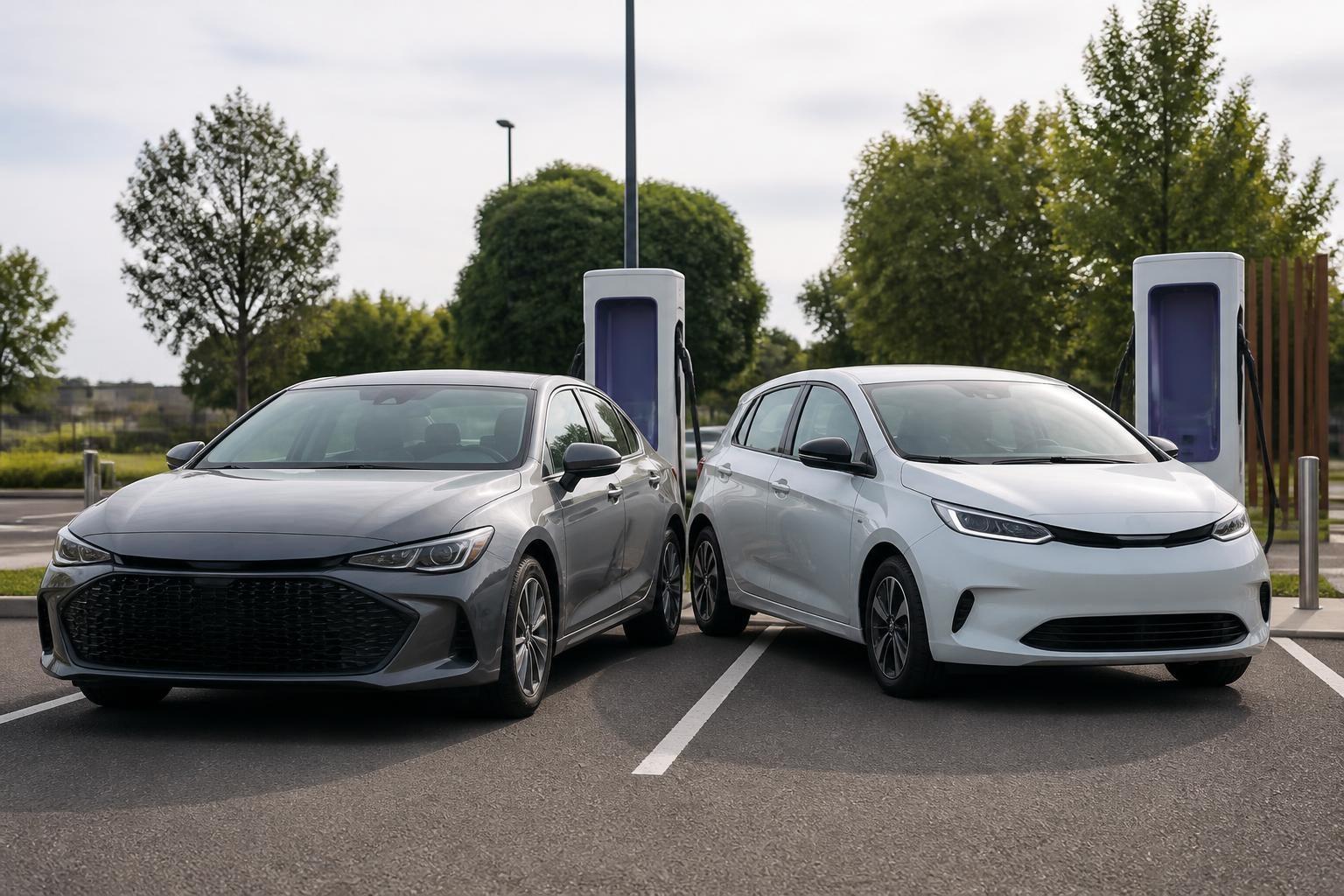
Ready to Hit the Road in Style?
Save money and reduce emissions with vehicles designed to deliver exceptional mileage. Visit our inventory and find a car that fits your lifestyle.
Ready to Hit the Road in Style?
Save money and reduce emissions with vehicles designed to deliver exceptional mileage. Visit our inventory and find a car that fits your lifestyle.
You rent a flat in the suburbs, drive about 35 km a day and plan to sell the car in three or four years. Hybrid or electric? Ask five people and you'll get five confident answers. Few will account for the fact that you park on the street.
Electrified vehicles made up 46% of new-car sales in Australia in May 2026. Battery-electric cars reached a record 20% (FCAI’s May 2026 electrified vehicle sales figures, June 2026). A hybrid and an EV aren't interchangeable choices, especially when you're comparing used cars.
What tips the balance is practical. Consider the purchase-price band, where you park overnight, how long you'll keep the car and what it's worth when you sell.
For a used-car buyer, check battery health, remaining battery warranty, service history and local servicing access before comparing fuel or charging costs. A three-year ownership plan can favour a hybrid because resale risk matters more. A longer hold with reliable home charging can make an EV's lower running costs count for more.
Hybrid or EV? The short version
- Hybrids suit renters and anyone without reliable off-street parking. Conventional HEVs don't need external charging.
- Using Savvy's Sydney assumptions, the BYD Dolphin's calculated charging cost is 4.8 c/km, compared with 9.6 c/km for its Mazda3 petrol comparator (Savvy’s Sydney fuel and charging cost comparison, March 2026).
- AADA and AutoGrab data reported by Gridly shows hybrids retained 98.3% of value after one year, while EVs retained about 75% (AADA’s 2024 Automotive Insights Report, 2024).
- Australia passed 1,500 fast-charging sites by June 2026 (ABC’s Australian fast-charger rollout analysis), although regional gaps and faulty chargers still matter.
- For a used hybrid versus used EV, neither wins outright. Check battery health, warranty and servicing access, then match the car to your driveway and ownership horizon.
What Do You Actually Pay Per Kilometre?
A home-charged EV can have a lower energy cost, but it isn't automatically the cheapest car to own. Using Savvy's stated Sydney assumptions, the BYD Dolphin calculation is 4.8 c/km. Its Mazda3 petrol comparator is 9.6 c/km (Savvy’s Sydney fuel and charging cost comparison, March 2026).
That calculation produces $575 over 12,000 km. It excludes charging losses, servicing, insurance and depreciation. The figure applies to Savvy's named vehicles and Sydney assumptions, rather than to every EV or hybrid.
Home Charging vs Public Fast Charging
The 4.8 c/km calculation assumes you're plugging in at home. Public charging generally costs more than charging at home. The tariff depends on the operator, charger speed, subscription, idle fees and location.
Check the network's current rate before relying on an EV energy-cost comparison.
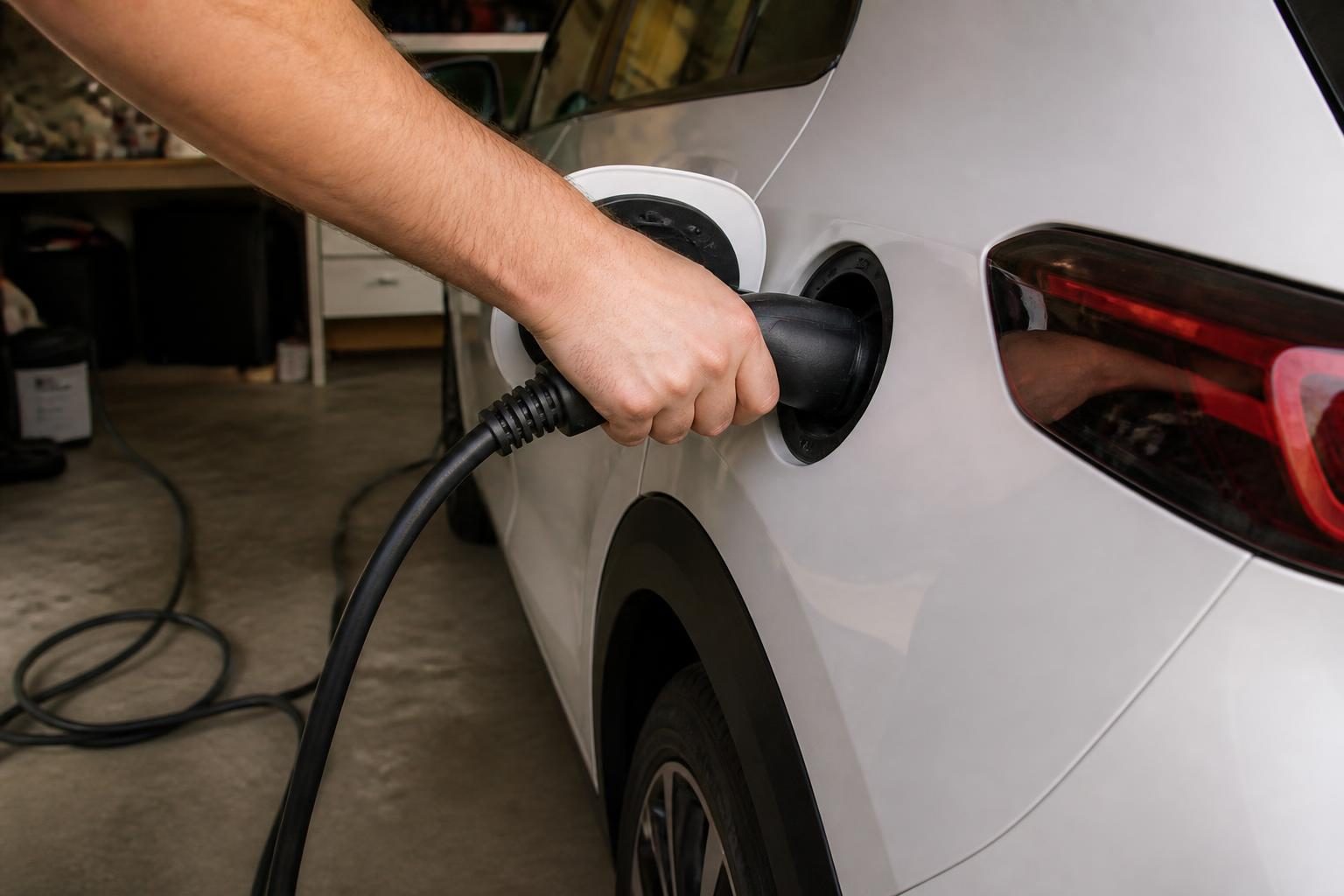 Home charging is where the per-kilometre savings come from, which is why off-street parking matters more than range.
Shift most of your charging to public DC and the EV's energy-cost advantage over a hybrid may shrink. The result depends on the EV's efficiency, the hybrid's fuel economy, petrol prices and the charging tariff.
Where Hybrids Land
Savvy's comparison figures put the selected 2025 petrol hatch at $3,710 a year, the hybrid at $3,436 and the EV at $3,102. The comparison uses Sydney conditions and 12,000 km a year (March 2026).
Each figure changes with fuel prices and electricity tariffs. These are transparent comparisons for the named vehicles, not a market average, quote or promise.
Is EV Range Actually a Problem in Australia?
For most Australians, EV range isn't a problem if the vehicle can be charged reliably. Many popular EVs offer more than 400 km of WLTP range, while the broader market spans roughly 250 km to 600 km or more. WLTP, or Worldwide Harmonised Light Vehicles Test Procedure, is the standard laboratory range test used for these figures.
Average Australian daily driving is about 33–35 km. About 80% of EV owners charge at home (Evee’s Australian EV charging guide, February 2026). Charging routines still vary.
The EV Owners Who Charge at Home
If you have a garage or a carport with a power point, the daily experience is simpler. You can plug in at home when needed, while public chargers remain useful for longer trips.
Whether range feels limiting depends on the car's usable range, your charging routine and the trips you take.
The Rental Problem Nobody Wants to Discuss
If you cannot reliably charge at home, public charging becomes more important. It usually costs more than home charging and requires more planning, especially on regional trips.
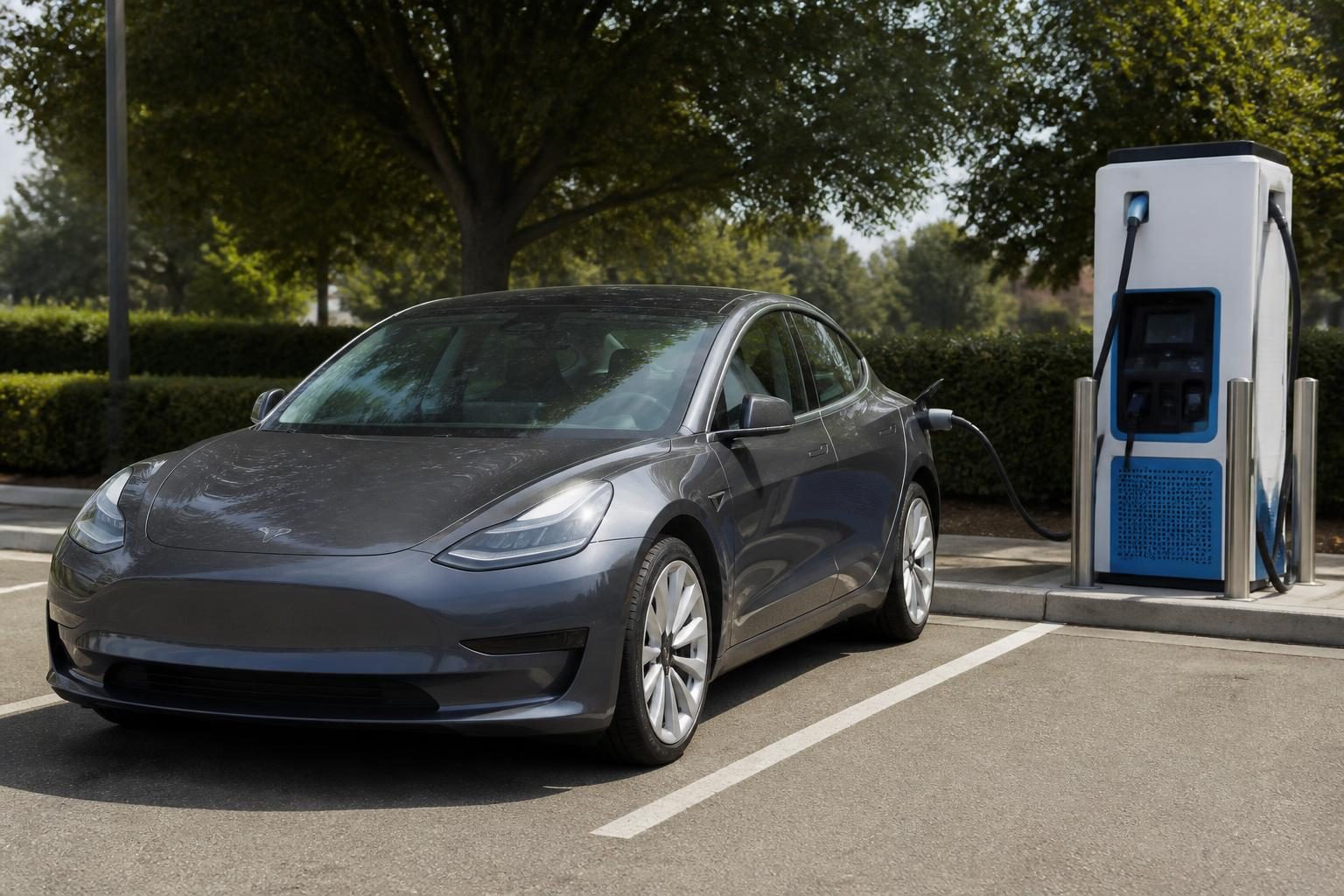 Public fast charging fills the gaps on long trips, but it generally costs more per kilowatt-hour than charging at home.
The real question was never how far the car goes. It's where the battery gets refilled, and whether that's forty steps from your front door or a detour on the way home.
The Hybrid's Quiet Advantage
A hybrid avoids the home-charging problem because it refuels at a servo. Australia's charging network has improved: the major-city fast-charging network recorded a 14% time-based utilisation rate in June 2026, and queueing was generally rare (ABC News, June 2026).
Those averages hide peak-hour and regional variation. A hybrid never has to plan around a charger.
Which Loses Less Money: A Hybrid or an EV?
A hybrid lost less value than an EV in the cited short-term aggregate observations. Gridly's report of observations from AADA and AutoGrab data found hybrids retained about 98.3% of their value after one year, compared with about 75% for EVs (AADA’s 2024 Automotive Insights Report, 2024).
At three years, the aggregate observations showed 92.4% retained for hybrids and 60.3% for EVs. These figures aren't a forecast for every model.
| Powertrain | First-year value loss | Value retained at 3 years |
|---|---|---|
| Hybrid (HEV) | ~1.7% | 92.4% |
| Petrol | ~11.5% | — |
| Electric (BEV) | ~25% | 60.3% |
Source: AADA and AutoGrab market data, reported by Gridly, July 2026; the one-year hybrid and EV figures are retained-value observations, not guarantees for every model. They are aggregate observations rather than model-level predictions.
Depreciation means the value a car loses between purchase and sale. It can be one of the largest ownership costs, particularly for a newer vehicle.
Two caveats keep this comparison honest. First, the gap is closing. Used EV sales grew 54.6% in the first half of 2026, and days-to-sell fell from over 60 to under 40 by June (Gridly, July 2026).
Second, holding the car longer can change the result. The NRMA's 2026 Best Value Car Awards found near-parity over five years and 55,500 km in its small-car comparison: $35,527 for a petrol contender, $35,569 for an EV and $36,174 for a hybrid (NRMA’s five-year Best Value Car comparison, August 2026).
In that comparison, EV energy costs ran 55% lower and servicing 39% cheaper. Insurance was 28% higher. These figures aren't universal drivetrain costs.
The depreciation risk is real if you're selling in three years. The effect of holding a car longer depends on its purchase price, model, condition and running costs. The NRMA comparison covers five years, not seven.
So Which One Is Right for You?
A hybrid makes more sense if:
- You rent, park on the street or share a carpark with no dedicated power point.
- You expect to sell within three years and want stronger resale protection.
- You regularly drive regional or interstate routes where charger spacing shapes your day.
- You prefer established hybrid systems and model support available for some Japanese-market vehicles, after checking the exact model and parts situation.
A hybrid is the wrong call if you have a garage, drive short daily distances and plan to keep the car for a decade. You'd be paying for petrol you didn't need to buy.
An EV makes more sense if:
- You own your home or have guaranteed off-street parking with a power outlet.
- Your regular trips fit comfortably within the vehicle's usable range and you can charge reliably at home.
- You expect to drive the car long enough for its running-cost difference to matter, after considering purchase price and depreciation.
- You're comfortable with a resale market that is improving but hasn't fully settled.
An EV is the wrong call if you're a renter planning a three-year hold. You'd be paying public-charging rates and facing the steepest part of the depreciation curve.
One note on plug-in hybrids. A PHEV is a plug-in hybrid that uses battery power for shorter trips and petrol for longer runs. It's a middle path.
A PHEV is worth a look if its real-world electric range covers your regular trips and you can charge it routinely. The full three-way comparison lives in the hybrid vs PHEV vs electric buying guide.
Where Japanese-Market Hybrids Fit
Japanese-market hybrids can make sense when you want a conventional HEV and don't have dependable home charging. An HEV is a hybrid that charges its battery through regenerative braking and the petrol engine, rather than plugging into a wall.
Hybrid history and parts support vary by model. Check the service records, local market history and exact parts position before importing.
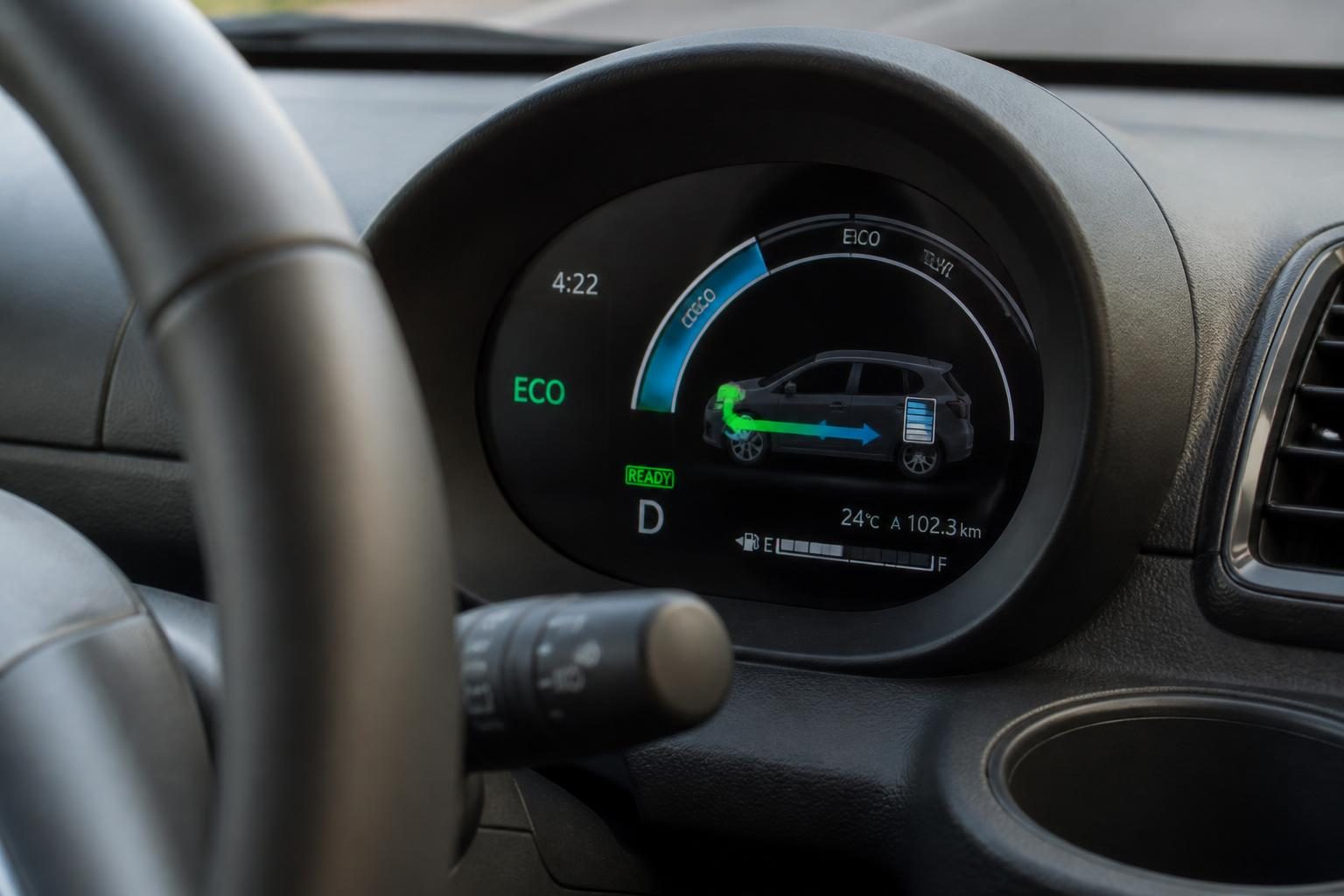 Japanese-market hybrids have been mainstream at home for two decades, which is why their reliability records run long.
The Honda Fit Hybrid, Honda Shuttle Hybrid and Subaru XV Hybrid are listed on Rover under the SEVS Environmental Criterion.
Rover is the government register used to identify vehicles listed under the Specialist and Enthusiast Vehicle Scheme. SEVS eligibility matters because an imported vehicle must meet the relevant approval and compliance requirements before it can be registered.
Import still requires a valid Vehicle Import Approval. Eligibility depends on the exact model code, variant, build date and compliance requirements. You can browse used hybrids available in Australia or narrow to Toyota hybrid listings.
Sources and Method
The figures in this article come from the linked FCAI, Savvy, AADA, ABC, Evee, NRMA and Gridly material. The depreciation figures are Gridly's report of AADA and AutoGrab observations, with the linked AADA report providing the underlying industry report.
The figures were checked against the linked publications dated between June and August 2026. Fuel and charging comparisons use the assumptions stated by Savvy. They are comparisons for named vehicles and conditions, not universal ownership costs.