



Ready to Hit the Road in Style?
Save money and reduce emissions with vehicles designed to deliver exceptional mileage. Visit our inventory and find a car that fits your lifestyle.
Ready to Hit the Road in Style?
Save money and reduce emissions with vehicles designed to deliver exceptional mileage. Visit our inventory and find a car that fits your lifestyle.
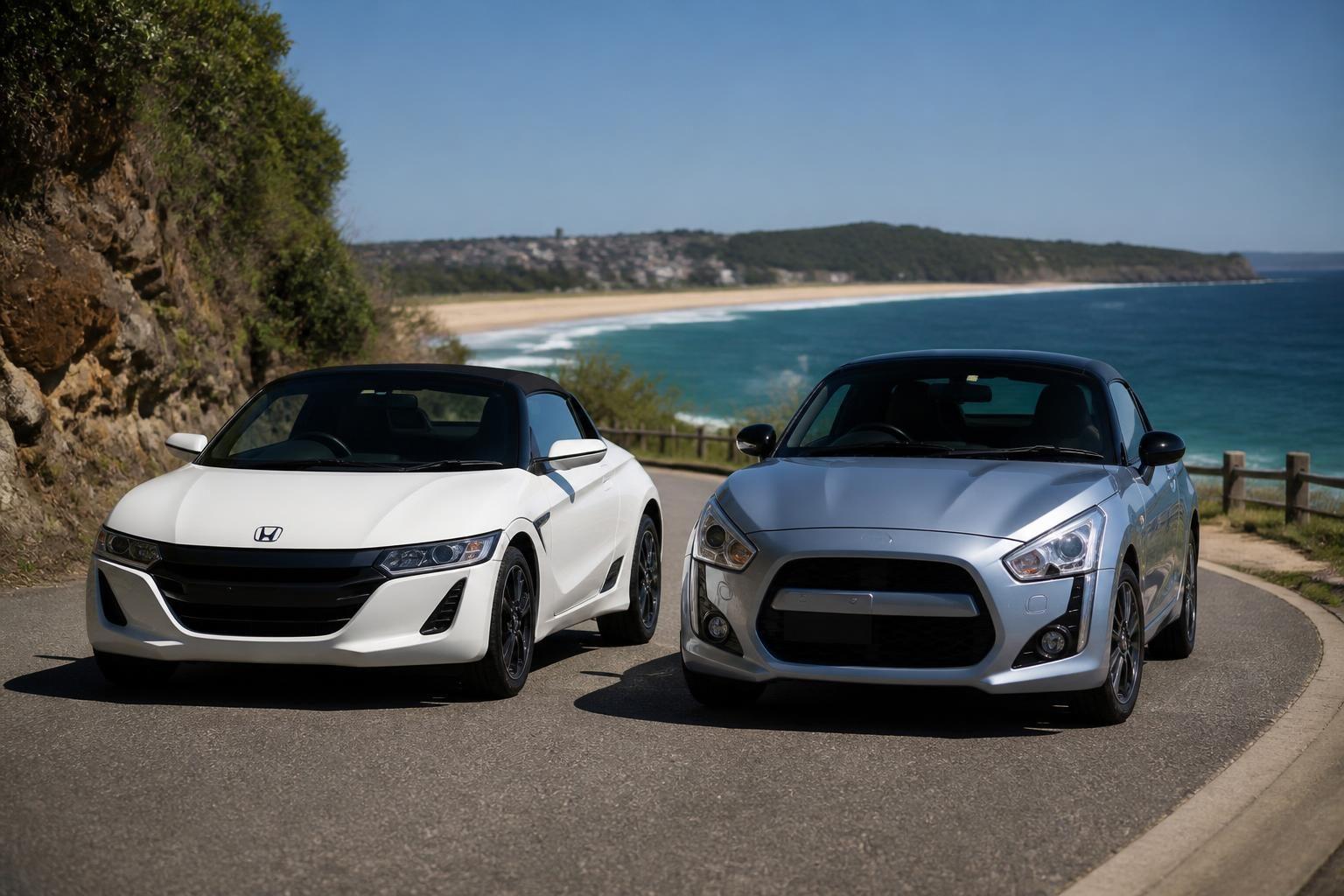
You want something small, open-topped and genuinely fun, and you've narrowed it to two Japanese kei cars. Kei cars are Japan's microcar class, capped by law at 660cc, 47 kW and 3,400 mm in length — a standard that produces vehicles light enough to feel genuinely fast at everyday speeds. The Honda S660 and the Daihatsu Copen both squeeze a 658cc turbo three-cylinder into a body shorter than a Yaris. Both produce exactly 47 kW, because Japanese law caps kei power at 64 PS and every maker builds right up to that line. That's where the similarity stops.
These aren't fringe machines in their home market either. Kei cars made up 38% of Japan's passenger car sales in 2025, according to AutoNergy's kei segment analysis citing JADA and JAIA data (May 2026). This guide covers how the two drive, how they differ mechanically, and what's involved in getting one into Australia.
TL;DR, Honda S660 vs Daihatsu Copen
- Both make 47 kW from a 658cc turbocharged inline-three, Japan's legal kei power ceiling
- The S660 is mid-engine and rear-wheel drive with a 6-speed manual, closer to a scale-model sports car
- The Copen is front-engine, front-wheel drive, with an electric folding metal hard-top and easier daily manners
- Honda ended S660 production in March 2022 after more than 30,000 units (Carscoops, November 2021), so supply is finite
- Both are on the SEVS (Specialist and Enthusiast Vehicle Scheme) register with build-specific eligibility, so check the approved build range before you commit
What Makes These Two So Different?
The engineering split is the whole story here. Honda put the engine behind the seats and drove the rear wheels, landing a 45/55 front-to-rear weight distribution (Honda Global press release, March 2015). Daihatsu went front-engine, front-drive, and spent the engineering budget on a folding metal roof instead. Same output ceiling, opposite priorities.
Honda S660, the Mid-Engine One
The Honda S660 is the closest thing to a shrunken NSX that anyone has actually built and sold. Its turbocharged S07A engine sits behind the cabin. The soft-top roll-top lifts off and stows in the front storage compartment under the hood. Honda claimed it as the world's first kei vehicle fitted with a 6-speed manual gearbox (Honda Global, March 2015). The exterior came from a design competition won internally by Ryo Sugiura, then 22, working from the EV-STER concept shown at the 2011 Tokyo Motor Show.
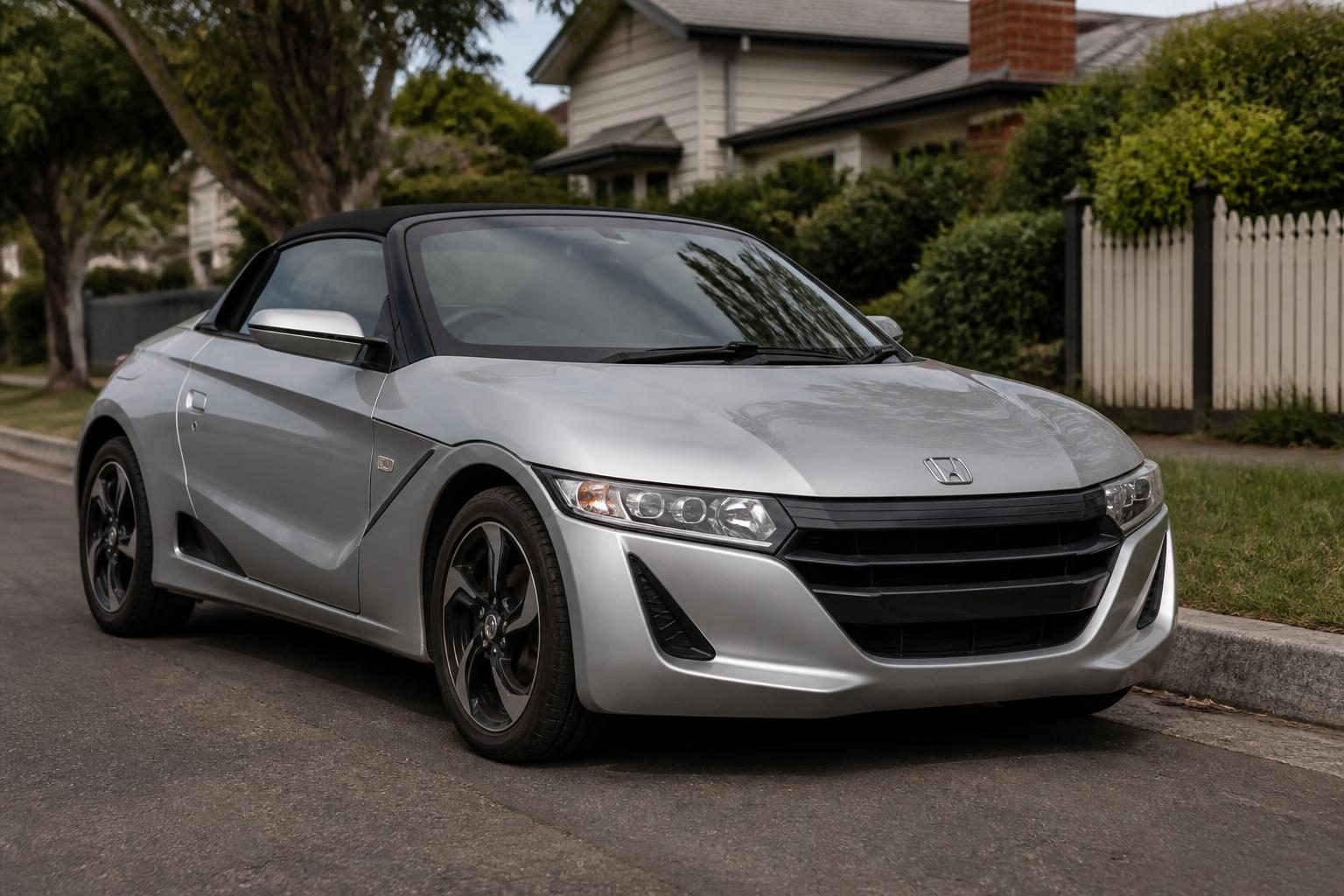 5201 Honda S660
On the numbers: 47 kW at 6,000 rpm and 104 Nm at 2,600 rpm from 658cc, in a car that weighs 830 kg in manual form. It measures 3,395 mm long, 1,475 mm wide and just 1,180 mm tall, on a 2,285 mm wheelbase. That's lower than almost anything else you can register in Australia. The whole point of the packaging is mass placed low and centrally, which is why it changes direction the way it does.
Production ran from April 2015 to March 2022, ending with the manual-only Modulo X Version Z. More than 30,000 were built across the run (Carscoops, November 2021). It's a two-seater with essentially no boot once the roof panel is stowed, so treat it as a weekend and commuting car rather than a do-everything one.
Daihatsu Copen, the Folding-Roof One
The Daihatsu Copen answers a different brief: a properly styled two-seat convertible you can use every day without thinking about it. The electric metal hard-top folds away in seconds, which means you get a sealed, quiet, secure cabin in winter and a fully open one in summer. For a lot of buyers, that single feature settles the argument.
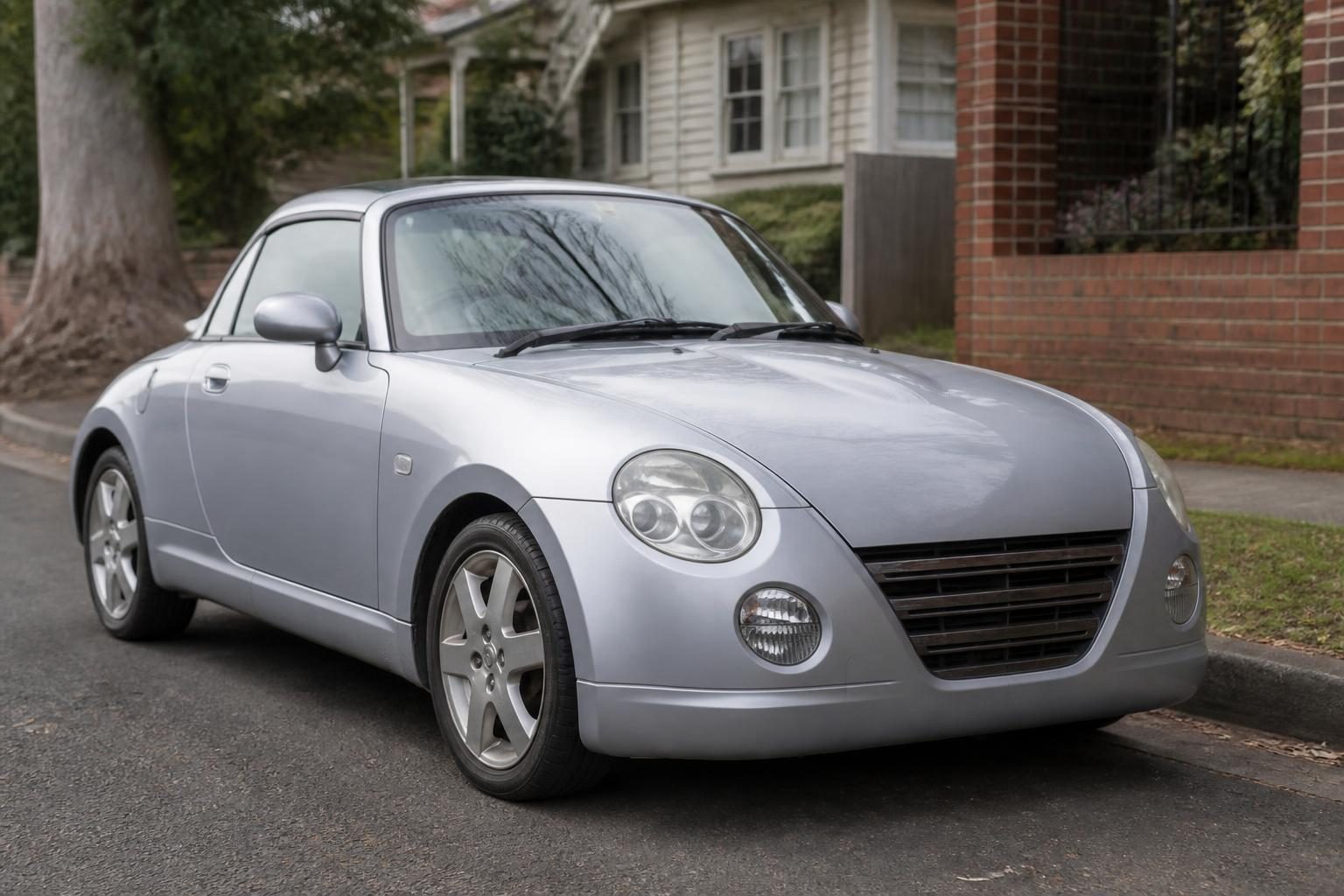 4002 Daihatsu Copen
The LA400K makes the same 47 kW, though it arrives at 6,400 rpm, with 92 Nm at 3,200 rpm. Kerb weight is 850 kg for the manual. Length and width match the S660 at 3,395 mm and 1,475 mm — kei rules dictate both. The Copen stands 1,280 mm tall on a 2,230 mm wheelbase. The extra 100 mm of height is the folding roof mechanism, and it's the reason the Copen feels less like a go-kart from the driver's seat.
Three body styles share the platform. The Robe is rounded and European-looking; the Cero is sharper and more angular. The GR Sport, developed with Toyota Gazoo Racing and launched 15 October 2019, adds front and centre chassis bracing, sport-tuned dampers and revised spring rates. The manual also gets a limited-slip differential, retuned electric power steering and BBS wheels. If you want the sharpest Copen, that's the one.
How Do the S660 and Copen Compare on Paper?
The numbers sit close on paper. The feel in your hands is not. Power is identical, but the S660 carries 12 Nm more torque and delivers it 600 rpm earlier — in an 830 kg car, that difference is felt every time you leave a roundabout or clip the apex of a tight corner.
| Metric | Honda S660 (JW5) | Daihatsu Copen (LA400K) |
|---|---|---|
| Engine | 658cc turbo inline-3 (S07A) | 658cc turbo inline-3 |
| Power | 47 kW @ 6,000 rpm | 47 kW @ 6,400 rpm |
| Torque | 104 Nm @ 2,600 rpm | 92 Nm @ 3,200 rpm |
| Layout | Mid-engine, rear-wheel drive | Front-engine, front-wheel drive |
| Weight distribution | 45 / 55 front-rear | Front-biased |
| Kerb weight (manual) | 830 kg | 850 kg |
| Height | 1,180 mm | 1,280 mm |
| Wheelbase | 2,285 mm | 2,230 mm |
| Roof | Removable soft-top (roll-top, stows in front compartment) | Electric folding metal hard-top |
| Gearbox | 6-speed manual or CVT | 5-speed manual or CVT |
| Production | Apr 2015 – Mar 2022 | 2014 – current |
Specifications sourced from Honda's March 2015 S660 press release and published Wikipedia model data for both vehicles.
What Are They Actually Like to Drive?
Neither car is fast in absolute terms. At 47 kW they're slower than a base Corolla, and pretending otherwise does nobody any favours. What they offer is the sensation of driving something small and responsive at speeds that won't cost you your licence, which is a genuinely rare thing now.
Honda S660, Rear-Driven and Talkative
Mid-engine layout means the mass sits behind you, and the S660 rotates into corners in a way that front-drive hatches simply don't. The 6-speed manual has short, mechanical throws. Torque arriving at 2,600 rpm in an 830 kg car means it feels willing from low revs, even though the actual output is modest.
The honest limitation is the freeway. At 110 km/h with a small turbo three-cylinder working hard, it's noisy and there's not much left in reserve for overtaking. This is a back-road and around-town car. If your commute is 60 km of motorway each way, look elsewhere.
Daihatsu Copen, Composed and Forgiving
Front-wheel drive makes the Copen the more predictable of the two, and the easier one to live with if you've never owned a convertible. The GR Sport's bracing and damper changes make a real difference on tighter roads. The roof is the daily-use trump card: a metal top means proper security, proper weather sealing and no fabric to replace in five years.
The trade-off is that the Copen won't give you the same feedback through the wheel. Under power out of a tight corner, the front end can feel a bit hesitant. For most buyers, most of the time, that's a fair swap for the everyday composure.
Which One Makes Sense for You?
There's no outright winner here, only a fit. The layout question decides it, and everything else follows. Mid-engine with a 45/55 rear weight bias versus front-engine and front-drive — those two configurations reward completely different things. One sharpens your attention on every corner. The other handles a wet Tuesday commute without asking anything of you.
 Blue open-top convertible driving along a seaside road
| What matters most to you | Better fit |
|---|---|
| Purest driving feel, manual is fine | Honda S660 |
| A convertible you'd use as a daily | Daihatsu Copen |
| Rear-wheel drive character | Honda S660 |
| Proper secure metal roof | Daihatsu Copen |
| Factory performance variant | Daihatsu Copen GR Sport |
| Finite, collectible production run | Honda S660 |
If you already know that mid-engine rear-drive feel is what you're chasing, the S660 is the only kei car that delivers it, and production ended in 2022, so the pool only shrinks from here. If the car needs to handle a wet Tuesday commute as well as a Sunday drive, the Copen is the more sensible buy, and the GR Sport closes a fair bit of the fun gap.
How Do You Import Either One to Australia?
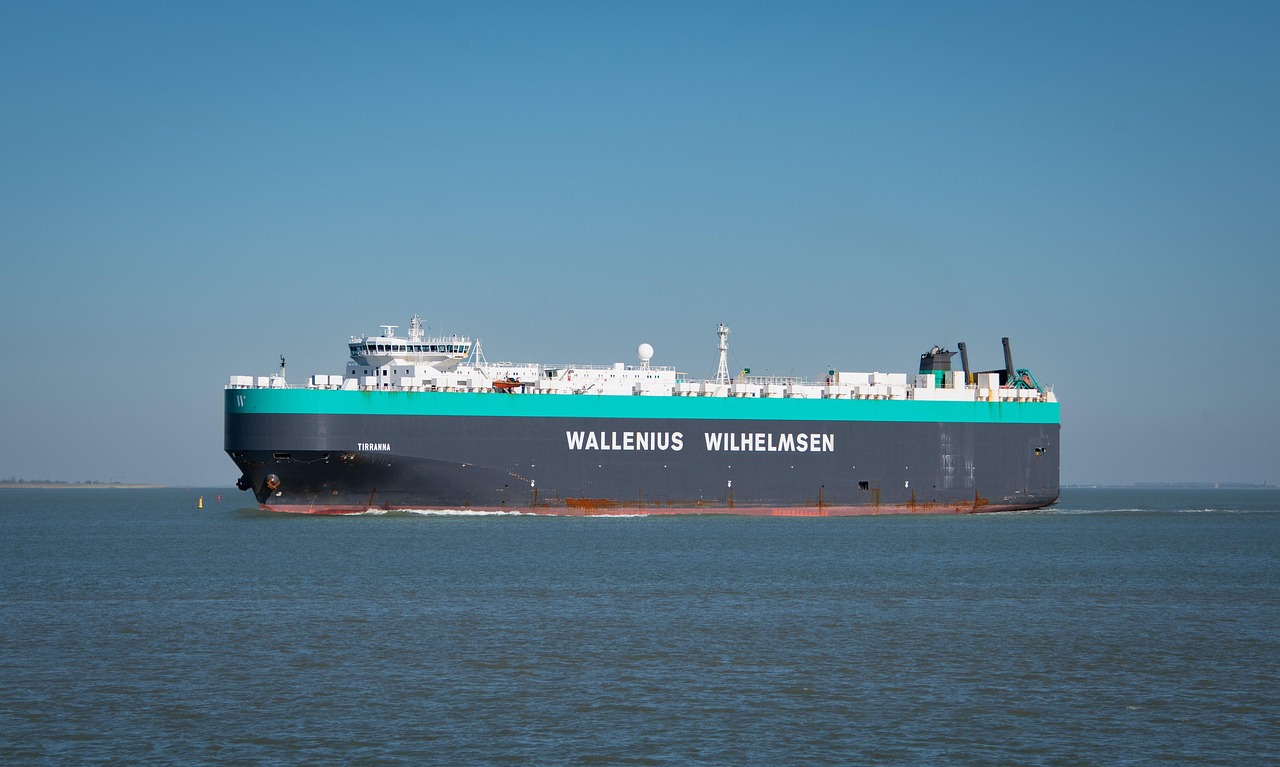 A Wallenius Wilhelmsen car carrier vessel at sea.
Both cars are Japan-market only, so an import is the only way to get one. Both appear on the Australian Government's Rover register under SEVS — the Specialist and Enthusiast Vehicle Scheme — which applies an Environmental Criterion to both these models. Eligibility is build-specific, and the published approval is the binding reference. The Copen LA400 sits under SEV-000940, valid to 31 August 2028, covering builds from October 2019 to October 2021. The S660 JW5 is covered by SEV-000990 and SEV-000393. Check the current approved build range before you fall in love with a particular auction lot, because a car built outside the window cannot be complied.
The cost side is rule-based rather than a single number. Customs duty on Japanese-origin vehicles is 0% under JAEPA — the Japan-Australia Economic Partnership Agreement — which has been in force since 15 January 2015. Proof of origin is required; without it the 5% MFN rate applies (Australian Border Force). GST is 10% of the combined CIF value, meaning vehicle cost plus insurance plus freight. Luxury Car Tax kicks in at $80,567 for standard vehicles in FY 2025–26, so neither kei car goes anywhere near it. Compliance is quoted separately and covers Australian Design Rules (ADR) rectification work, the Approved Vehicle Verifier (AVV) inspection and Register of Approved Vehicles (RAV) entry. A SEVS import also needs an odometer under 80,000 km.
Carbarn handles this end to end from its Lidcombe base in Sydney. That covers sourcing through approved Japanese auctions with pre-bid inspection and auction-sheet verification, bidding only within your written cap, and lodging the Vehicle Import Approval before the car ships. Roll-on/roll-off freight and customs clearance follows, then compliance, AVV inspection and RAV entry completed in its own RAW-certified Sydney workshop. Finance, extended warranty eligibility checks, door delivery and registration-ready paperwork are all part of the service. Typical end-to-end timing is 6–10 weeks. For live eligibility, auction data and current pricing, see the Honda S660 import page and the Daihatsu Copen import page.