



Ready to Hit the Road in Style?
Save money and reduce emissions with vehicles designed to deliver exceptional mileage. Visit our inventory and find a car that fits your lifestyle.
Ready to Hit the Road in Style?
Save money and reduce emissions with vehicles designed to deliver exceptional mileage. Visit our inventory and find a car that fits your lifestyle.
One of these cars revs to 9,000 rpm, weighs about 1,270 kg, and wears a four-door body Australia never officially received. The other makes 400 Nm from 2,500 rpm and reaches 100 km/h in roughly 5.7 seconds. Both wear the Type R badge, both drive the front wheels, and both have to come out of Japan. So the question isn't which one is better. It's which one suits how you drive and what you're willing to spend landing it here.
TL;DR: FD2 vs FK2
- The FD2 runs the naturally aspirated K20A: 225 PS and a 9,000 rpm redline. The FK2 runs the K20C1 turbo: 310 PS and 400 Nm from 2,500 rpm.
- The FD2 is a JDM (Japanese domestic market) four-door sedan. The FK2 is a five-door hatch built at Honda's Swindon plant in the UK.
- Just 5 FK2s transacted at Japanese auction in the last 90 days against 27 FD2s (Carbarn live auction data, to 7 September 2026). The FK2 is far harder to find.
- Both hold SEVS (Specialist and Enthusiast Vehicle Scheme) approval under the Performance Criterion: FD2 is SEV-000659, FK2 is SEV-000650.
- The compliance package is AUD $1,540 either way, but the FK2's stronger auction results flow through to a bigger GST figure and a real chance of Luxury Car Tax.
What Separates Them on the Road?
The gap between these two isn't 81 PS. It's where the performance lives. The FD2's K20A makes peak torque of 215 Nm at 6,100 rpm (FD2 power and torque figures (auto-data.net)); the FK2's K20C1 has all 400 Nm on tap from 2,500 rpm (FK2 power and torque figures (auto-data.net)). That's the same displacement delivering speed in two completely opposite ways.
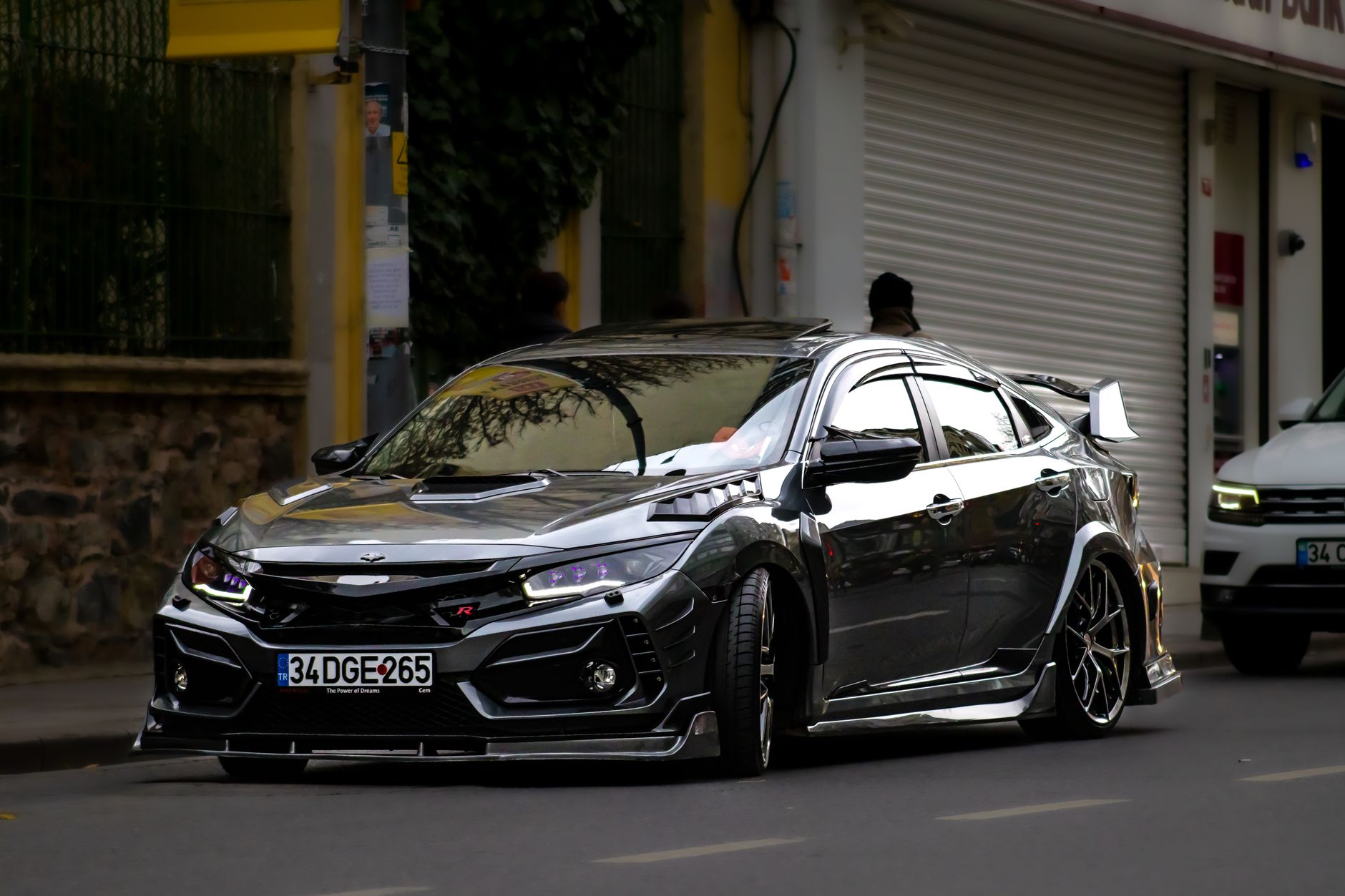 Black Honda Civic Type R cruising along an urban street.
The FD2: Built to Be Wrung Out
Below 5,500 rpm the K20A is honestly a bit ordinary. The car only wakes up past the VTEC (Honda's variable valve-timing system) crossover, and from there to the 9,000 rpm ceiling it's linear, mechanical and loud in a way modern engines simply aren't. A Torsen-type helical limited-slip differential (LSD) and fully independent multi-link rear suspension back it up. That combination is a large part of why the FD2 still gets talked about as one of the better front-drive chassis Honda has built.
It demands commitment. If you drive at seven-tenths on a commute, you will rarely see what you paid for.
The FK2: Fast Without the Ceremony
The FK2 needs none of that. Torque arrives before you've found second gear, so it's quick in traffic, quick uphill, quick when you can't be bothered. It ran a 7:50.63 lap of the Nürburgring in 2015 (Autocar, 2015), a front-wheel-drive production car record at the time, since surpassed by later Type Rs.
The trade-off is real: the FK2 swaps the FD2's independent rear end for a torsion beam axle. It's simpler and it works, but it's less delicate at the limit. More usable day to day, less theatrical when you push.
Neither approach is wrong. They're just Honda's thinking a decade apart.
How Do the FD2 and FK2 Compare on Paper?
| FD2 (2006–2011) | FK2 (2015–2017) | |
|---|---|---|
| Engine | K20A 2.0L naturally aspirated i-VTEC | K20C1 2.0L turbocharged |
| Power | 225 PS @ 8,000 rpm | 310 PS @ 6,500 rpm |
| Torque | 215 Nm @ 6,100 rpm | 400 Nm @ 2,500 rpm |
| Redline | 9,000 rpm | ~7,000 rpm |
| 0–100 km/h | ~6.2 sec | ~5.7 sec |
| Transmission | 6-speed manual, FWD | 6-speed manual, FWD |
| Rear suspension | Multi-link independent | Torsion beam |
| Body | 4-door sedan | 5-door hatchback |
| Kerb weight | ~1,270 kg | ~1,380 kg |
| Built at | Suzuka, Japan | Swindon, UK |
| Global production | 14,062 units | ~7,500 units |
| SEVS approval | SEV-000659 | SEV-000650 |
| Typical auction odometer | ~166,000 km | ~57,000 km |
| Auction sales, last 90 days | 27 | 5 |
Production figures: 14,062 FD2s per Honda records collated on Honda Civic Type R production records (Wikipedia); approximately 7,500 FK2s (widely reported; per Honda Type R Timeline and Milestones (Honda News)). Performance specifications per FD2 specifications (auto-data.net) and FK2 power and torque figures (auto-data.net).
The FD2: Final Naturally Aspirated Type R
The Honda Civic Type R FD2 is the last Type R Honda built without a turbo, and that single fact drives most of its value now. The K20A produces 225 PS at 8,000 rpm and spins to 9,000 — a figure almost nothing else on the used market will match at any budget (FD2 specifications (auto-data.net)). Australia got the FN2 European hatch of that era. The four-door FD2 sedan was never sold here in any form, so every one on Australian roads arrived through import.
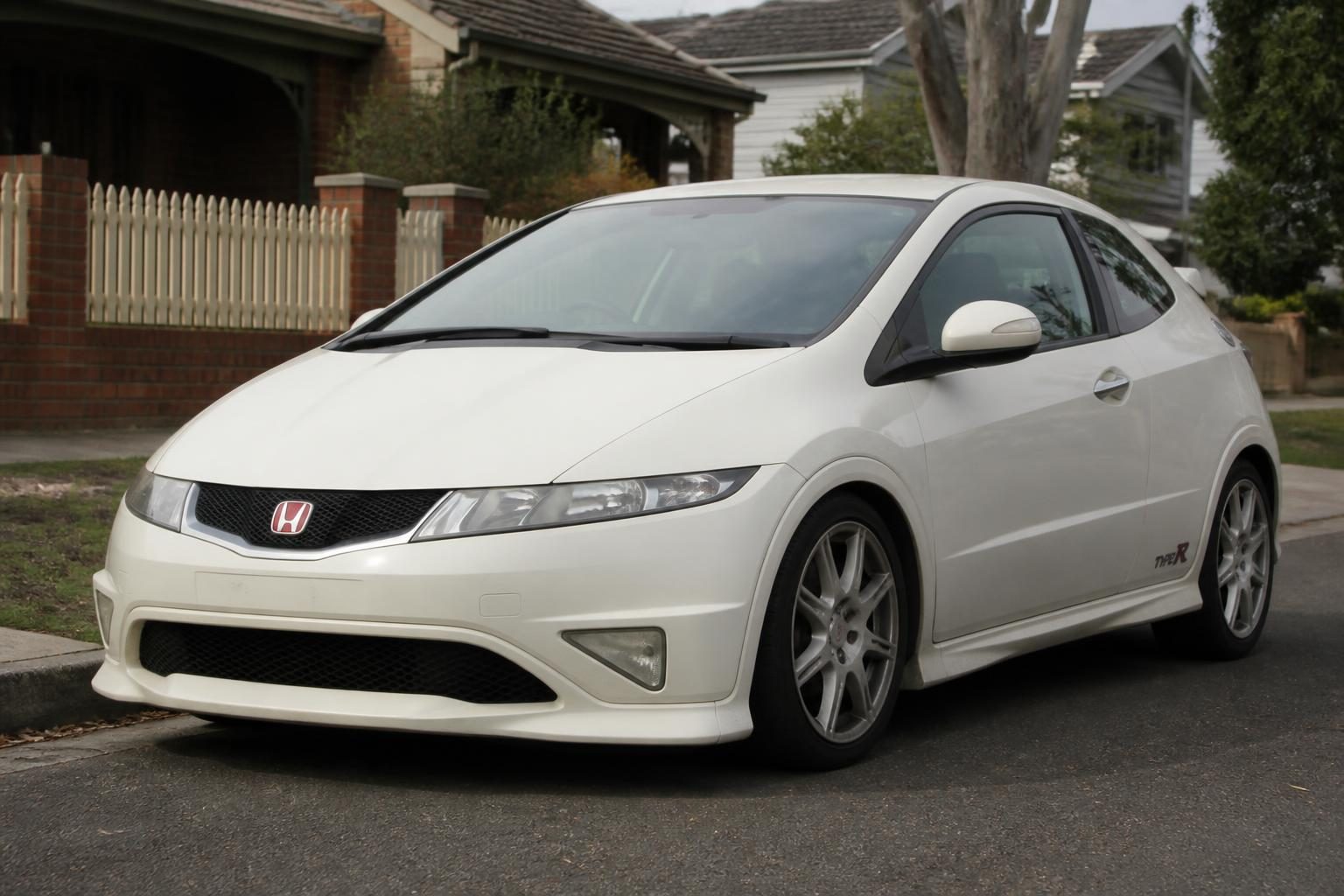 2006 HONDA Civic Type R
Underneath, it's a genuinely serious package: 215 Nm at 6,100 rpm, a six-speed manual, a Torsen-type helical LSD, multi-link independent rear suspension and roughly 1,270 kg of kerb weight. Approvals cover builds from October 2006 to December 2011, listed as the Civic Type R four-door sedan with the K20A 2.0L VTEC petrol engine and six-speed manual.
Supply is the FD2's practical advantage. Carbarn's auction data recorded 27 sales in the past 90 days across 2007 to 2010 cars, at grades 3 to 4. The honest catch is distance travelled: those examples sit around 166,000 km. This is the right car if the engine matters more to you than the odometer, and if a JDM-only sedan nobody else at the meet has appeals more than badge familiarity.
The FK2: First Turbocharged Type R
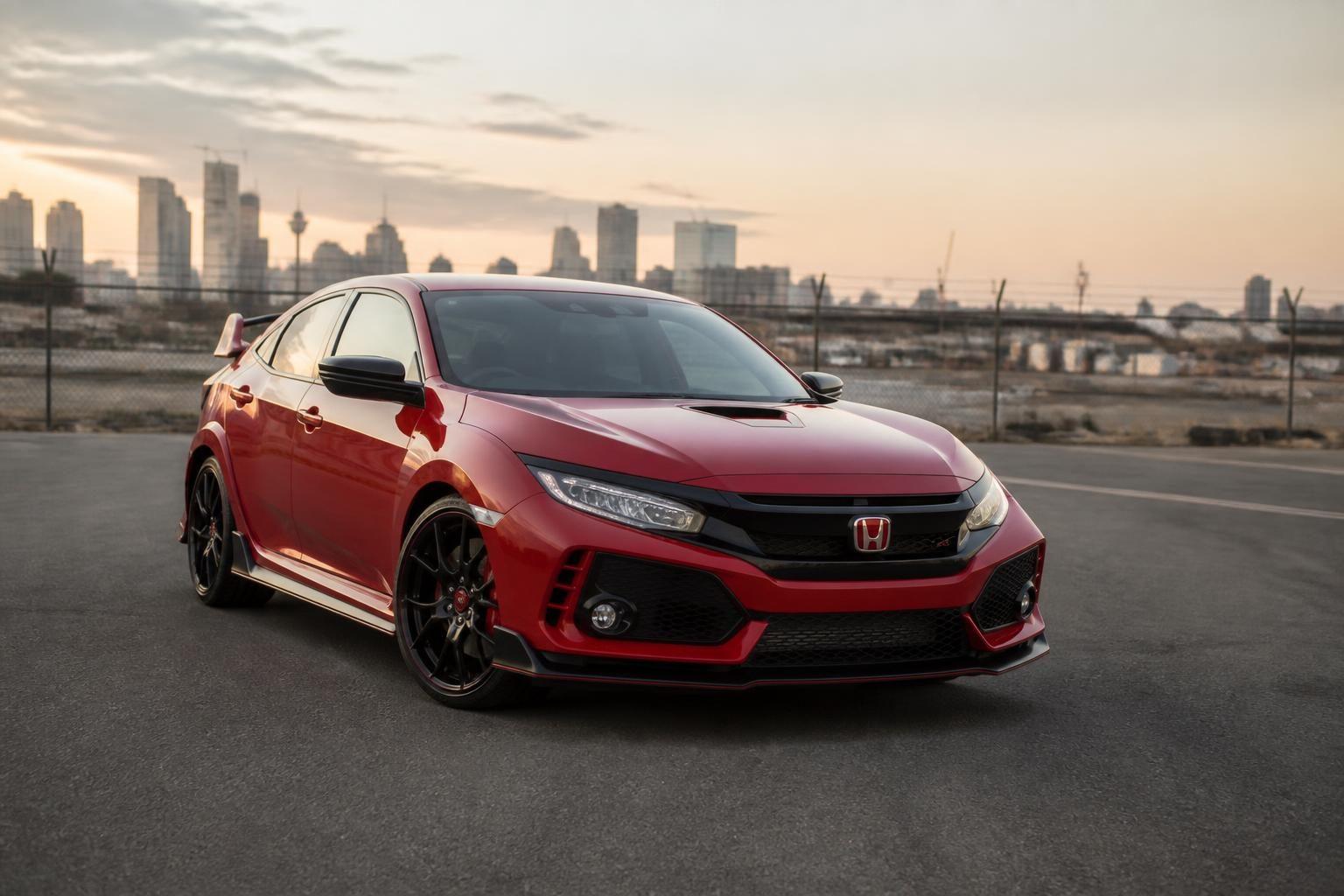
The Honda Civic Type R FK2 took the badge in the opposite direction, and it remains the strongest performance number available among SEVS-approved Type Rs. The K20C1 makes 310 PS at 6,500 rpm with 400 Nm across a 2,500 to 4,500 rpm plateau, good for about 5.7 seconds to 100 km/h. Five doors, usable rear seats and a proper boot mean it works as an actual daily car in a way the FD2 never really pretended to.
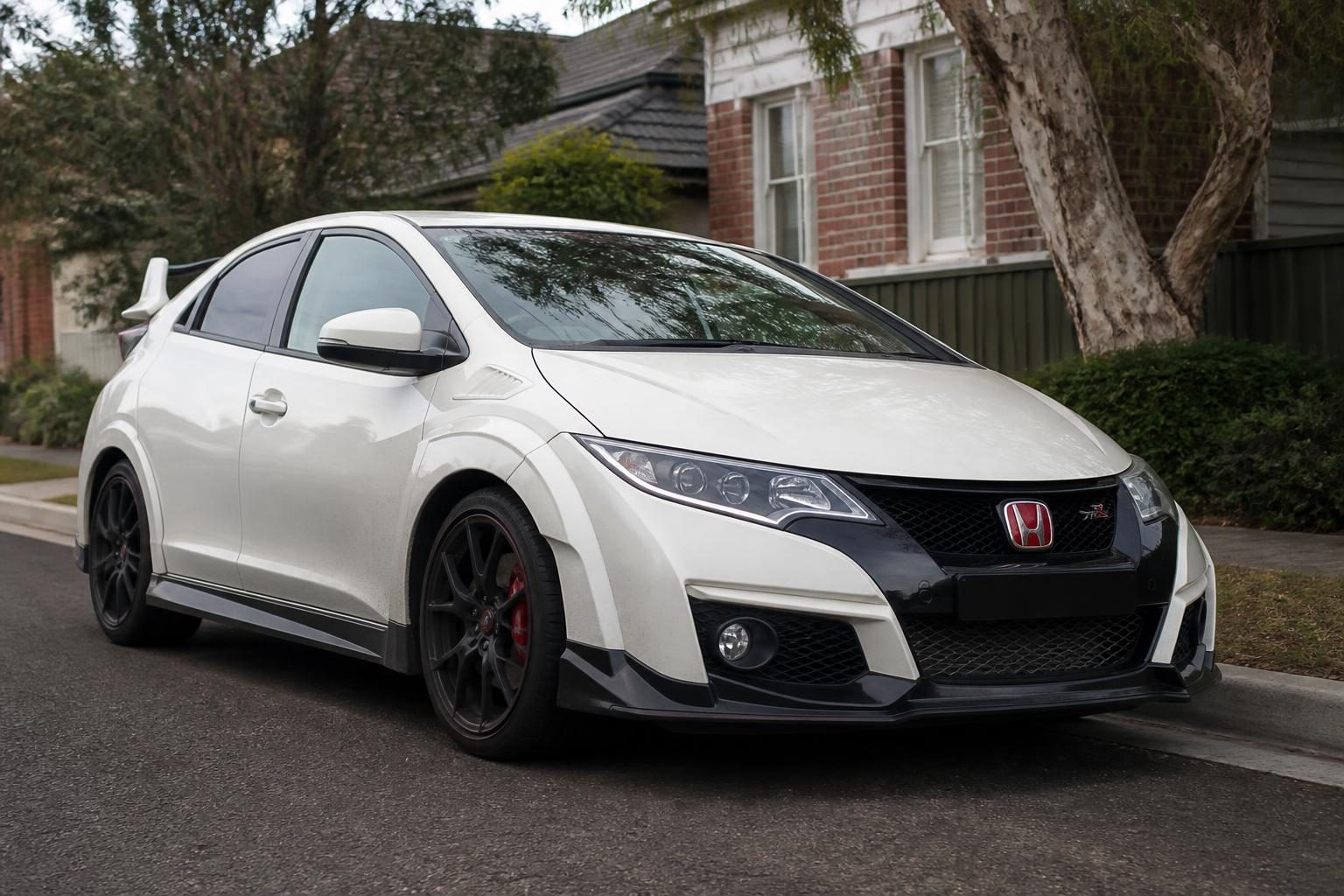 2015 HONDA Civic Type R
Rarity is the other half of the story. Honda built roughly 7,500 globally across a short 2015 to 2017 run, about half the FD2's total, and almost none were sent to Japan. That shows up at auction: 5 sales in 90 days, all 2016 cars, grades 3.5 to 4.5. Approvals cover builds from January 2015 to April 2017 under SEV-000650, supported by modification record entries MRE-000386 and MRE-000944.
The compensation for waiting is condition. FK2s coming through auction typically show around 57,000 km, roughly a third of the FD2's typical reading. One detail worth filing away for later: Honda built the FK2 in Swindon, not Japan, and that changes the customs duty picture.
What Does It Cost to Import Each One?
Both cars follow the same SEVS import pathway — that's where the similarity ends. Every cost layer feeds off the auction result, and the FK2's higher hammer prices amplify each variable. Below is how each component works.
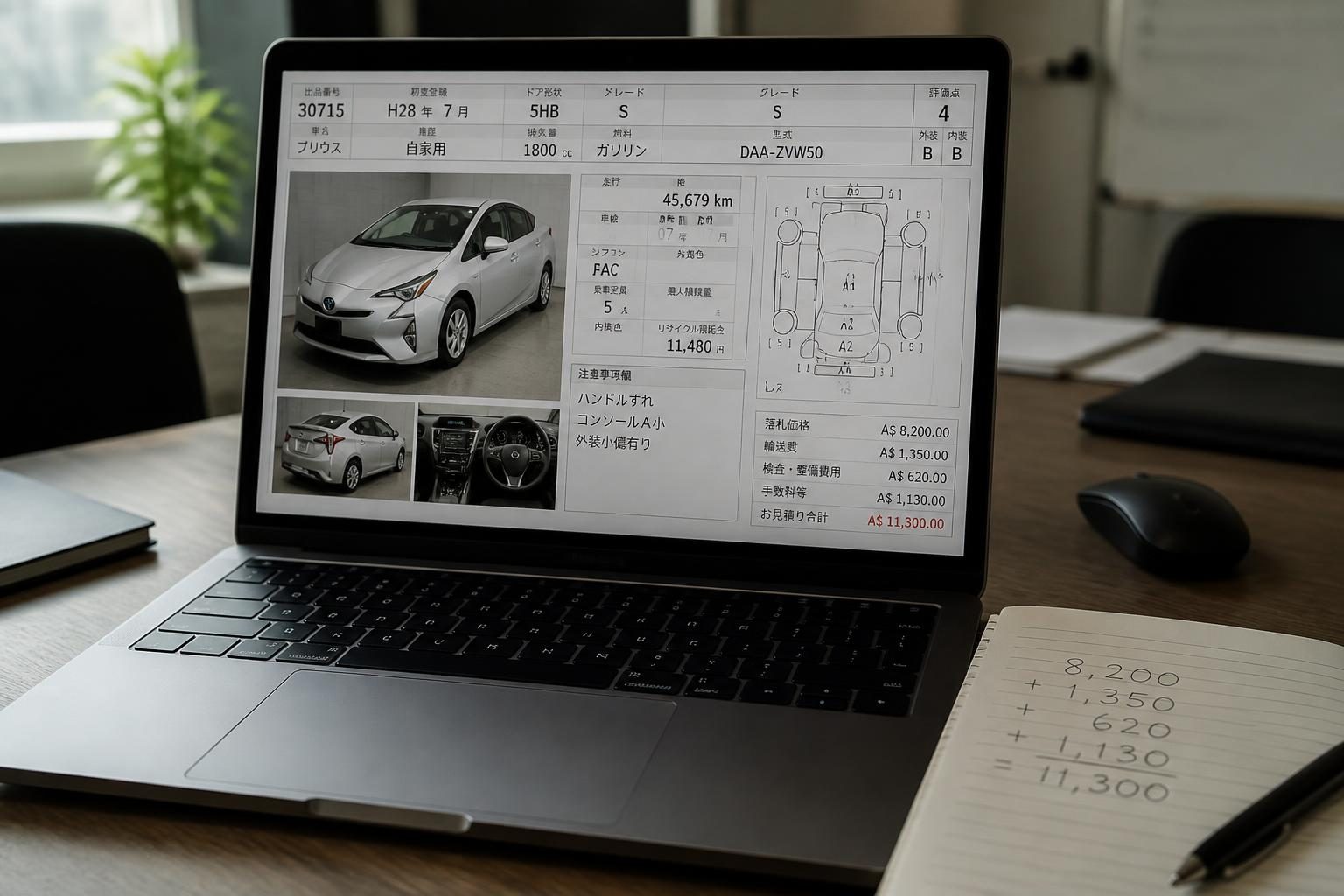 Japanese car auction listing on a laptop beside a calculation notepad.
Auction result. This is the variable that moves everything else. The FK2 consistently clears higher hammer prices than the FD2, driven by thinner supply, newer vintage and much lower odometer readings. Current numbers for both sit on the live import pages.
Fixed service fees. Two figures don't move at all. The Carbarn Agent Fee is AUD $1,500 and the compliance package is AUD $1,540 — identical for the FD2 and the FK2. Carbarn quotes tyres or rectification work separately before anything proceeds.
Japan Agent Fee. Percentage-based, so it scales with the hammer price. Higher auction result, higher fee.
Freight, port and customs. Varies with vessel and declared value, and runs higher on the FK2 for that reason.
Import duty: the split most buyers miss. Standard customs duty on a passenger vehicle is 5% of customs value. Under the Japan-Australia Economic Partnership Agreement, Japanese-origin vehicles can enter duty-free with valid proof of origin, and the FD2 was built at Suzuka. The FK2 was built in the UK, so JAEPA doesn't cover it and the standard rate applies. Origin claims are documentation-dependent, so confirm the position for your specific car via the DFAT JAEPA guide before you bid.
GST. 10%, calculated on customs value plus duty plus freight. A stronger auction result compounds straight through.
Luxury Car Tax. If the vehicle's taxable value clears the ATO's annual LCT threshold, published each financial year, LCT applies at 33% on the excess. The FK2's higher landed values make it far more likely to reach that line than the FD2.
Refundable auction deposit. Required before any bid goes in. It's fully refunded if no car is secured, or if you pull out before a bid goes in.
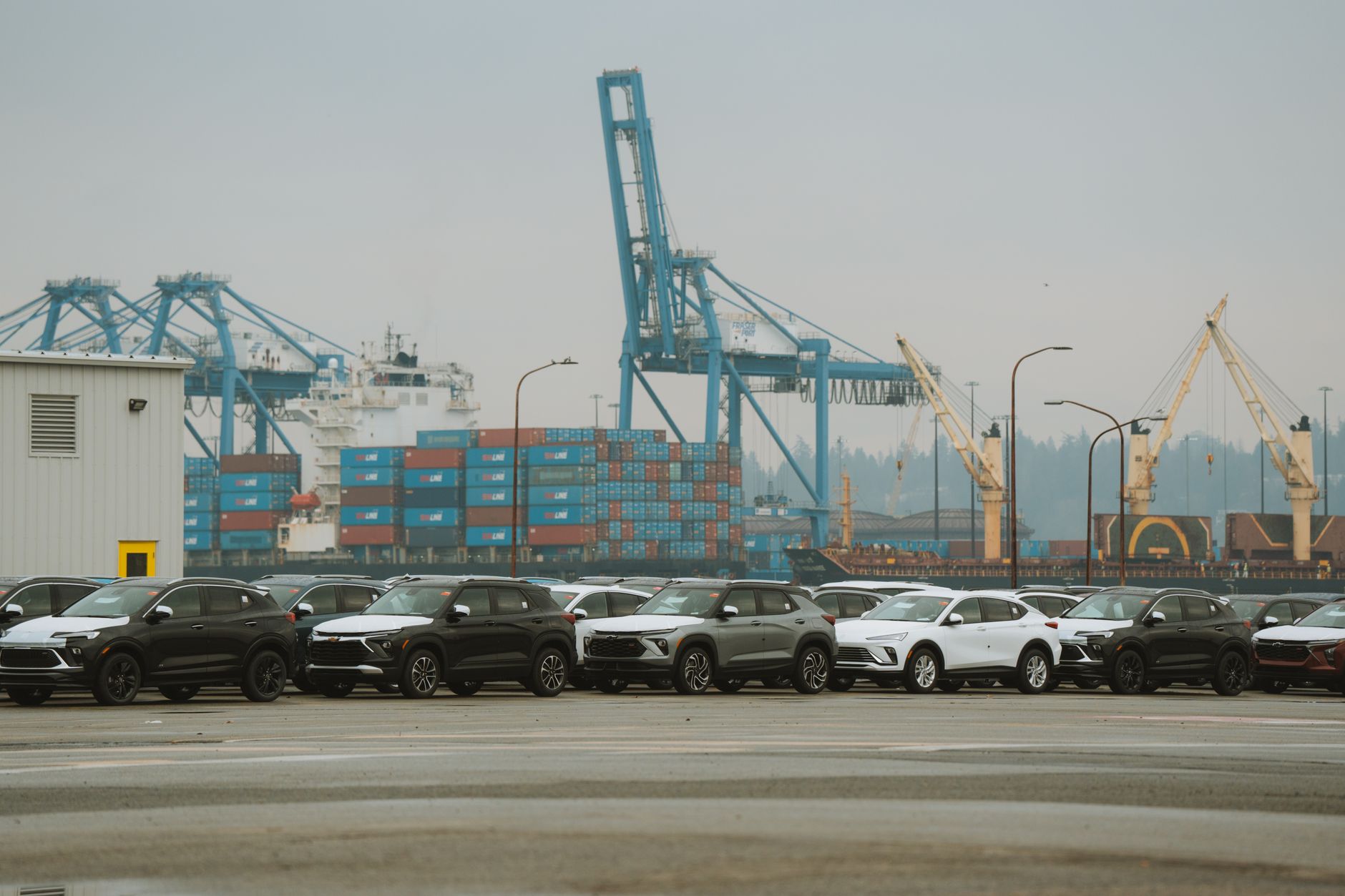 New vehicles await shipment beside containers and cranes at a cargo port.
Timeline is the same on paper for both. Expect 6 to 10 weeks across three phases: 1 to 6 weeks sourcing and approval in Japan, 4 to 6 weeks shipping, then 2 to 3 weeks for compliance and delivery in Sydney. In practice the FK2's five-cars-in-90-days supply can stretch that first phase. For current cost components on each, the FD2 import page and the FK2 import page both publish live breakdowns.
Which One Suits You?
The FD2 makes sense if chasing the VTEC crossover matters more to you than a stopwatch, you can live with an odometer near 166,000 km, a four-door JDM sedan appeals as a point of difference, and you'd rather have a deeper auction pool and the lower cost tier of the two.
The FK2 makes sense if you want the strongest SEVS-eligible Type R performance figure, need a hatch that genuinely works as a daily, and value a car around 57,000 km. The trade-offs are concrete: the standard 5% customs duty applies where the FD2 may qualify duty-free under JAEPA, the FK2's stronger landed values make LCT more likely, and five cars in 90 days means the sourcing phase can stretch.
Neither is the definitive answer. They suit genuinely different drivers, and anyone telling you one of them wins outright is skipping the part where you have to live with it.
How Do You Source Either Car Through Carbarn?
Carbarn handles both models end to end from its Lidcombe base in Sydney. That covers shortlisting suitable auction lots against your year, grade and odometer criteria. Carbarn arranges pre-bid physical inspection where the auction format allows, shares auction sheets, photos and inspector notes over WhatsApp, and bids only on your written approval within your cap. From there it's the VIA (Vehicle Import Approval) application before shipping, ocean freight, customs and biosecurity clearance, full SEVS compliance at the RAW (Register of Approved Workshops)-certified Sydney workshop, AVV (Approved Vehicle Verifier) inspection and RAV (Register of Approved Vehicles) entry, then delivery with registration-ready paperwork. Extended warranty and finance options are available on eligible cars, and Carbarn can arrange interstate delivery. You can read the full process on Carbarn's Japan import process, or compare cost components on the FD2 and FK2 model pages.