



Ready to Hit the Road in Style?
Save money and reduce emissions with vehicles designed to deliver exceptional mileage. Visit our inventory and find a car that fits your lifestyle.
Ready to Hit the Road in Style?
Save money and reduce emissions with vehicles designed to deliver exceptional mileage. Visit our inventory and find a car that fits your lifestyle.
Most van owners assume the greenslip on their rego handles work driving. It doesn't come close. If you have an at-fault accident while on a job and never declared business use, the whole claim can be knocked back. This guide walks through how to choose the right commercial van cover in Australia, and what to check before you sign. If you're still weighing up the van itself, the complete guide to HiAce variants is a good place to start.
Quick Answer
- Three cover levels run the market: Third Party Property Damage (TPPD), Third Party Fire & Theft (TPFT), and Comprehensive. Each suits a different operator and risk profile.
- Personal policies exclude business use. Most contain an explicit business-activity exclusion, so an at-fault claim made on a job can be denied outright (Allianz).
- Tools and stock in the van aren't covered by vehicle insurance. They need a separate goods-in-transit policy or endorsement.
- CTP (greenslip) is not commercial cover. It's mandatory everywhere but only pays for personal injury to other people.
- Underinsurance is the big avoidable risk. Only 42% of businesses review their sum insured each year (Vero SME Insurance Index, 2025).
Why Won't Your Personal Car Insurance Cover a Work Van?
Personal vehicle policies almost universally exclude commercial activity, and the exclusion is written right into the wording. According to Allianz, a standard personal policy is priced for private and commuting use only, so using the van to earn income sits outside what you paid for. Nearly three in four small businesses have never completed a risk analysis (Vero 2026 SME Insurance Index), which is why so many owners never spot the gap.
 Worker loads parcels into a white delivery van on a city street.
Picture a courier running deliveries on a Saturday. They rear-end another car at the lights, lodge a claim, and the insurer asks what the van was doing. Once business use surfaces, the claim can be declined because it was never disclosed when the policy started. Insurer product disclosure statements, including QBE's commercial motor wording, spell out that cover follows the declared use. The lesson is blunt: once a van earns income, commercial cover stops being optional.
Which of the Three Commercial Van Cover Levels Fits Your Operation?
Commercial motor cover comes in three tiers, and the right one tracks the value of your van and how hard it works. Comprehensive premiums have climbed sharply, up 42% since 2019 according to the Insurance Council of Australia's Motor Insurance Roadmap (March 2025), so matching the tier to your real risk matters more than ever.
| Cover level | What it covers | Best suited to |
|---|---|---|
| Third Party Property Damage (TPPD) | Damage you cause to other people's property | Low-value van, tight budget, an operator who can absorb their own repair costs |
| Third Party Fire & Theft (TPFT) | TPPD plus theft, fire and lightning | Mid-value van, higher theft risk in urban areas |
| Comprehensive | All of the above plus your own van from collision, hail, storm and vandalism | Most working operators, and any van with real market value |
TPPD is the floor. It pays for the damage you do to others but nothing for your own van, so it suits a cheap runabout you could replace out of pocket. TPFT adds theft and fire cover, which makes sense if the van sleeps on the street in a city suburb. Comprehensive is the default for most businesses, because the ICA reports claims costs rose 42% between 2019 and 2024, and repairing your own van without cover gets expensive fast. If you want to compare policies, a tool like Finder's van insurance guide lets you line up quotes.
Coverage Gaps in a Standard Commercial Van Policy
Plenty of what owners assume is included actually sits outside a standard commercial motor policy. The gaps below are the ones that catch working operators out, and each one needs a deliberate decision rather than an assumption.
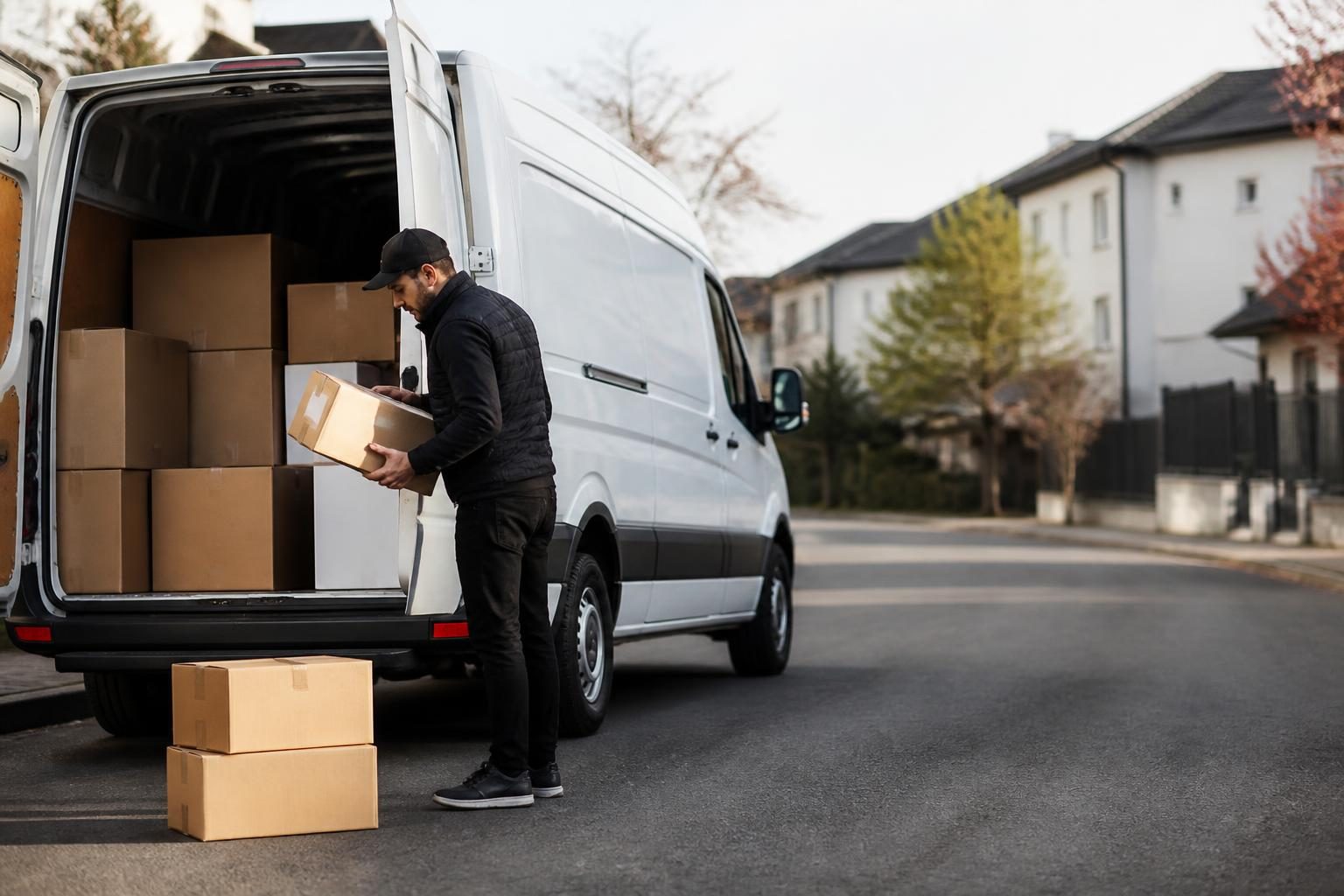 A courier unloads cardboard boxes from a white delivery van parked on a neighborhood street.
Goods in transit. The van is insured, but the tools, stock and equipment inside it are not. As Upcover explains, that load needs a separate goods-in-transit or tools-of-trade policy. Lose a van full of gear in a break-in and the motor policy won't touch the contents.
Hire and reward. Rideshare, courier-app work and shuttle runs usually need a specific hire-and-reward endorsement. A plain commercial motor policy generally doesn't include it, so carrying paying passengers or parcels without it can void a claim.
Multiple drivers. Named-driver policies are common, and an undisclosed driver is a frequent reason claims fail. Around 80% of Australian businesses used a broker last year, and 95% of heavy broker users were satisfied with their claim outcomes (Vero 2026 SME Insurance Index), which is one reason a broker helps with fiddly multi-driver terms.
Grey import vans. Some insurers limit agreed value or decline cover for vehicles without Australian-market compliance plates. That's worth knowing for HiAce and Daihatsu Hijet buyers, where a specialist commercial broker usually has wider access to insurers who will write the policy.
What Five Things Should You Check Before Signing a Commercial Van Policy?
Before you commit, five details decide whether a policy actually protects you or just looks cheap. Vehicle valuation disputes rank among the most common complaints handled by AFCA, per the Insurance Council of Australia (April 2026), so reading the fine print pays off directly.
 Calculator and printed documents on a desk during a paperwork review.
Agreed value versus market value. Agreed value locks in a payout figure when the policy starts. Market value pays the depreciated rate at claim time, which can be a lot less for an older working van. For most vans with a settled commercial history, agreed value is the safer pick.
Excess structure. A low or nil-excess policy often carries a higher premium and tighter conditions. Know what triggers a bigger excess: a young-driver loading, an at-fault crash, or a particular vehicle type. Read the excess schedule in the PDS before you sign.
Business activity declared correctly. Delivery, trade work and passenger transport each attract different underwriting. Misdeclaring your category is a common cause of a denied claim, so make sure the declared activity matches how the van is really used, in writing.
CTP versus comprehensive. The greenslip is mandatory and covers personal injury to other people only. Comprehensive commercial cover is a separate product entirely. Plenty of operators conflate the two and find out the hard way after a prang.
Insurer appetite for imports. Not every insurer writes agreed-value cover for grey-import or older Japanese-market vans. Specialist commercial brokers tend to have better access to the ones that will, which again matters for HiAce and Hijet owners.
How Does CTP Change From State to State?
CTP is compulsory for registration in every state, but how you buy it varies. Some states let you choose your insurer, while others bundle a government levy into the rego. Knowing which system applies where you register saves confusion at renewal.
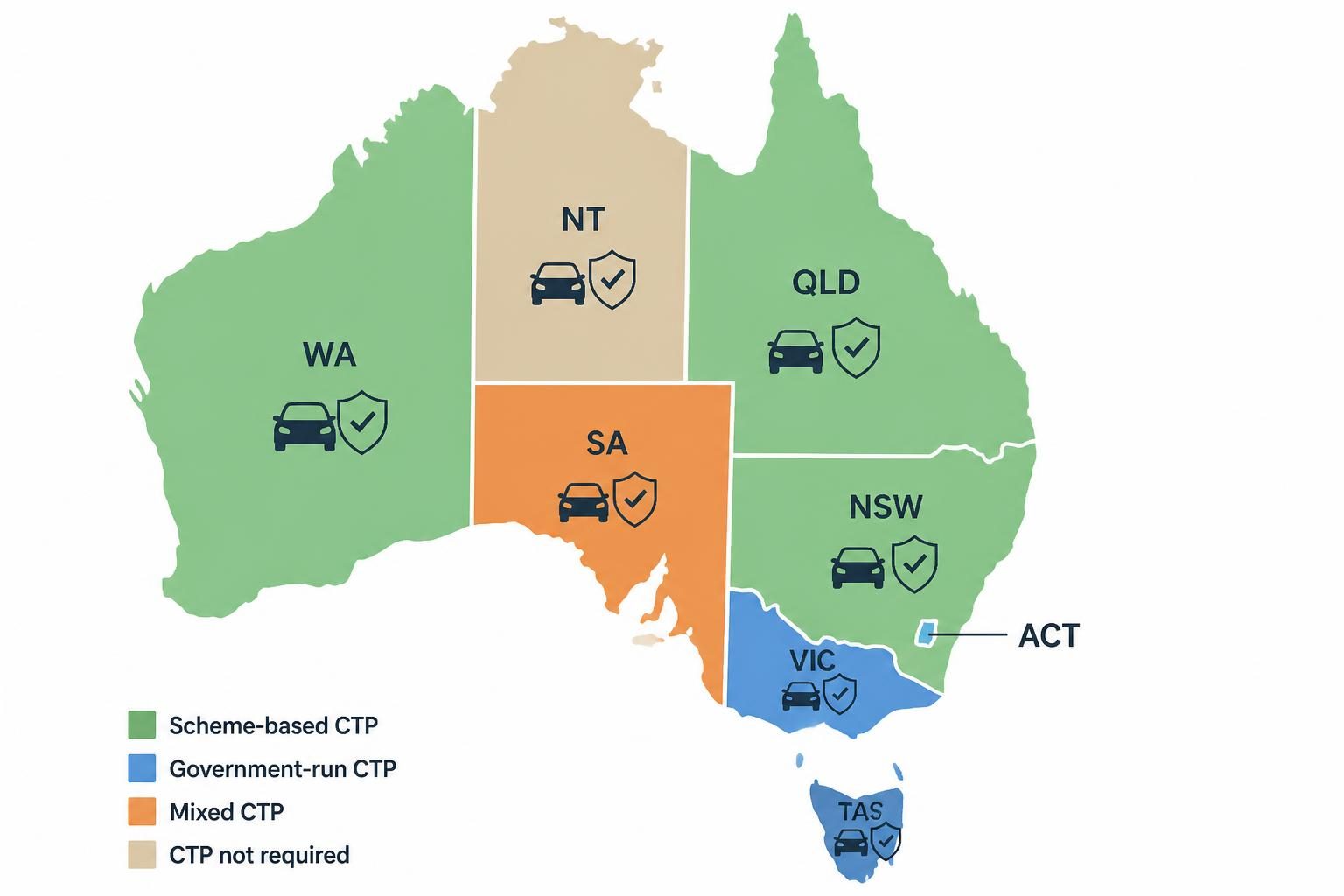 CTP is compulsory everywhere, but how you buy it changes from state to state.
| State | CTP scheme type | Choose your insurer? |
|---|---|---|
| NSW | Scheme-regulated (SIRA) | Yes, six licensed insurers as of May 2026 |
| QLD | Scheme-based | Yes |
| ACT | Scheme-based | Yes |
| VIC | TAC levy, government-run | No, included in rego |
| WA | ICWA, government-run | No, included in rego |
| SA | Scheme-regulated (CTP Insurance Regulator) | Yes |
In NSW the average greenslip sat at $536 in 2025, down from $935 before the 2017 reforms, per SIRA's CTP Scheme Performance Report (that figure is NSW-specific). Whichever state you're in, remember CTP covers injury to people only. It is context for your setup, not the cover that protects the van.
Sort the Van and the Cover Together
If you're shopping for a work van before locking in insurance, Carbarn's Sydney van stock includes Japanese-market HiAce 4WD vans and the team can also help you import a HiAce from Japan on request. That's a useful thing to know at the insurance stage, because the HiAce is one of the most commonly insured commercial vans on Australian roads.
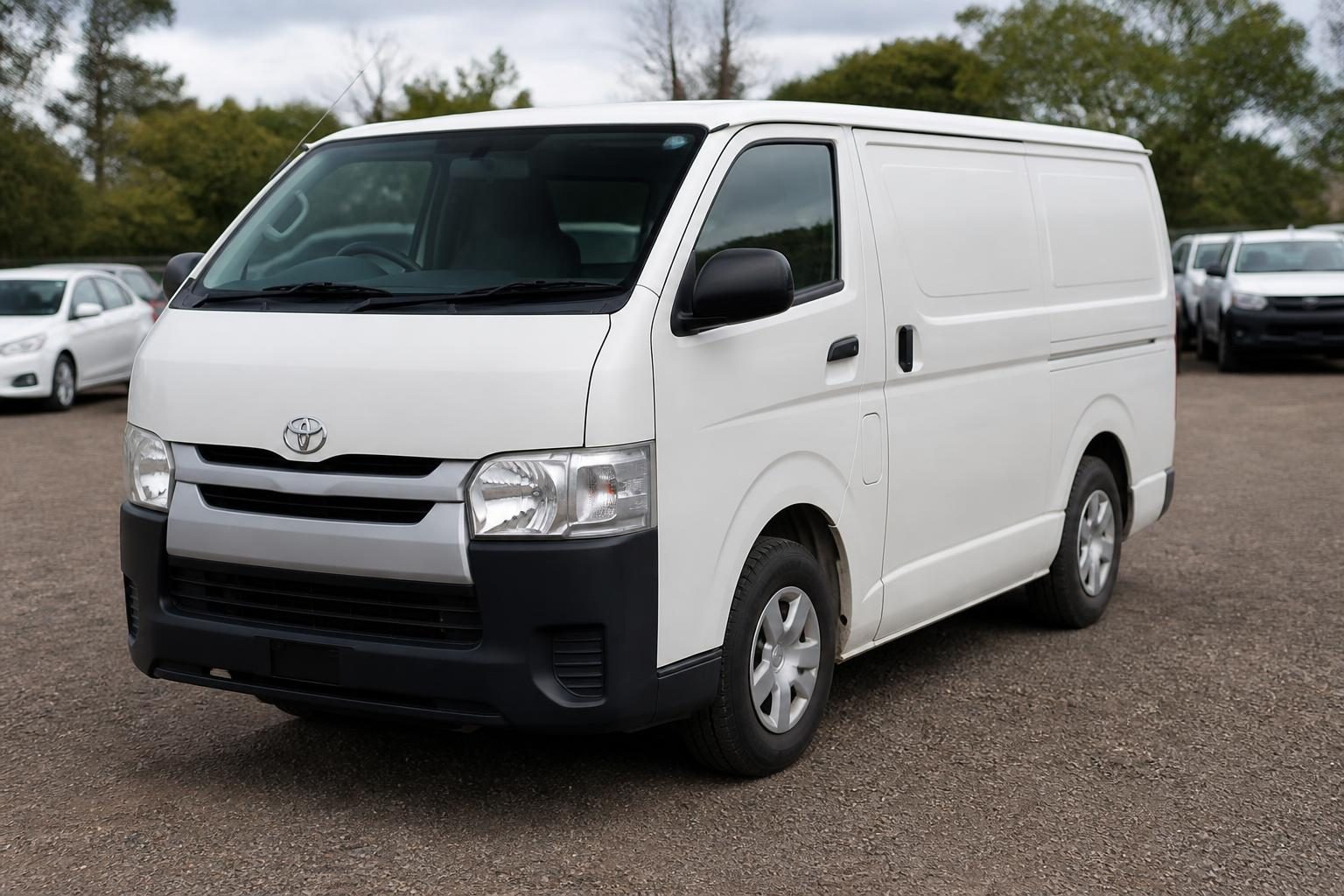 White Toyota HiAce cargo van parked outdoors on a dealership lot.
Most mainstream insurers write standard policies for complied HiAce imports, and specialist brokers can usually accommodate older or grey-import units at agreed value. Sorting the van and the cover together, rather than in a rush after purchase, tends to give you the cleaner outcome.