


Ready to Hit the Road in Style?
Save money and reduce emissions with vehicles designed to deliver exceptional mileage. Visit our inventory and find a car that fits your lifestyle.
Ready to Hit the Road in Style?
Save money and reduce emissions with vehicles designed to deliver exceptional mileage. Visit our inventory and find a car that fits your lifestyle.
SUVs took 61.1% of Australia’s new-car market in January 2026 (FCAI, 2026), so it’s no surprise used buyers keep circling back to the same question: which family SUV actually makes sense once budget, safety and servicing all matter? This guide ranks five smart picks by build-year safety window and budget, then narrows the years, engines and pre-purchase checks that matter most in Australia.
Quick Answer
- SUVs made up 61.1% of new-car sales in January 2026 (FCAI, 2026).
- Want the cheapest family-flex option? Start with the X-Trail.
- Want the easiest under-$20k all-rounder? Pick the CX-5.
- Need occasional extra seats or more cabin room? Look at Outlander or CR-V.
The main trick is avoiding the wrong compromise. Why pay extra for badge appeal if the logbook is patchy? We’d rather buy the safer facelift, the simpler petrol drivetrain and the better-kept car every time. If you’re also weighing non-SUV options, broaden the comparison across used-car buying guides before you commit.
How did we rank the safest used family SUVs in Australia for 2026?
Australia had 22.3 million registered vehicles at 31 January 2025, and average passenger-vehicle age reached 11.3 years (BITRE, 2025). That means the safest used family SUV in Australia for 2026 is rarely the newest badge. It’s usually the model with the safest target years, straightforward servicing and strong market supply.
Used-car supply has loosened too. AADA and AutoGrab say listings hit 1,589,491 in the first half of 2025, while 1,133,990 used cars sold in that same period (AADA / AutoGrab, 2025). Buyers have more choice than they did during the worst shortage years, so patience matters again. That’s good news, isn’t it?
ANCAP’s build-date cut-offs across the X-Trail, CX-5, Outlander and CR-V show why target years matter more than most buyers think. A facelift or later build can bring standard AEB and a stronger safety case, even when the badge and asking price look similar on paper. That’s why this shortlist focuses on specific safety windows, not just model names.
Budget guide note: the table below uses relative shopping bands, not fixed market-price claims. Actual asking prices vary with year, trim, kilometres and condition.
| Model | Budget band* | Years to target | Seats | Engine to prioritise | Best for | Main caution |
|---|---|---|---|---|---|---|
| Nissan X-Trail T32 | Entry-budget family pick | Facelift cars built from Feb 2017 | Varies by variant | Petrol-first shortlist with full history | Cheap family flexibility | CVT history |
| Mazda CX-5 | Under-$20k benchmark | KF-series cars | 5 | Petrol to suit your use | Best all-rounder | No third row |
| Mitsubishi Outlander ZK/ZL | Value 5+2 option | ANCAP-rated ZK/ZL cars | Varies by variant | Simple petrol versions | Occasional extra seats | Third row is tight |
| Toyota C-HR Hybrid | Compact hybrid stretch pick | Later hybrid examples | 5 | Hybrid | Low running costs, city use | Smaller rear seat and boot |
| Honda CR-V RW | Roomy family step-up | RW-series cars within ANCAP coverage | Varies by variant | Petrol, with servicing ahead of spec-chasing | Roomiest family fit | Check servicing carefully |
Reliability still matters just as much as safety and space once you’re shopping older, higher-kilometre SUVs.
1. Why is the Nissan X-Trail T32 the best cheap family-flex pick?
ANCAP says facelift Nissan X-Trails built from February 2017 scored 35.28 out of 37 and gained standard AEB on rated variants (ANCAP, 2017). That makes the T32 the cheapest genuinely family-friendly pick here, provided the petrol engine and CVT have impeccable service history.
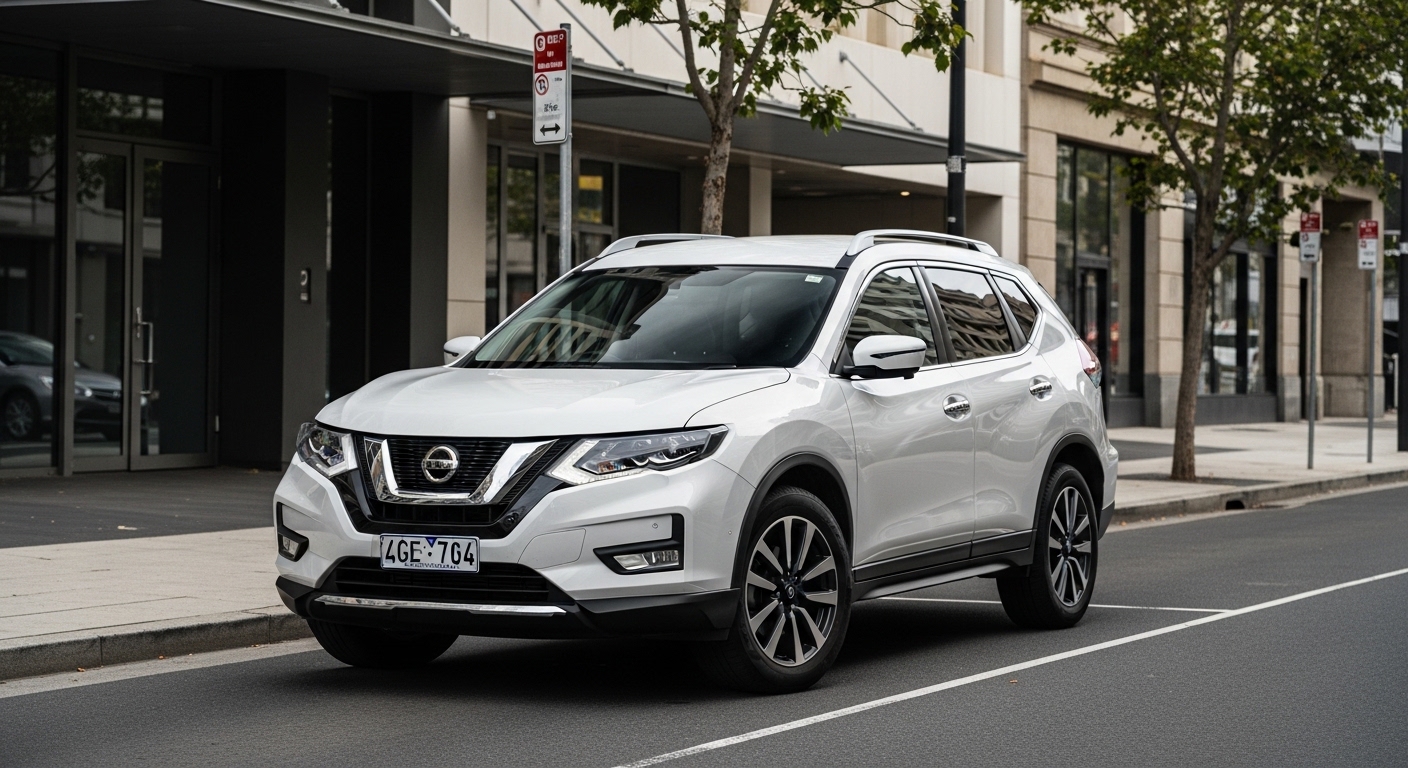 2017 Nissan X-Trail
The Nissan X-Trail still makes a lot of sense for buyers who want space without stretching to newer, pricier rivals. Start with facelift T32s that fall inside ANCAP’s February 2017-on safety coverage, and only keep examples with clear transmission servicing and no gaps in the paperwork. Most buyers choose it for space and family-friendly packaging rather than for cabin polish, and that’s fair enough.
From a used-buyer point of view, the sweet spot is the facelift itself rather than any one badge on the tailgate. The safety case is strongest from Feb 2017 onward, because that’s when ANCAP’s rated facelift coverage begins and standard AEB applies to rated variants (ANCAP, 2017). Want a cheap used family SUV that still feels practical now? This is probably it.
What would we inspect first? CVT behaviour, every time. On the test drive, watch for shuddering under light throttle, delayed Drive or Reverse engagement, flaring revs and any story that sounds vague around servicing. A well-kept X-Trail can be a very sensible buy. A neglected one can get expensive quickly.
2. Why is the Mazda CX-5 the best under-$20k all-rounder?
RACV names the Mazda CX-5 its best used medium SUV under $20,000 in Australia, and ANCAP says the KF rating applies from April 2017 to December 2023 (RACV, 2026; ANCAP, 2017). That’s why it’s the easiest under-$20k all-rounder to recommend.
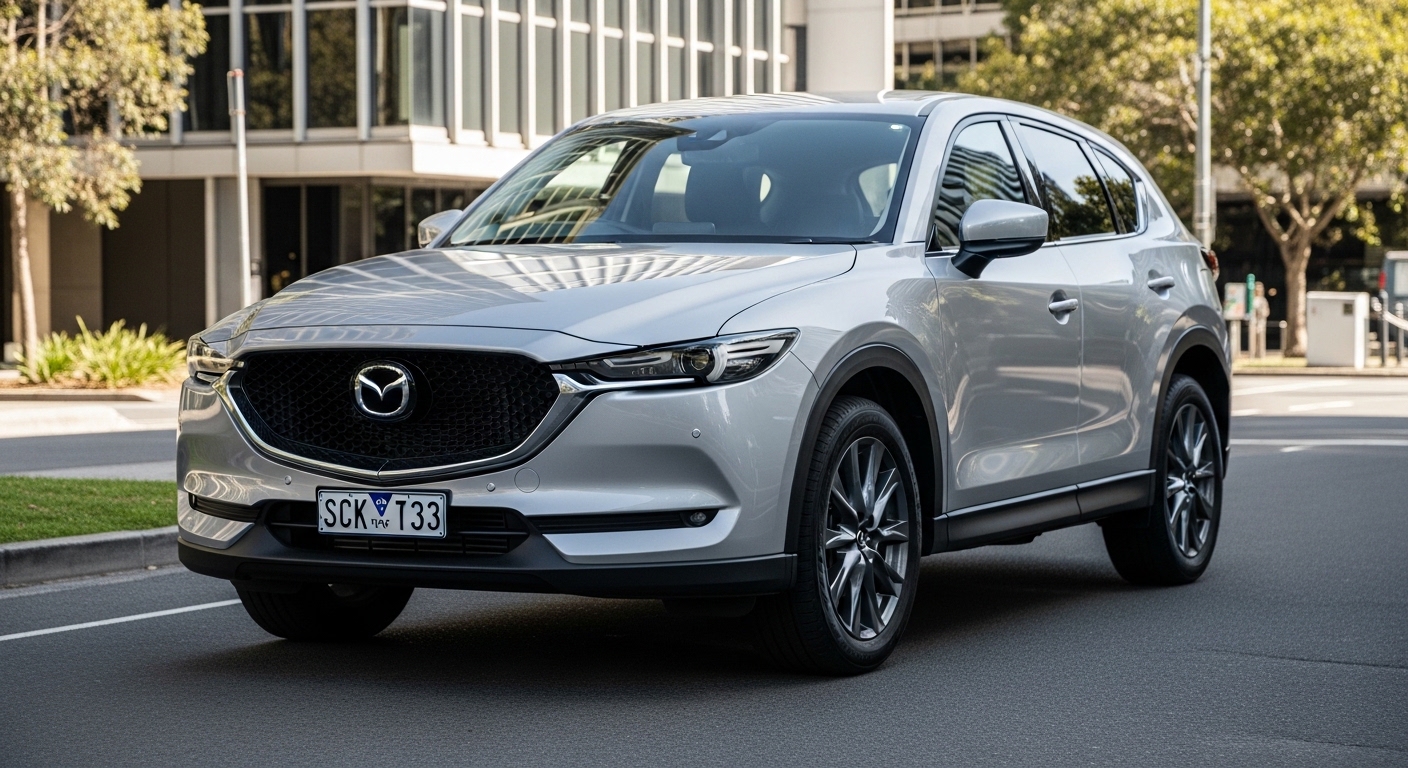 2017 Mazda CX-5
The Mazda CX-5 is the pick here if you want a normal-sized family SUV with no weird learning curve and no seven-seat compromise. Start with KF-series petrol cars that fit your budget and service-history standards. In our view, the 2.5-litre petrol makes more sense if you regularly carry adults, school gear and highway kilometres. The 2.0-litre petrol still works if budget comes first and the car will live mostly in suburbia.
The CX-5’s appeal is simple. It feels well screwed together, rides neatly, and doesn’t ask you to excuse much. ANCAP says its rating applies to all KF variants introduced in April 2017 and built from February 2017, with AEB standard on all variants and broader lane-support coverage on later builds (ANCAP, 2017). That’s a strong ownership story for the money.
A clean CX-5 usually shows its quality in small places: even tyre wear, a tidy cabin, crisp steering feel and servicing that matches the kilometres. Check brake wear, tyres, recall completion and signs of hard family use in the boot and rear seats. If you need a third row, skip it. If you want a calm, easy recommendation, it’s hard to go past.
3. Mitsubishi Outlander ZK/ZL, best budget 5+2 pick
ANCAP’s 35.58 out of 37 score applies to Outlander variants built from April 2015 to October 2022 (ANCAP, 2014). That broad safety coverage, plus the availability of simple petrol versions, makes the Outlander the smartest budget 5+2 compromise in this group.
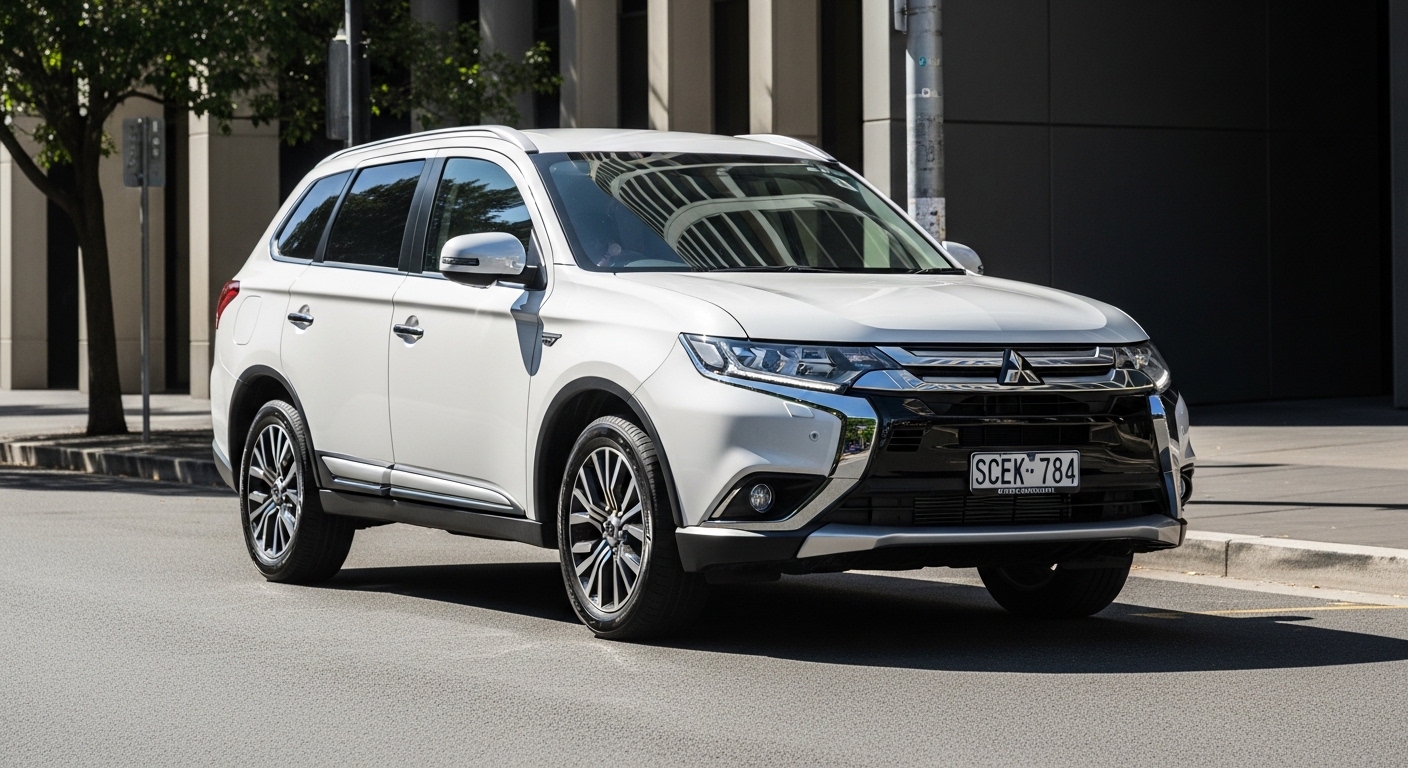 2017 Mitsubishi Outlander
The Mitsubishi Outlander suits growing families who need occasional extra seats but don’t want a huge SUV. Start with tidy petrol cars that have strong service history and honest family-use wear. If simplicity matters most, we’d shortlist naturally aspirated petrol versions first. Do you actually need seven full-time adult seats? If yes, this isn’t the car.
The Outlander works because it’s honest about what it is. You get a practical mid-size SUV, a usable second row, and a third row that’s best treated as a school-run or short-trip backup rather than a daily adult space. The ZK/ZL shape keeps a strong safety story, which helps explain why it remains such a sensible 5+2 used buy (ANCAP, 2014).
The pre-purchase checklist is fairly predictable, which is a good sign. Check CVT behaviour, oil seepage history, rear-seat and third-row wear, boot trim damage and complete service records. A tidy Outlander makes a lot of sense for buyers who need flexibility more than polish. A rough one often shows family wear quickly, so condition matters more than badge or trim.
4. Toyota C-HR Hybrid, best compact hybrid stretch pick
Dealer transactions made up 48.6% of used sales in 2025 and electrified used vehicles kept gaining share, according to AADA (AADA, 2026). That trend suits the Toyota C-HR Hybrid, which is the right stretch pick if you want SUV height with hatch-like fuel bills.
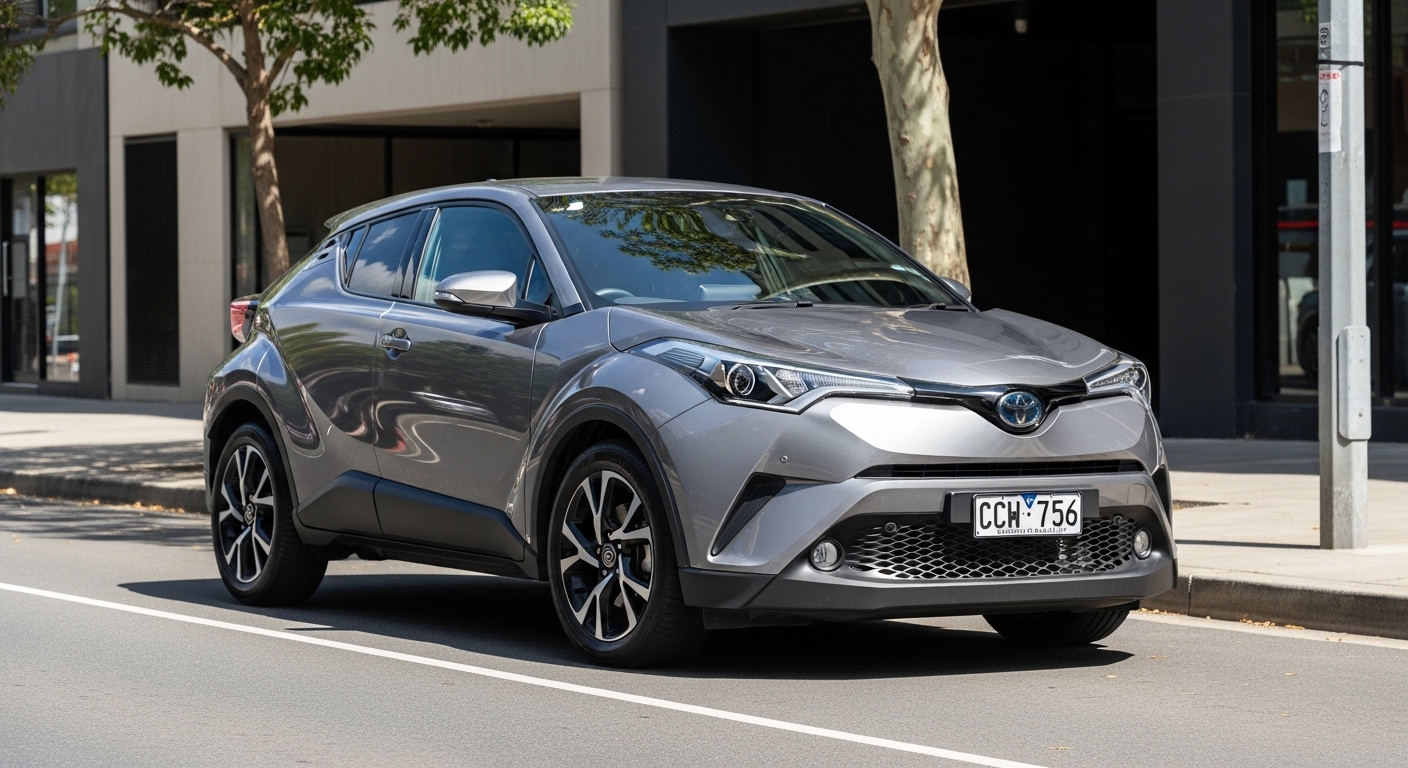 2019 Toyota C-HR
The Toyota C-HR is the odd one out in this list, and that’s exactly why it deserves a spot. It isn’t the roomiest SUV here, but it gives city-first buyers a hybrid drivetrain, easy dimensions and a more modern feel than many budget rivals. If your daily life is commuting, school drop-offs for one child, or weekend errands, it’s a strong option.
Current Carbarn listing data includes a 2019 ZYX10 hybrid with automatic transmission, five seats, and combined fuel use quoted as low as 4.3L/100km (Carbarn listing data, 2026). The same source highlights features like Apple CarPlay, Android Auto, Toyota Safety Sense and 60/40 split rear seating. Those are useful, real-world ownership wins, especially if fuel bills keep annoying you at the servo.
Here’s the trade-off most buyers need to hear: the C-HR is a better fit for couples, commuters and small households than for big family duty. Rear seat space and boot flexibility simply aren’t as generous as CX-5, Outlander or CR-V. But if you don’t need bulky-pram practicality every day, why pay for size you won’t use?
5. Why is the Honda CR-V RW the roomiest family pick?
The Honda CR-V scored 35.76 out of 37 in ANCAP testing, with the rating applying to July 2017 to August 2023 cars (ANCAP, 2017). That makes the RW-shape CR-V the most complete family buy here if cabin space, rear-seat access and day-to-day ease matter more than shaving every last dollar off the purchase.
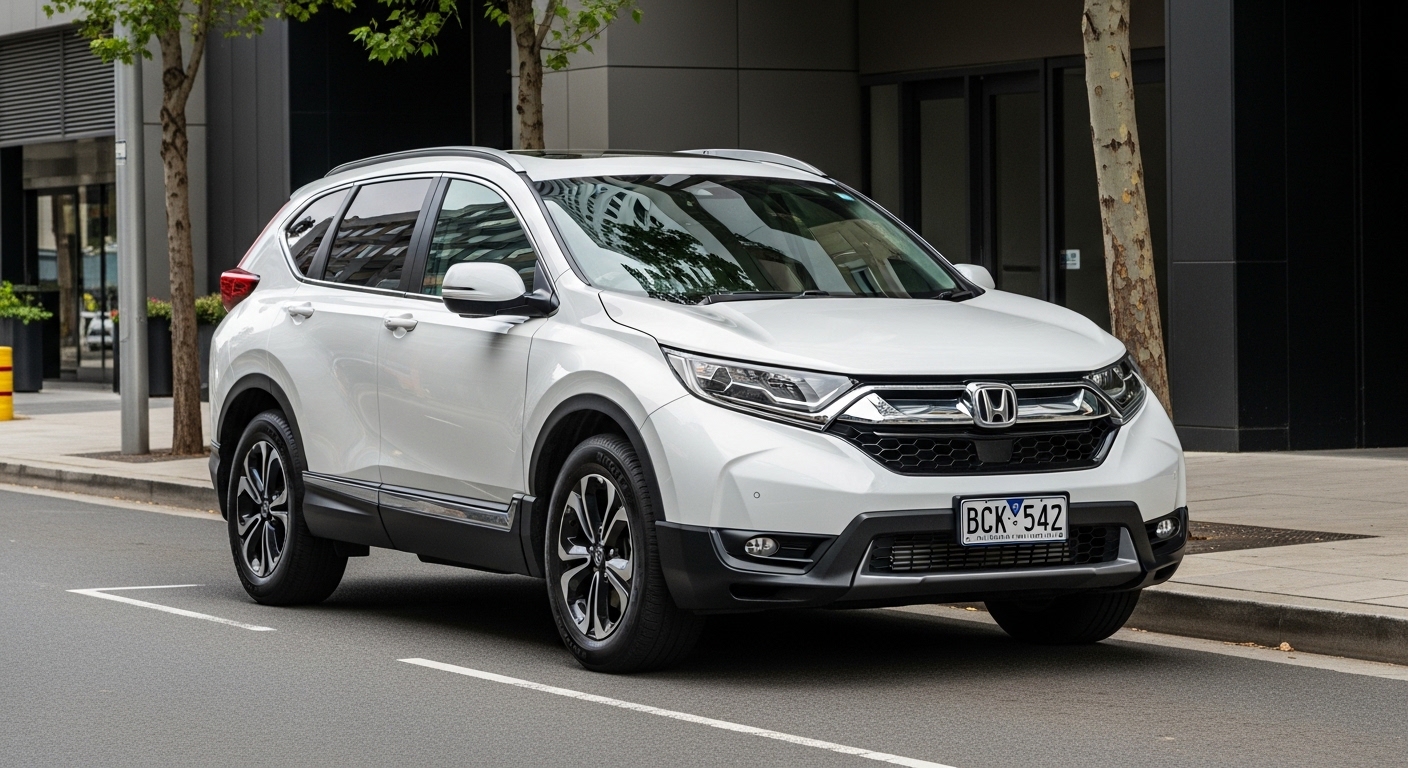 2018 Honda CR-V
The Honda CR-V is the pick for families who care most about rear-seat room, easy access and a relaxed day-to-day drive. Start with well-kept RW-series cars that fall within ANCAP’s July 2017 to August 2023 coverage window, and put service history ahead of chasing one exact engine or badge on paper. If you’ve ever wrestled a child seat in a tight SUV, you’ll understand the appeal straight away.
The CR-V’s cabin packaging is its main strength. It feels airy, practical and easy to live with, and ANCAP’s score backs up the family case well (ANCAP, 2017). Few used SUVs feel this complete unless you specifically need stronger AWD confidence or more rugged-road ability.
Before buying, inspect servicing carefully and pay attention to oil-dilution concerns on turbo cars, tyre condition, cold-start behaviour and the exact safety-tech specification fitted to that variant. A well-kept CR-V is probably the best fit here for a family that wants room without stepping into a much larger SUV.
Which used family SUV is safest for your budget?
ANCAP’s build-date cut-offs are a big reason budget and build year need to travel together. Across this shortlist, the smarter buy is usually the SUV that lands in the right safety window and has the clearest service history, not simply the one with the flashiest badge.
If you’re shopping at the lower end of this shortlist, start with the X-Trail if space matters most, then the CX-5 if you want the cleaner all-round recommendation. Move up a step and the Outlander becomes the best answer for buyers who need occasional extra seats. Stretch further, and the C-HR Hybrid starts to suit city-first buyers who want lower fuel use, while the CR-V is the roomy family option if cabin space is the priority.
In our experience, most buyers get clearer faster when they choose by lifestyle instead of rank. Need the best five-seat all-rounder? CX-5. Need the cheapest family-flex option? X-Trail. Need occasional extra seats? Outlander. Want a compact hybrid? C-HR. Want the roomiest family fit? CR-V. Simple, right?
If you want to compare these SUVs with other practical used-car picks, widen the shortlist before choosing on badge alone.
National used-car sales totalled 2.32 million in 2025, and dealers handled 48.6% of them (AADA, 2026). That tells you two things. First, there’s enough supply to be picky. Second, it’s worth deciding early whether you want something locally available or whether you want to widen the search for a Japan-sourced spec.
Start with the broad stock hub if you want to compare locally available vehicles with visible pricing: used car stock. If you want SUV-style stock specifically, use 4WD and SUV listings. If you want to understand the import path first, use the import enquiry hub and the how importing works guide.
If you want one place to compare both paths, Carbarn can help with locally available stock, SUV and 4WD browsing, finance support, warranty options, nationwide delivery, Japan sourcing, pre-bid inspection where possible, auction bidding, import approval, compliance, registration-ready support and Sydney-based workshop handling from Lidcombe.