



.png&w=3840&q=75)
Ready to Hit the Road in Style?
Save money and reduce emissions with vehicles designed to deliver exceptional mileage. Visit our inventory and find a car that fits your lifestyle.
Ready to Hit the Road in Style?
Save money and reduce emissions with vehicles designed to deliver exceptional mileage. Visit our inventory and find a car that fits your lifestyle.
Buying a family motorhome isn’t about chasing the biggest body or the fanciest interior; it’s about choosing a layout that keeps your trip calm. The right motorhome gives you beds that don’t require a nightly rebuild, enough legal seating with proper seatbelts, storage that actually fits family life (pram, bags, food, toys), and a kitchen/bathroom setup that makes stops quicker.
In this Carbarn blog, we’ll break down the family-friendly motorhome types in Australia, the layouts that work best for 2–5 people, and a practical used-motorhome checklist to help you avoid the common traps. Then we’ll finish with real motorhomes you can compare right now through Carbarn, so you can match your family size, trip style, and comfort priorities to an option that makes sense in the real world.
What Makes a Motorhome Family-Friendly?
A proper family motorhome isn’t about bragging rights. It’s about whether it still works when you’re tired, it’s late, and the kids have gone from “fine” to “feral” in the space of a red light.
Seatbelts come first. If a seat isn’t a designated travel position with a proper belt, it doesn’t count, no matter how plush the lounge looks in the listing photos. This is the classic trap: a motorhome looks perfect online, you picture road trips straight away… then you realise only two people can legally travel with any comfort. For families, that’s a deal-breaker before you even get to the kitchen.
Next is the part many buyers don’t think about until they’re already committed: child restraints. Rules vary by state, but the logic doesn’t change: kids must be correctly restrained in approved restraints. That means you’re not just shopping for beds and bench seats; you’re shopping for seatbelt geometry and anchor points that actually suit your child seats. If it doesn’t work with your restraints, it’s not a family motorhome; it’s a weekend van with a nice interior.
Then there’s the daily reality: sleeping setup. The best family layouts are the ones that don’t turn every night into furniture Tetris. That’s why the classic over-cab bed plus a dinette conversion is still the go-to: it creates real sleeping capacity (often four or more) without needing a massive body, and it lets you get bedtime sorted quickly, which matters more than you think after a long drive.
Finally, don’t underestimate the boring stuff: storage, wet area, and kitchen flow. Families carry more than people, prams, bags, snacks, wet towels, bikes, and a good layout gives that gear a home without turning the aisle into an obstacle course. Add a usable kitchen and ideally a wet bath, and suddenly the trip becomes easier: fewer emergency stops, faster resets, and less stress when you’re living inside the thing for days at a time.
That’s the checklist. Nail those four elements, and you’re not just buying a motorhome you’re buying a family routine on wheels.
Best Motorhome Types for Families in Australia
Most family buyers end up circling the same three motorhome “types” not because people lack imagination, but because these categories solve the same real problems: parking stress, sleeping logistics, and space on bad-weather days.
Compact motorhomes (HiAce/Camroad-style)
This is the sensible starting point for a lot of families. The big win is drivability: they’re easier to park, less intimidating in city traffic, and they feel familiar if you’ve only ever driven normal cars and vans. For small families doing weekend escapes or school-holiday loops, compact rigs often hit the sweet spot — you get touring comfort without the full “big rig” learning curve.
What you trade is space. These builds usually rely on multi-use zones (dinette becomes bed, seats become sleeping), plus clever storage rather than a huge open living area. If your family is happy with a flexible setup and you value stress-free driving, a compact makes a lot of sense.
Best for: first-time motorhome owners, 2 adults + 1–2 kids, shorter trips, city-friendly touring.
Cab-over / Class C motorhomes (the family layout classic)
If there’s a universal family motorhome formula, this is it: over-cab (luton) bed + dinette conversion. The over-cab bed is the cheat code because it gives you a permanent sleeping zone that doesn’t wipe out your living area every night. That one detail makes evenings calmer, you can feed the kids, get them into bed, and still have a usable cabin without rebuilding half the furniture.
This is why so many family guides and experienced buyers recommend cab-over layouts: they’re designed around real sleeping capacity, not just “looks good on a listing.”
Best for: families who want 4+ sleeping spaces, quicker bedtimes, and a layout that works every night.
Truck-based motorhomes (Isuzu ELF-style)
This is where families go when compact starts feeling cramped — especially for longer touring. Built on light commercial truck platforms, ELF-style motorhomes tend to offer more internal width, more storage, and more ‘liveability’ when you’re stuck inside due to rain, heat, or early kid bedtimes.
The trade-off is the driving experience. It’s closer to driving a small truck than a van, and you’ll notice it around town. But many families happily accept that when the reward is space, stability, and value — particularly if you travel with more gear.
Best for: longer trips, bigger families, gear-heavy touring, and buyers prioritising interior volume.
Top 5 Family Motorhomes in Australia 2026
If you’re searching for the best motorhomes in Australia for families, don’t start with “biggest” or “newest.” Start with the things that actually decide whether family travel feels easy or exhausting: sleeping setup, seatbelts, storage, and how fast you can pack up and move when the kids are tired.
This guide breaks down five family-proven motorhome options and explains why each layout works, with practical details, not fluff.
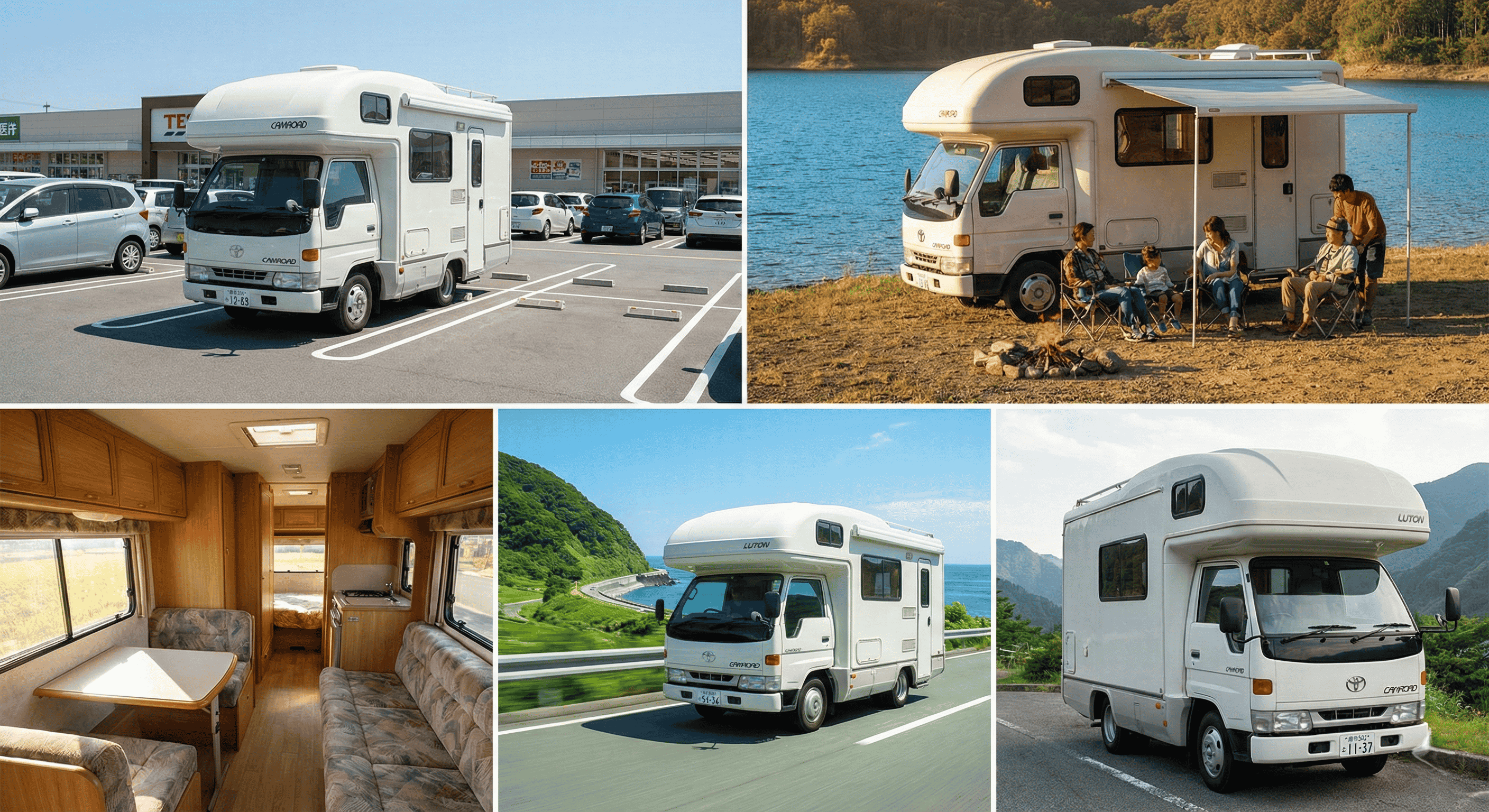
Toyota Camroad Motorhome (1999): The Family Sweet Spot
The Toyota Camroad (Camper + Road) is one of the most “family-correct” motorhomes you can buy in Australia when you want a real touring setup without stepping into full-size motorhome stress. It’s a purpose-built motorhome chassis, which matters because the layout and weight balance are designed for this job, not guessed.
The big reason the Camroad works is simple: it offers proper sleeping capacity, an onboard wet bath, and a touring-grade kitchen while still staying compact enough to feel manageable around town. Many examples sit around the 5-metre mark, which helps with parking compared to larger rigs.
Why families like it (real-life benefits):
Permanent over-cab double bed means at least one bed is always ready (great for kids’ early bedtimes).
Dinette converts into a second double bed, giving you a true “family sleep plan.”
Wet bath onboard (shower + cassette toilet) the difference between “easy trip” and “constant toilet stops.”
Engine & driving feel:
Most Camroad-era builds run Toyota’s 3L (2.8L) or 5L (3.0L) naturally aspirated diesel engines. They’re not fast, but they’re famously durable and simple. On the road, it feels more like a light truck/heavy-duty pickup than a car — stable, honest, and built for touring.
Interior layout & touring practicality:
Sleeping: over-cab double + dinette-to-double
Kitchen: mid-coach galley with 2-burner gas stove, sink, 3-way fridge
Bathroom: compact wet bath (shower + cassette toilet)
Storage: wardrobe + overhead cabinetry
Trim vibe: classic 90s velour upholstery and timber-look cabinetry (tough, not fancy)
Toyota HiAce Motorhome Conversion 1996: Compact & Low-Stress
For families who want the easiest entry into motorhome travel, a HiAce conversion is hard to beat. The main advantage is psychological and practical: it drives like a normal van, so you don’t get “big rig anxiety.” That matters if you’re doing school runs, quick weekend escapes, or you’re new to touring.
This is also a strong option if your family travel style is simple: short trips, flexible sleeping, and using caravan park facilities for showers and toilets.
Why this layout works (especially for first-timers):
Van-sized footprint makes parking and city driving easy.
High-roof/pop-top profile avoids low-bridge stress and stays agile in urban areas.
Simple interior is fast to clean and fast to set up.
Engine & mechanicals:
Common engines include Toyota’s 3L (2.8L diesel) or the sought-after 1KZ-TE (3.0L turbo-diesel). These are popular because parts are widely available and ownership is generally straightforward. Many builds exist in 2WD, and some variants are 4WD depending on base.
Interior setup (minimalist but smart):
Sleeping: “rock-and-roll” rear seat → folds flat into a bed
Cooking: side galley with sink + portable butane stove or single-burner setup
Fridge: usually a 12V chest fridge
Bathroom: none onboard (portable options or park facilities)
Materials: practical flooring and wipe-down surfaces (made for real use)
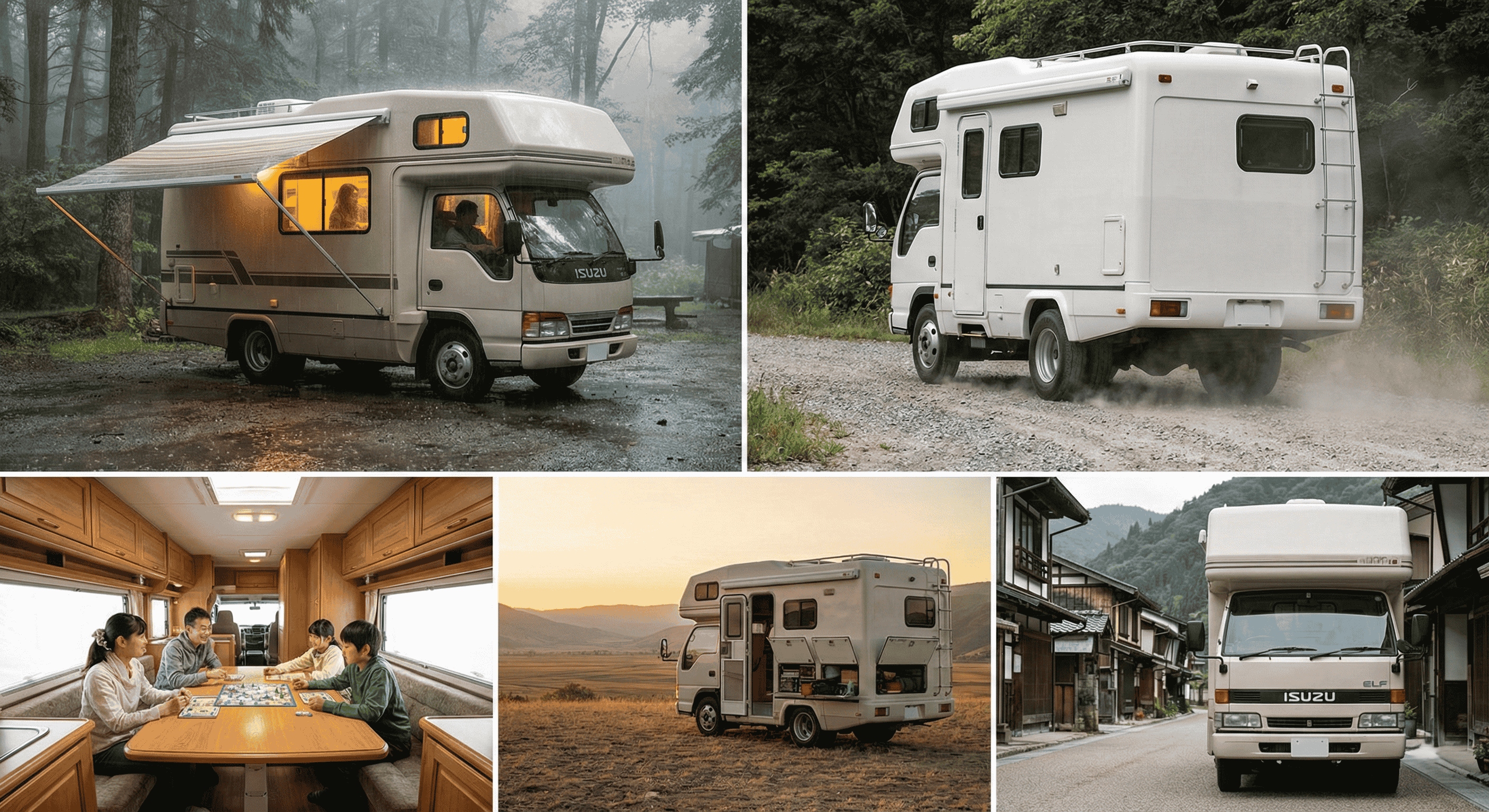
Isuzu ELF Motorhome 1994: Spacious & Robust
When families outgrow a HiAce (and sometimes even a Camroad), they move to an ELF-based motorhome because space becomes the priority. The Isuzu ELF platform is a light commercial truck base, which typically means more internal width, better load stability, and a bigger living zone — especially useful when weather forces everyone inside.
A huge advantage for family touring is that bigger coaches often allow separation: one parent can manage bedtime while the other sets up dinner without stepping on each other.
Why families choose the ELF step-up:
Bigger interior width makes day-to-day living easier (less bumping, more room to move).
Dual rear wheels (duallies) improve stability and weight distribution at highway speeds.
More external storage for gear-heavy family travel.
Engine & driving feel:
Typically powered by the 4JG2 (3.1L diesel), a torquey, commercial-grade engine. It’s not “smooth like a new SUV,” but it’s built to work, carry weight, and keep going.
Interior & touring layout benefits:
Sleeping: large over-cab bed + rear lounge converts into a big sleeping area
Living: dedicated dining zone that doesn’t kill the cooking workflow
Bathroom: full wet bath
Water storage: generally larger fresh/grey tanks than van builds
Storage: deep overhead lockers and external compartments
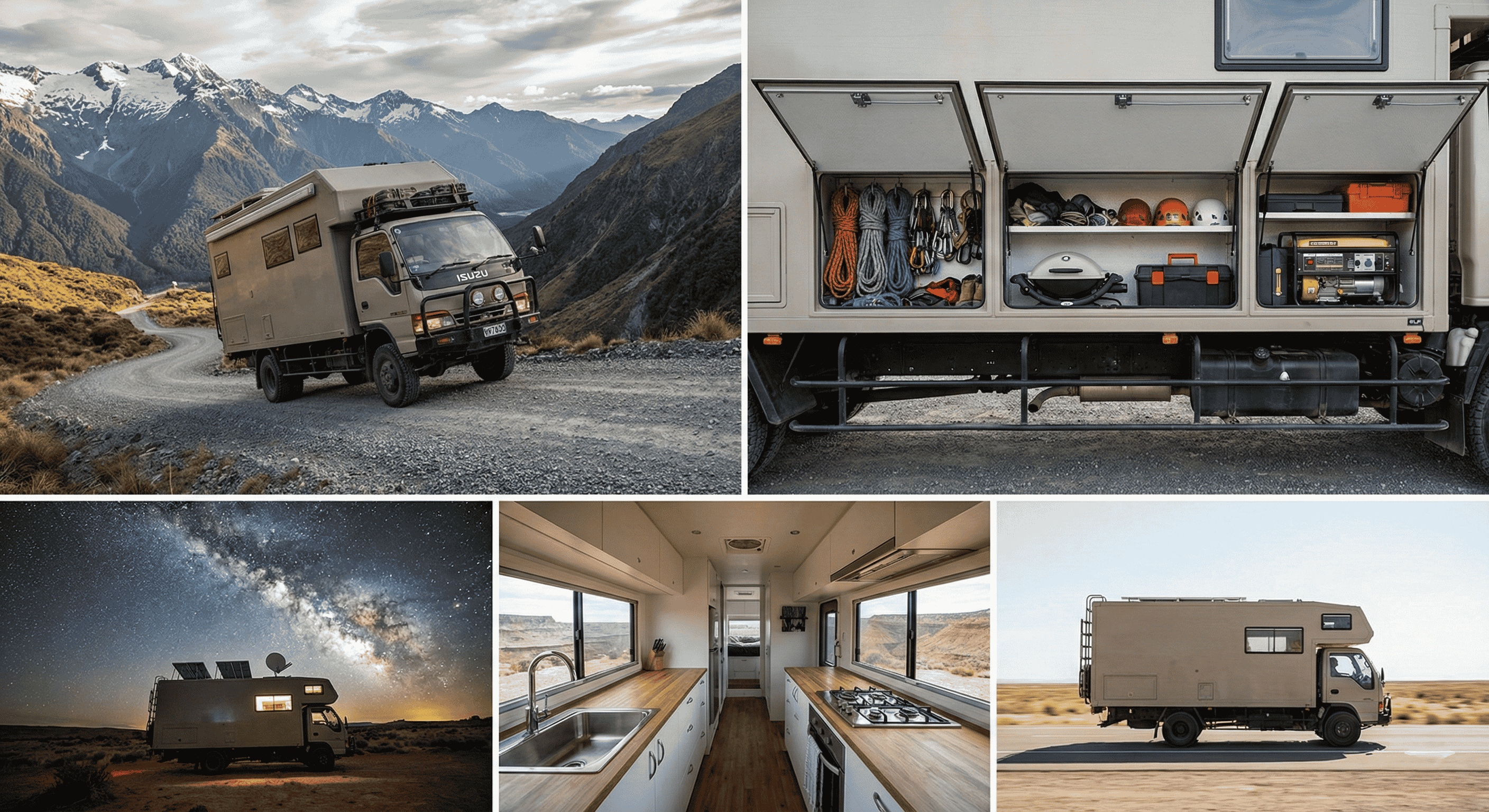
Isuzu ELF Diesel Motorhome 1997: The Heavy-Duty Hauler
If your touring style is “multi-week interstate,” this is the kind of motorhome that makes sense. The Isuzu 1997 ELF diesel motorhome is built around the idea that families bring weight: bikes, extra water, extra food, sometimes extra people, and they still want to cruise without the vehicle feeling strained.
This is also where value comes in: older truck-based motorhomes can offer huge interior volume for the money compared to modern turnkey builds.
Why it’s a strong value touring platform:
Heavier-duty chassis handles payload better.
Large storage lockers support long touring (and family gear).
More internal volume than compact van builds.
Engine & mechanicals:
Upgrades to the 4HF1 (4.3L diesel), known for strong low-end torque. The advantage is how it behaves when loaded: hills, highways, and longer distances feel less stressful.
Interior: built for longer living
Kitchen: longer galley with more prep space (a big win for families)
Bathroom: full-sized wet bath
Storage: bigger wardrobe + often “basement” style external lockers
Touring upgrades: Many older rigs have had solar/power systems retrofitted over time
Comfort: upgraded cab seating is common on higher-spec conversions
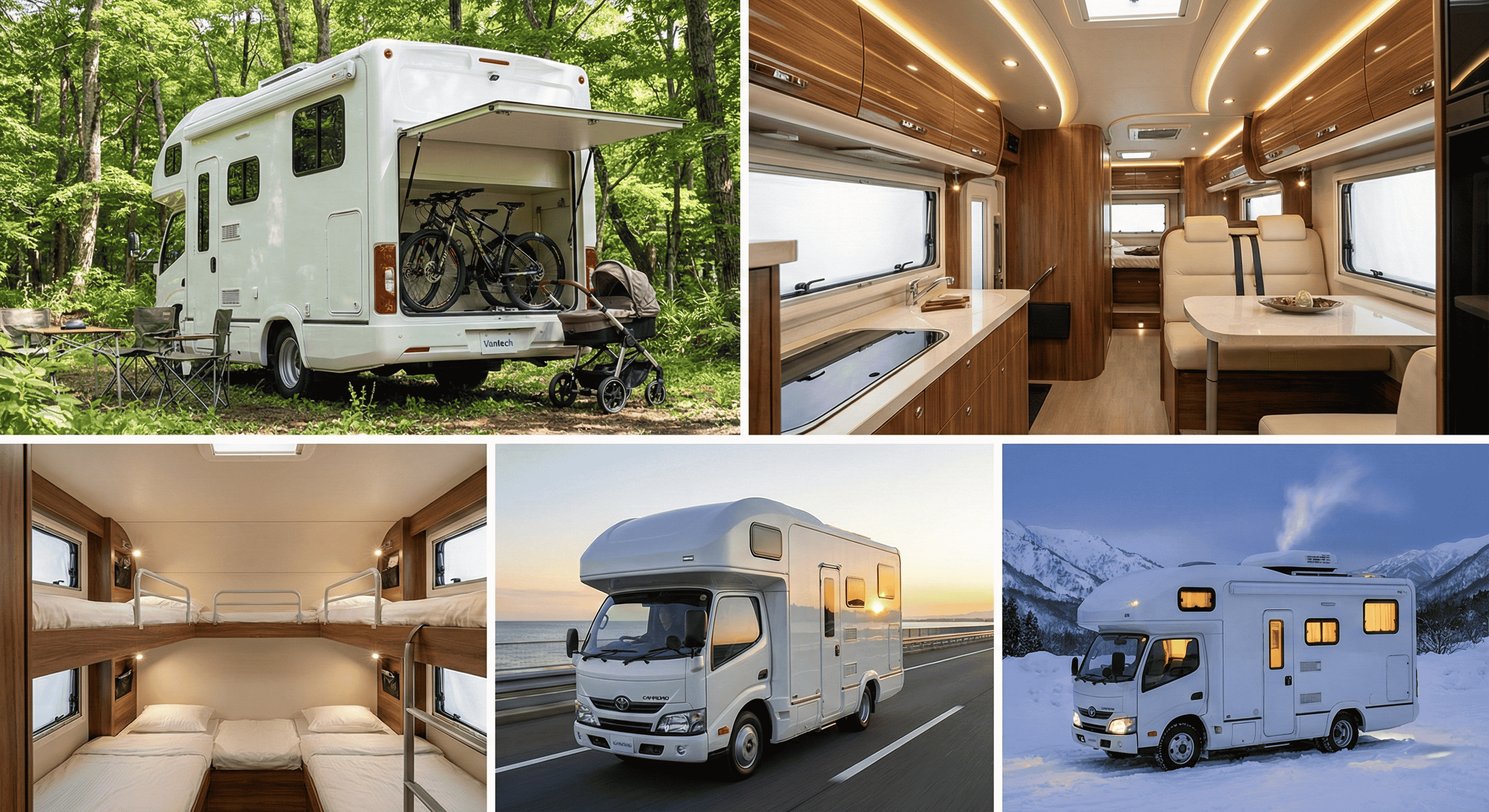
Toyota Camroad Vantech Corde Bunks: The Ultimate Benchmark
Class: Standard Class C (benchmark family layout)
This is the modern layout because it fixes the number one family problem: nobody has to make a bed every night. The Corde Bunks layout is built around permanent sleeping zones and smart cargo storage which makes it perfect for families with multiple kids.
Even if you don’t buy this exact model, it’s a great benchmark because it shows what an “ideal” family layout looks like. You can then compare older options against the same priorities.
Why is this the gold standard layout?
Permanent rear bunks = kids have their own beds, always ready
Lower bunk flips up to create a massive rear garage (bikes/pram/gear)
Permanent over-cab double for adults — no nightly conversion
Mechanical advantage (late-model benchmark):
Typically built with modern Toyota turbo-diesel engines like 1KD-FTV (3.0L) or 1GD, plus smoother automatics and more refined highway performance.
Interior: modern family touring comfort
Finishes: LED lighting, premium cabinetry, stain-resistant upholstery
Bathroom: fully enclosed wet bath with ceramic cassette toilet
Off-grid tech (often): lithium batteries, 12V compressor fridge, advanced power systems
Storage: genuine garage-style cargo space under bunks
Why Families Buy Motorhomes Through Carbarn
Buying a motorhome is different from buying a normal car; here, condition, layout, and usability matter as much as the drivetrain. Families need clarity: where the kids sleep, how storage works, whether the seatbelts and restraint setup suit their children, and whether the vehicle’s systems (gas/electrical) have the right evidence behind them.
At Carbarn, the goal is simple: help families compare motorhomes clearly, understand what matters for real travel, and choose a setup that fits their trip style (not just what looks good in photos). If you’re planning your next family road trip, you can view and compare available motorhomes, ask the questions that actually matter (sleeping setup, storage, overall condition), and decide with confidence.
In Summary
The best motorhomes in Australia for families aren’t defined by price or size; they’re defined by how smoothly your day runs once you’re actually travelling. If the kids can sleep without you rebuilding the cabin every night, if everyone has proper seating while driving, and if your storage and bathroom setup prevents chaos, you’ve basically won the family motorhome game.
Start with the layout first: over-cab beds and dinette conversions are popular because they create real sleeping capacity without turning the vehicle into a parking nightmare. Then get serious about the “grown-up” checks: child restraint practicality, seatbelts in designated seating positions, and the compliance evidence trail for conversions and onboard systems.
If you want to skip the guesswork, compare real vehicles side-by-side. Carbarn currently has family-suitable options across compact (Camroad/HiAce-style) and bigger touring platforms (Isuzu ELF), so you can choose the setup that matches your family size and trip style, not just a pretty interior photo.