



Ready to Hit the Road in Style?
Save money and reduce emissions with vehicles designed to deliver exceptional mileage. Visit our inventory and find a car that fits your lifestyle.
Ready to Hit the Road in Style?
Save money and reduce emissions with vehicles designed to deliver exceptional mileage. Visit our inventory and find a car that fits your lifestyle.
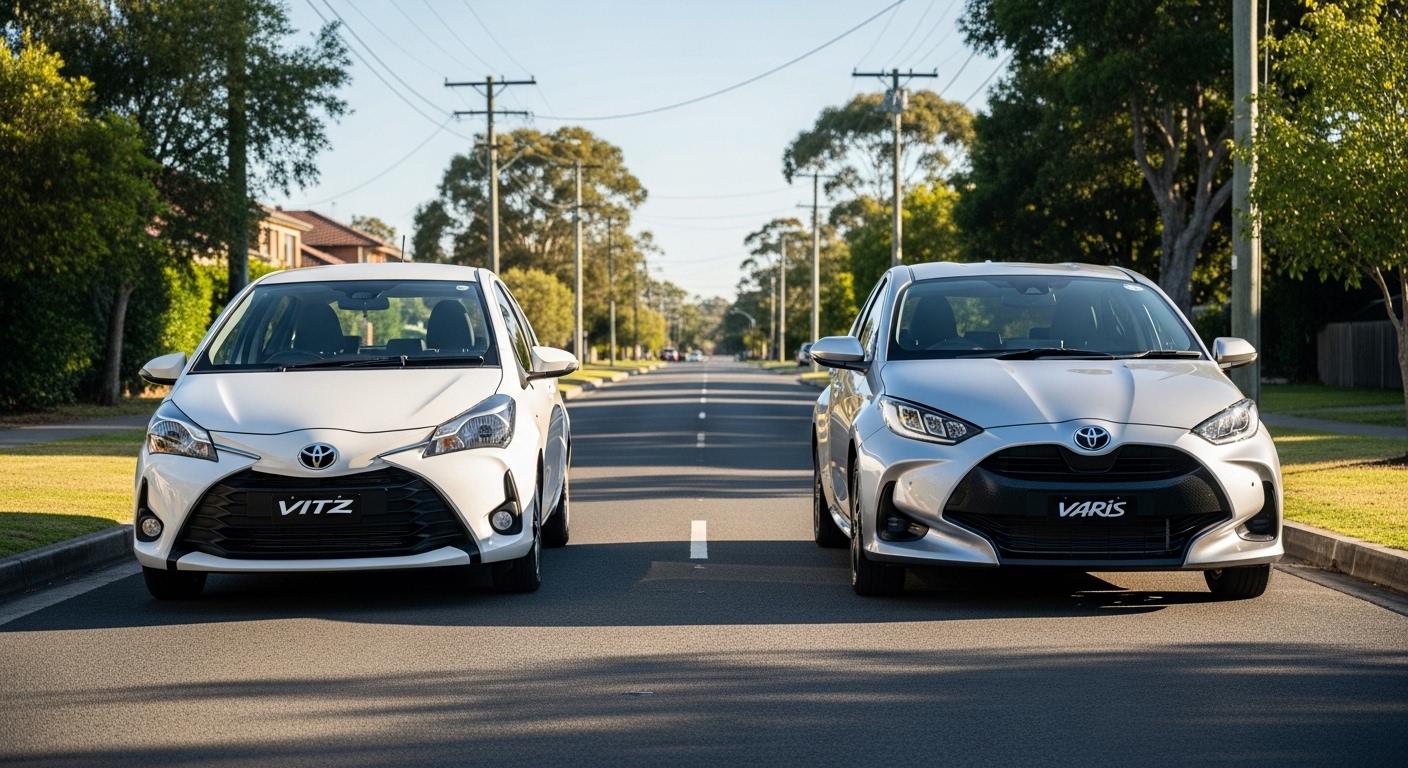
You've been scrolling used-car listings and keep bumping into two names that look almost identical: the Toyota Vitz Hybrid and the Toyota Yaris. They're roughly the same size, both wear a Toyota badge, and both promise cheap running. So which one actually suits Australian driving, and are they even the same car underneath?
They aren't. That's the short version. The Vitz Hybrid you see advertised is usually a Japan-market NHP130 with a proper petrol-electric hybrid system. Most Australian-delivered Yaris hatches of the same era are conventional petrol cars. This guide walks through the real differences in fuel economy, engines, safety, practicality, reliability and ownership costs, so you can pick the right fit rather than the right badge.
Key Takeaways
- The Toyota Vitz NHP130 Hybrid uses a 1NZ-FXE Atkinson-cycle engine with an electric motor for a 73 kW combined system output (Toyota Global Newsroom, 2017). The Australian Yaris NCP131R uses the separate 1NZ-FE petrol engine.
- On the lab cycle, the Vitz Hybrid rates 34.4 km/L (2.9 L/100km) on Japan's JC08 test; the Australian Yaris auto rates 6.3 L/100km on ADR 81/02. The two cycles are not directly comparable.
- Hybrids hit a record share of the Australian market in 2025, with 199,133 hybrid vehicles sold — a 16.5% share of new light-vehicle sales for the full year (AfMA/FCAI, 2026).
- The Vitz Hybrid is the stronger pick for fuel savings and city commuting; the petrol Yaris is simpler and easy to service anywhere.
- Always confirm the exact grade, safety equipment and hybrid battery health on the individual car before you buy.
Toyota Vitz Hybrid vs Yaris: The Quick Verdict
If you drive mostly in traffic and want the lowest fuel bills, the Vitz NHP130 Hybrid makes a lot of sense. Its petrol-electric system shines in stop-start Sydney conditions and sips fuel around town. If you'd rather keep ownership simple, with no hybrid battery to think about and servicing available at any suburban workshop, the Australian-delivered Yaris petrol is the safer, lower-fuss option.
Neither is universally better. The Vitz trades a little upfront simplicity for lower running costs. The Yaris trades some economy for peace of mind and easy parts. Both are compact, reliable Toyotas that suit first-car buyers and commuters. Your driving pattern decides the winner.
What's the Main Difference Between the Toyota Vitz Hybrid and the Australian Toyota Yaris?
The main difference is the powertrain. The Vitz NHP130 Hybrid is a petrol-electric hybrid producing a 73 kW combined system output from a 54 kW engine and a 45 kW motor (Toyota Global Newsroom, 2017). The Australian Yaris NCP131R is a conventional petrol car with an 80 kW 1NZ-FE engine and no electric assistance.
That single difference shapes everything else: fuel economy, how the car drives in traffic, servicing needs, and long-term battery considerations. It's also where the old comparison articles get it wrong. The two cars share a badge and a body family, but they do not share the same engine, and their parts are not automatically interchangeable. Confirm the specifics on any individual car.
Below is a snapshot of both before we get into detail.
The Toyota Vitz NHP130 Hybrid
The Toyota Vitz NHP130 Hybrid is the Japan-market hybrid version of the compact car we know as the Yaris, sold overseas between roughly 2017 and 2020 and previously eligible for Australian import under the SEVS environmental pathway. Note: the SEVS entry for the NHP130 expired in August 2025 — check current import pathways with a licensed compliance specialist before proceeding. It's a five-door hatch built around Toyota's second-generation hybrid system, designed for maximum efficiency rather than outright speed.
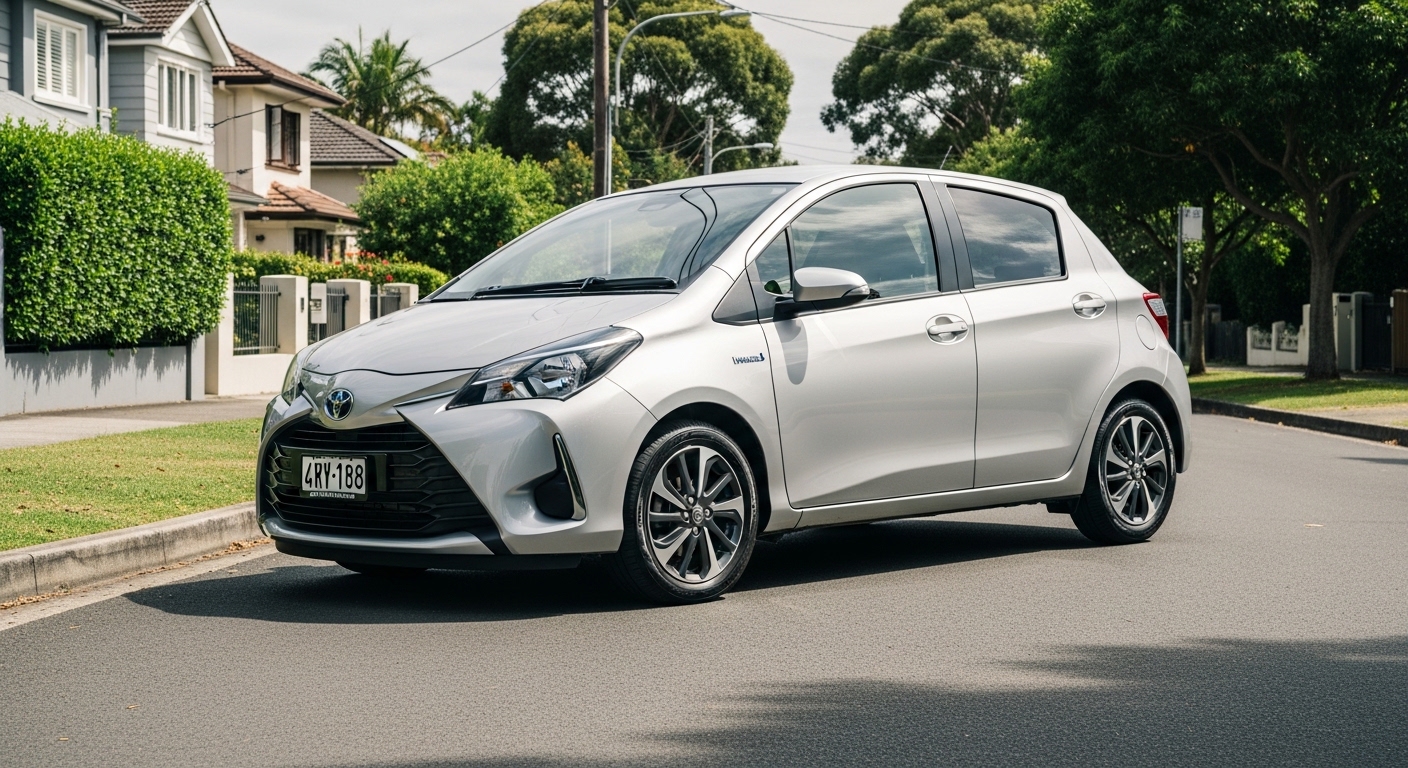 The Toyota Vitz NHP130 Hybrid, a Japan-market compact built around Toyota's THS II hybrid system.
Under the bonnet sits the 1NZ-FXE, a 1.5-litre Atkinson-cycle petrol engine making 54 kW and 111 Nm, paired with an electric motor rated at 45 kW and 169 Nm. The system combines for 73 kW (100 PS) and drives through an e-CVT, a planetary hybrid transaxle rather than a conventional gearbox (Toyota Global Newsroom, 2017). The drive battery is a nickel-metal hydride unit mounted under the rear seat.
The Australian Toyota Yaris (NCP131R)
The Australian-delivered Toyota Yaris most buyers cross-shop against the Vitz is the NCP131R, sold here from 2011 to 2019 as a petrol-only hatch. It's the version that dominated the local used market for a decade, and it remains a common, sensible first car.
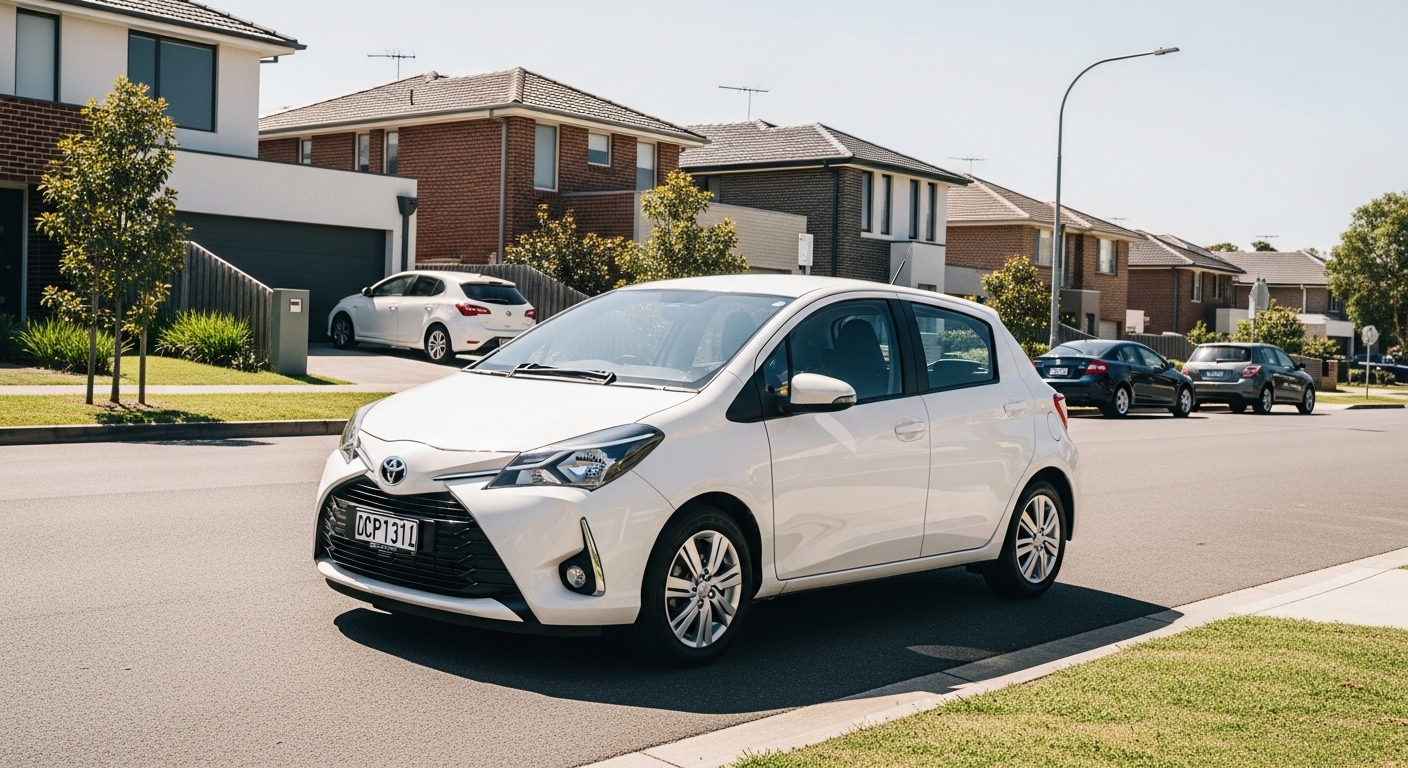 The Australian-delivered Toyota Yaris NCP131R, a conventional petrol hatchback sold here from 2011 to 2019.
Its engine is the 1NZ-FE, a 1.5-litre DOHC petrol unit with 80 kW and 141 Nm, running the conventional Otto cycle (Carsales, 2019). Local cars came with either a five-speed manual or a four-speed automatic. There's no hybrid hardware, so nothing to charge and no traction battery to service. It's mechanically simple and easy to work on.
How Do the Engine and Hybrid System Compare?
The engines look identical but aren't. The Vitz uses the 1NZ-FXE (Atkinson cycle, 54 kW); the Australian Yaris uses the 1NZ-FE (Otto cycle, 80 kW) (Toyota Global Newsroom, 2017). Both belong to Toyota's NZ engine family and share architecture, which is exactly why older comparisons mistakenly call them the same engine. They aren't.
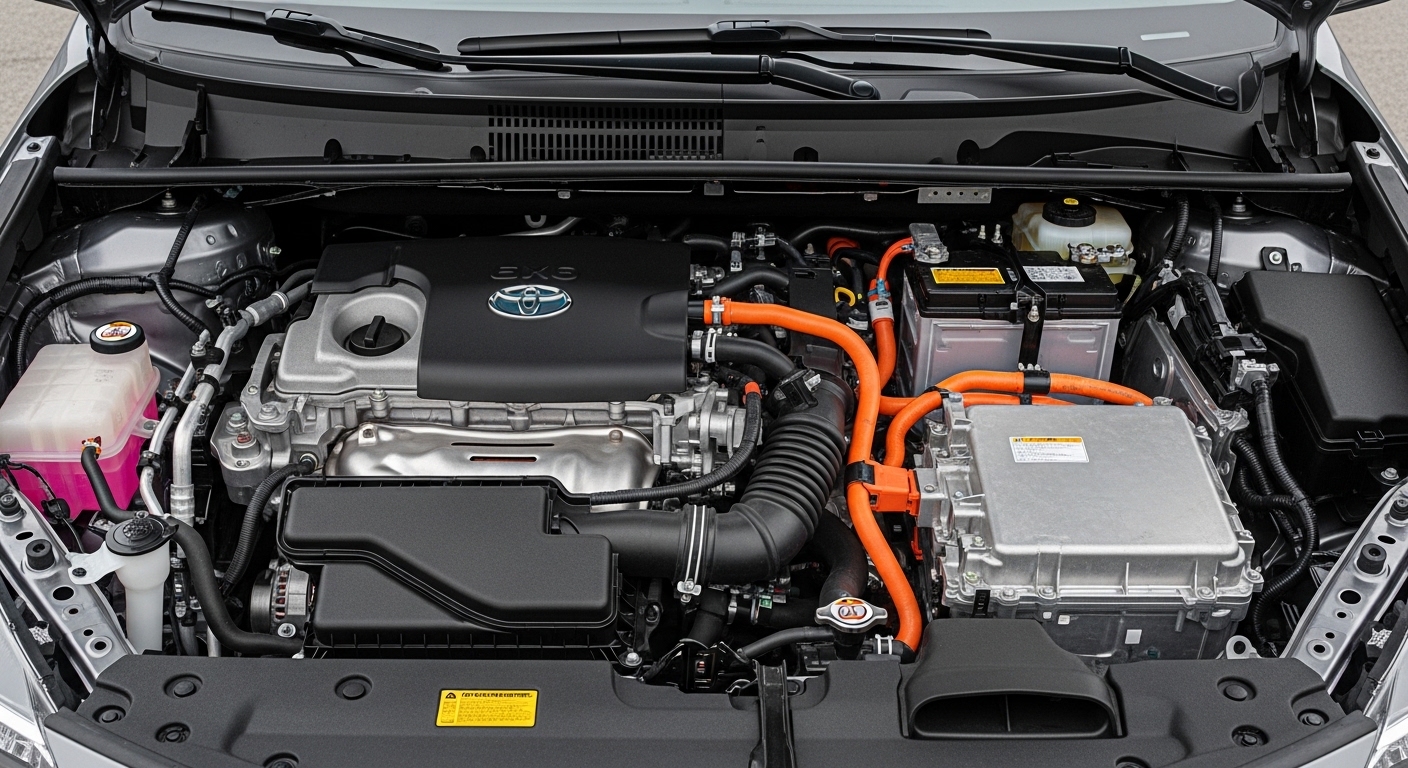 Toyota's THS II pairs a small petrol engine with an electric motor and a planetary gearset.
Here's the plain-language version. An Atkinson-cycle engine holds its intake valve open slightly longer, which lowers the effective compression and lets it turn more of each fuel burn into movement instead of heat. It sacrifices some power for efficiency. On its own it would feel gutless, so the Vitz pairs it with an electric motor that fills the gap. That's why the 54 kW engine and the 45 kW motor together feel livelier than the numbers suggest.
The Yaris takes the opposite approach. Its 1NZ-FE runs the standard Otto cycle tuned for output, so it makes more power on paper and does it without any electric help. Simpler system, more direct feel, but it burns petrol every metre you drive.
Two hybrid terms are worth knowing. THS II (Toyota Hybrid System II) uses a planetary gearset so the engine and motor can run together or separately: at low speed and light load the Vitz can run on electric power alone. Regenerative braking means that when you slow down, the motor spins backwards and works as a generator, turning your momentum back into electricity that tops up the battery instead of wasting it as heat through the brakes. In city traffic, that recovered energy is what keeps fuel use so low.
What Is the Real-World Fuel Economy of the Vitz Hybrid vs the Yaris?
On official figures the Vitz Hybrid is far thriftier, rating 34.4 km/L (about 2.9 L/100km) on Japan's JC08 cycle, while the Australian Yaris auto rates 6.3 L/100km on ADR 81/02 (Toyota Global Newsroom, 2017; Carsales, 2019). Crucially, those are different test cycles and cannot be compared directly.
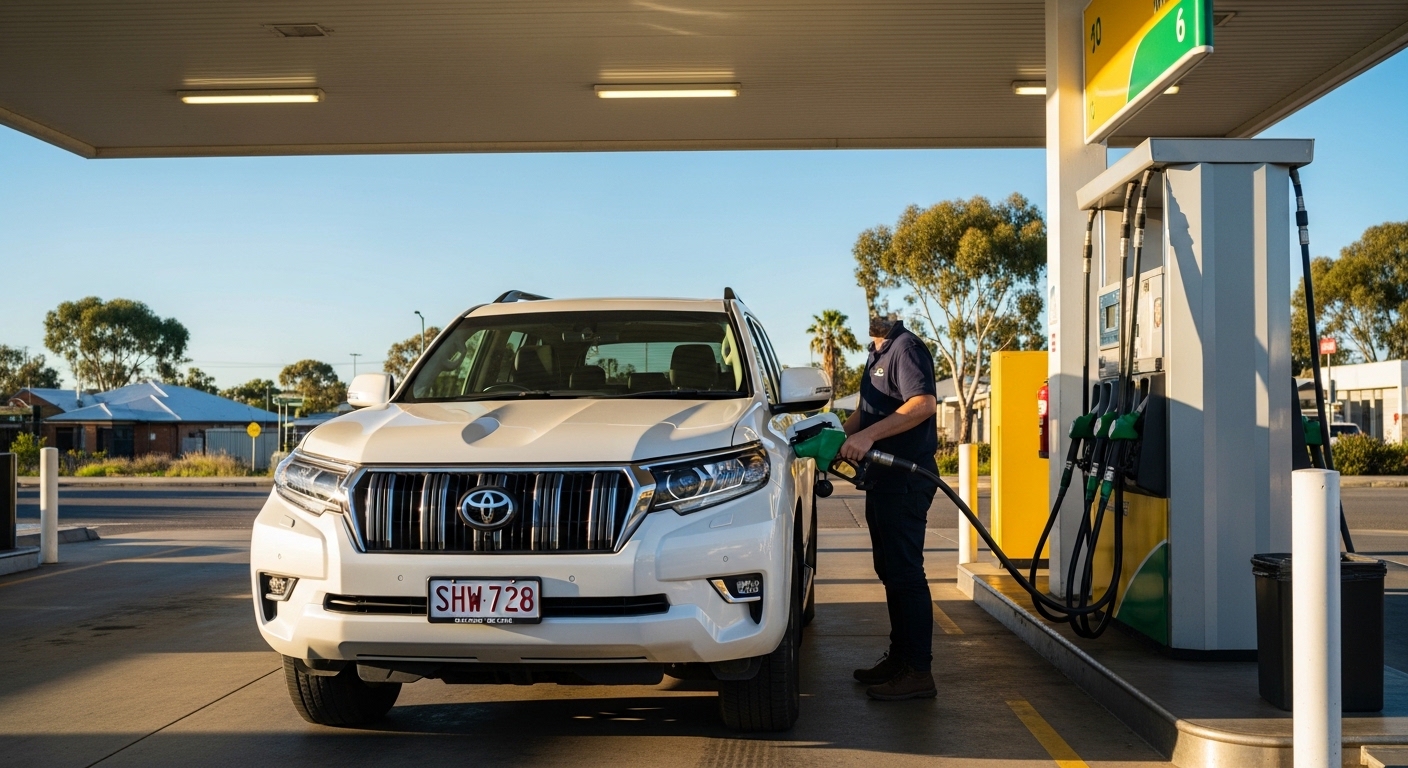 Fuel economy is where the two cars separate most clearly in daily driving.
JC08 is a Japanese laboratory cycle that tends to read 20 to 40% more optimistically than real driving. ADR 81/02 is the Australian standard and sits closer to real-world use, though it's still optimistic. Quoting the Vitz's 2.9 and the Yaris's 6.3 side by side, as many listings do, overstates the gap. Label each figure by its cycle and the picture stays honest.
Here's the same data set out clearly:
| Vehicle | Official rating | Test cycle | Rough real-world |
|---|---|---|---|
| Vitz NHP130 Hybrid | 34.4 km/L (2.9 L/100km) | JC08 (Japan) | ~4.0 L/100km |
| Yaris NCP131R manual | 5.8 L/100km | ADR 81/02 (AU) | 6 to 7 L/100km |
| Yaris NCP131R auto | 6.3 L/100km | ADR 81/02 (AU) | 7 to 8 L/100km |
| 2020 Yaris Hybrid (XP210, reference) | 3.3 L/100km | ADR combined | – |
The 2020-onwards Australian Yaris Hybrid (XP210) rates 3.3 L/100km on the ADR combined cycle (Green Vehicle Guide, 2020), which is a fairer local benchmark for how efficient a Yaris-sized hybrid really is once measured on the Australian standard.
[UNIQUE INSIGHT] Even taking a conservative real-world estimate of 4.0 L/100km for the Vitz against 6.3 for the Yaris auto, at 15,000 km a year and roughly $1.79 a litre (the 2025 national average per AIP annual retail price data, available in their downloadable XLSX — current prices will differ), you'd spend around $1,074 a year in the Vitz versus about $1,691 in the Yaris. That's near $617 a year, or roughly $3,085 over five years. Treat it as illustrative: your split of city and highway driving moves the number a lot.
How Do They Perform for City Driving?
For stop-start city driving, the Vitz Hybrid feels the more relaxed car despite its modest 73 kW (Toyota Global Newsroom, 2017). The electric motor delivers its 169 Nm instantly from a standstill, so the car pulls away smoothly and quietly, and it can creep in traffic on electric power alone.
 For stop-start city driving, the hybrid's electric assistance does its best work.
The petrol Yaris is fine around town too, and its 80 kW gives it a little more outright shove once moving. The catch is the four-speed automatic, which local reviewers have long criticised as sluggish, needing a leisurely stretch of time to haul from 80 to 120 km/h. In daily suburban use you rarely notice it. On a country overtake, you will.
[PERSONAL EXPERIENCE] We've found the practical difference comes down to where you drive. In heavy commuting, the Vitz's hybrid smoothness and lower fuel use are genuinely nicer to live with. If most of your kilometres are open-road at a steady cruise, the two cars feel much closer, and the Yaris's simpler drivetrain gives up very little.
How Do the Safety Features Compare?
Safety equipment is grade and year dependent on both cars, so nothing should be assumed. From its January 2017 redesign, the Vitz made Toyota Safety Sense C and hill-start assist standard on Hybrid grades (Toyota Global Newsroom, 2017), which includes pre-collision braking and lane-departure alert. The base F grade received TSS-C only as special equipment from October 2017, so coverage across the full range was not universal from launch. Pre-2017 cars and some import variants may differ, so check the specific vehicle.
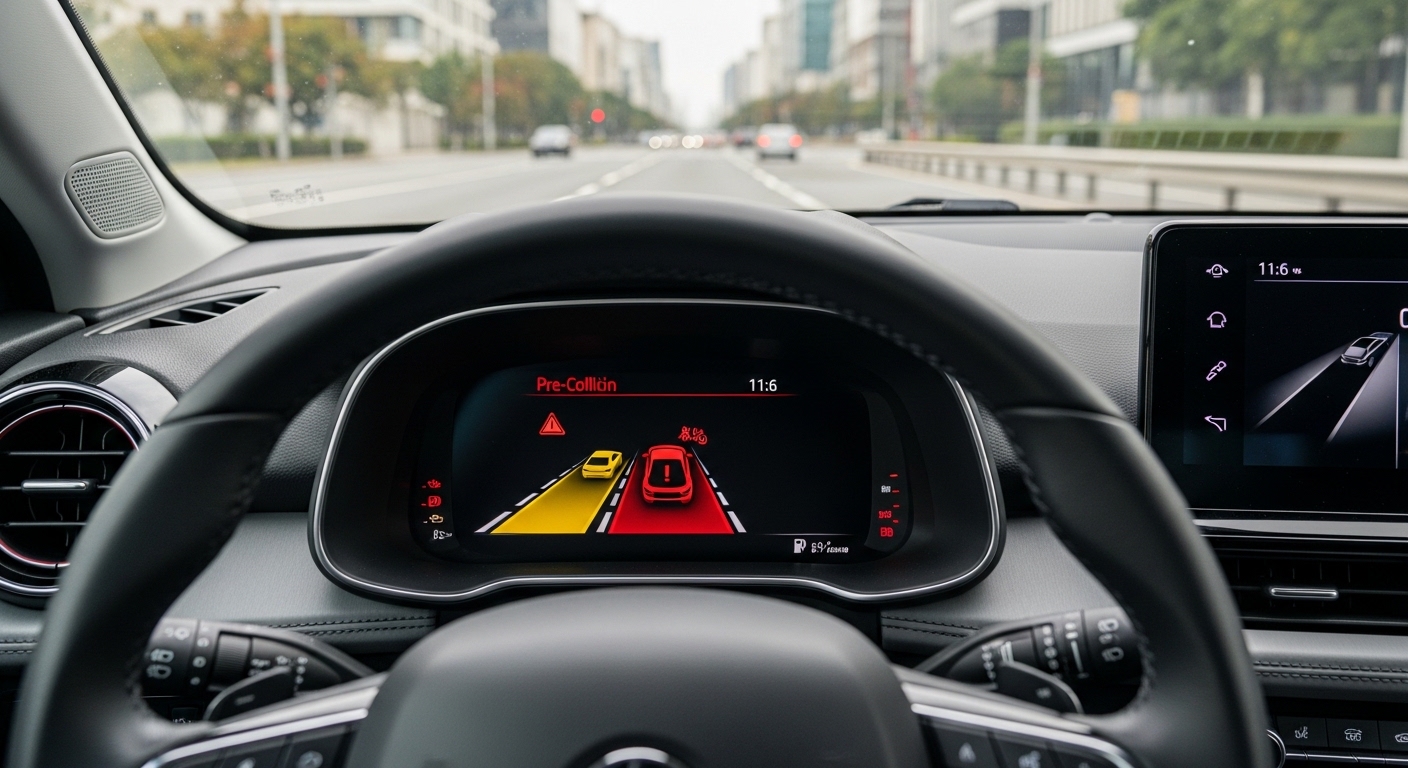 Toyota Safety Sense availability depends on the individual grade and build year, so confirm it car by car.
The Australian Yaris NCP131R carries a five-star ANCAP rating, but under the 2011 test protocol (ANCAP, 2011). That rating is not comparable to modern standards. Most NCP131R cars lack autonomous emergency braking, which is now common on newer small cars. A five-star badge from 2011 means something very different from a five-star badge today.
There's one more warning that competitor articles skip. Some early Yaris hatchbacks built up to around MY16 used Takata airbag inflators, which were subject to a serious safety recall. Before buying any pre-2016 example, check the VIN through the manufacturer recall site to confirm the airbag has been replaced. Don't assume the equipment on one car matches another: features like smart entry, the multimedia head unit and driver aids vary by grade, so confirm each item on the actual car.
How Practical Are They Inside?
Both are city-sized five-seat hatchbacks, so cabin space is close, and boot space is modest on either. The Yaris NCP131R offers a 286-litre boot (Carsales, 2023), while the Vitz NHP130 is reported at roughly 268 litres. The difference is small and comes down to body packaging, not the hybrid gear.
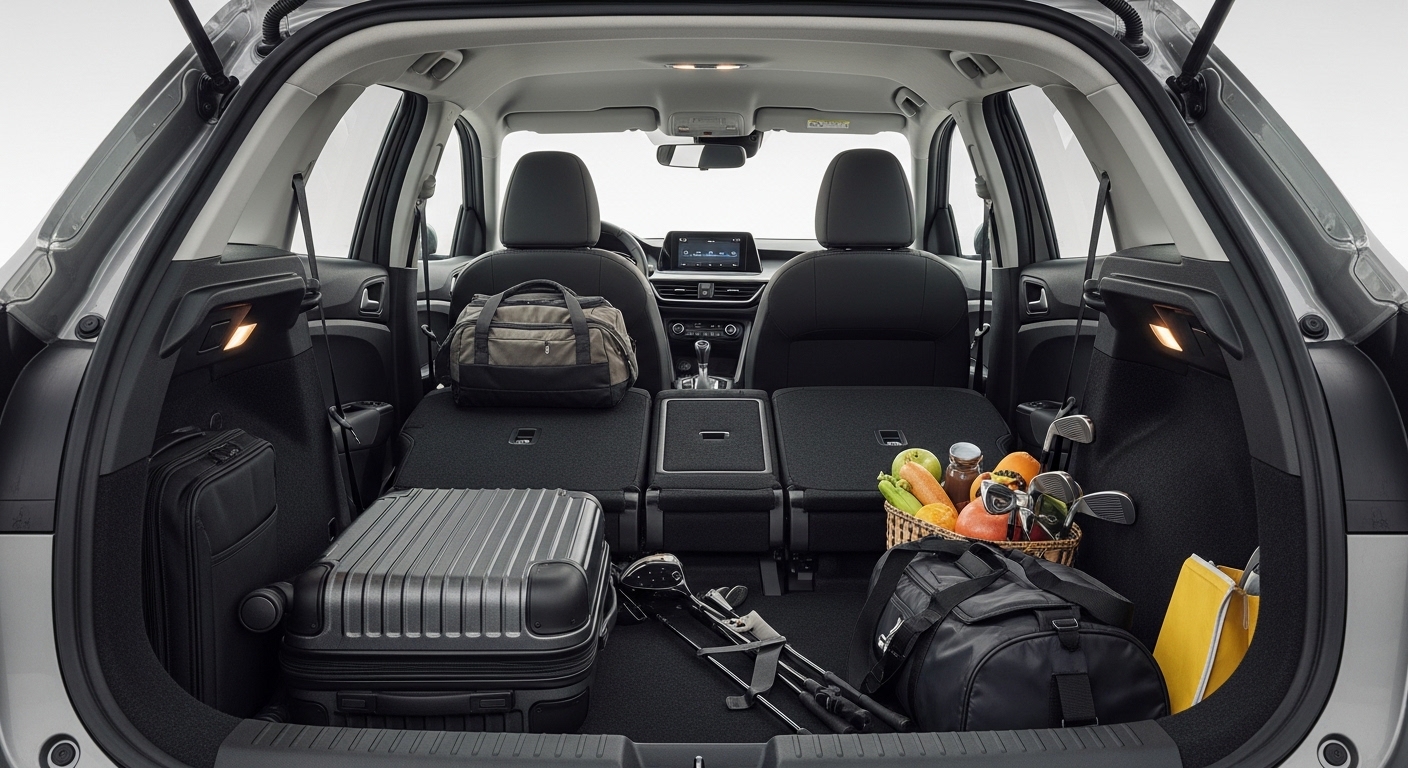 Both cars are city-sized, with boot space that suits shopping runs more than big family loads.
A common myth is that the Vitz loses boot space to its battery. It doesn't. Toyota mounted the hybrid drive battery under the rear seat specifically to preserve cabin and cargo room (Toyota Global Newsroom, 2017). The boot floor is not raised by a battery pack. Any cargo gap between the two cars is a design and generation difference, so you're not sacrificing usable space to go hybrid.
For everyday use, both cars swallow a weekly shop, a pram or a couple of gym bags easily enough. Neither is a family hauler. If you regularly carry three adults in the back or need a big boot, a larger hatch or a small SUV is the smarter shortlist. As a commuter or first car, both are right-sized for tight streets and small car parks.
How Reliable Are They, and What About the Hybrid Battery?
Both cars come from Toyota's most dependable small-car era, so mechanical reliability is a strong point for each. The big question buyers ask is the hybrid battery, and the reassuring answer is that most Toyota hybrid batteries reach 200,000 km or more on the original pack (Hybrid Automotive, 2025).
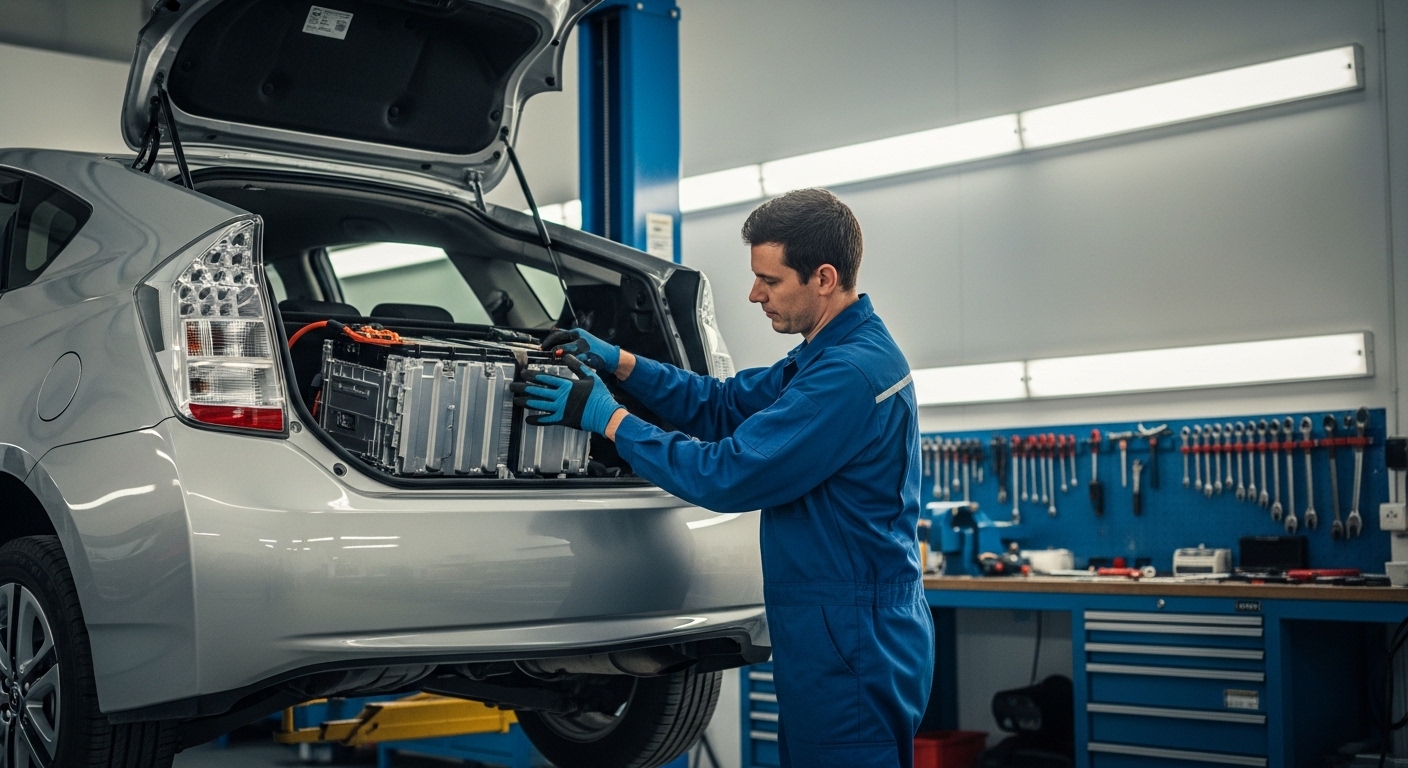 Hybrid batteries can be replaced by Australian specialists, often at lower cost than a full dealer unit.
If a battery does eventually need attention, Australia has a healthy specialist market. Replacement of a Vitz hybrid battery is advertised from around $2,260 supplied and fitted, with a two-year/100,000 km warranty on the new unit (Hybrid Automotive, 2025). Cell-level repairs and reconditioned packs can cost less again. It's a manageable cost, not the catastrophe some buyers fear.
Here's a rough guide to the options if the day ever comes:
| Option | Typical situation | Indicative cost |
|---|---|---|
| Individual cell replacement | High-km car, single weak cell | ~$800 to $1,400 |
| Reconditioned / rebuilt pack | Older car, whole-pack refresh | ~$1,500 to $2,000 |
| New aftermarket battery | Full replacement with warranty | ~$2,260 (2yr/100,000km) |
| OEM Toyota battery | Dealer-supplied replacement | Higher; confirm with dealer |
The petrol Yaris removes this question entirely, which is part of its appeal. Known NCP131R niggles to check are minor: engine-mount vibration, the odd fuel-injector seal, occasional electric power-steering assist dropouts, and some clear-coat paint bubbling on older cars. On any Vitz import, ask for evidence of hybrid battery health and a recent service history.
What Is Servicing and Parts Availability Like in Australia?
Servicing costs are similar and modest for both. Routine maintenance on a used Toyota hybrid runs at a comparable rate to a petrol equivalent — RACQ's 2025 vehicle running costs survey puts the Yaris Hybrid's annual servicing and tyre spend at around $490 for a new car under capped pricing (RACQ, 2025), with older cars outside the capped window typically running higher. Hybrids also tend to be gentler on brake pads, because regenerative braking does much of the slowing.
 Routine servicing on both cars is straightforward, with parts widely available in Australia.
Parts availability is where the two split slightly. The Australian Yaris was sold here in huge numbers, so service items, panels and mechanical parts are everywhere and cheap. Any suburban workshop can service it without a second thought. That's a genuine advantage for a low-fuss ownership plan.
The Vitz Hybrid is an import, but it shares so much with the locally sold Yaris and broader Toyota hybrid range that consumables like filters, brakes and fluids are easy to source. Hybrid-specific work is best handled by a Toyota dealer or a hybrid specialist, and there are plenty across the capital cities. Confirm a local workshop is comfortable with the THS II system before you commit, especially outside metro areas.
What About Insurance and Resale Value?
Both cars are cheap to insure by class, since they're small, low-powered and statistically low-risk. As a general rule, compact Toyotas sit at the affordable end of comprehensive premiums, though your age, licence history and postcode matter far more than the badge. Always get a specific quote for the exact car and your circumstances.
On resale, Toyota's small cars hold value well, and demand for efficient hatches is climbing. 199,133 hybrids sold across 2025, up 15.3% on the previous year, giving hybrids a 16.5% share of new light-vehicle sales for the full year (AfMA/FCAI, 2026). Rising fuel prices keep economical hatches in demand on the used market.
On price, the older Australian Yaris petrol generally sits toward the more affordable end of the used-hatch market, while a landed, complied Vitz Hybrid tends to sit in a similar compact-hatch band once import costs are counted. Rather than quote a figure that dates quickly, check current listings for live pricing on the exact grade and kilometres you're after.
Pros and Cons of Each
Each car wins on different fronts, so the honest summary is a trade-off rather than a knockout. The Vitz Hybrid leads on fuel economy and city refinement; the petrol Yaris leads on simplicity and parts. Here's the balance sheet.
Toyota Vitz NHP130 Hybrid
- Pros: lowest fuel use, quiet and smooth in traffic, instant motor torque, battery mounted to preserve boot space, later cars have standard Toyota Safety Sense C.
- Cons: it's an import so sourcing takes longer, hybrid work needs a specialist, and eventual battery replacement is a cost to plan for.
Toyota Yaris NCP131R (petrol)
- Pros: mechanically simple, cheap and easy to service anywhere, parts everywhere, more outright engine power, no traction battery to worry about.
- Cons: thirstier than the hybrid, the four-speed auto feels dated, and its five-star ANCAP is a 2011-era rating that usually lacks AEB.
Which Should You Buy?
The right choice comes down to how and where you drive, not which car is objectively "better." With hybrids now around 16.5% of the Australian new-car market (AfMA/FCAI, 2026), efficient hatches suit more buyers than ever, but the petrol Yaris still fits plenty of people. Here's a quick match by buyer type.
- Sydney and urban commuters: The Vitz Hybrid. Its electric assistance and regenerative braking do their best work in stop-start traffic, where it uses the least fuel and feels calmest.
- First-car buyers: Either, leaning Yaris. The petrol Yaris is simple, cheap to run and easy to fix, which suits a newer driver. A well-checked Vitz works too if lower fuel bills matter.
- High-kilometre drivers: The Vitz Hybrid, provided the battery checks out. Big annual distances are where the fuel saving compounds fastest, easily offsetting the hybrid's extra complexity.
- Buyers prioritising simple, conventional petrol ownership: The Yaris. No hybrid battery, no specialist servicing, parts on every shelf. It's the low-fuss choice.
- Buyers prioritising lower fuel use: The Vitz Hybrid, comfortably. On the numbers and in real driving, it's the more economical of the two.
Where to Find Toyota Hybrids in Australia
If a compact Toyota hybrid is where you've landed, Carbarn is a Sydney-based specialist worth a look. Based in Lidcombe, NSW, Carbarn carries a range of inspected used Toyota hybrids and hybrid cars more broadly, including late-model Yaris Hybrid examples (the newer MXPH15 and MXPH17 all-wheel-drive hybrids, a different, more recent car than the older NCP131R petrol). Every vehicle is inspected by in-house technicians, with the hybrid battery and powertrain checked as part of the process.
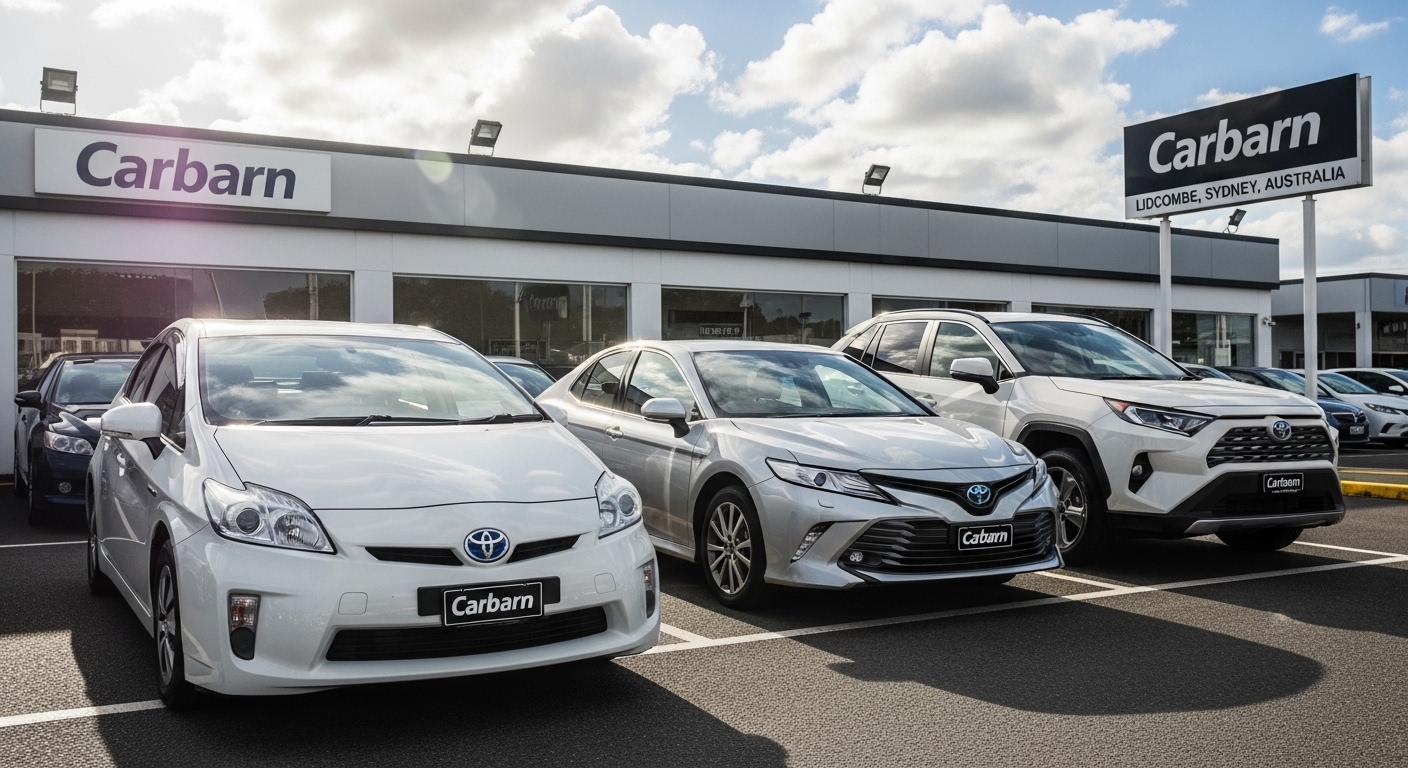 Toyota vehicles parked in front of the Carbarn dealership in Lidcombe, Sydney.
Carbarn also runs a full import and compliance service through its RAW-certified Sydney workshop. If you're interested in a Vitz NHP130 Hybrid, contact the team to discuss current import options — eligibility pathways can change, and the team can advise on what's available and how the process works. Beyond stock and importing, Carbarn offers warranty cover with hybrid battery and mechanical options, flexible finance and trade-in, and nationwide delivery. It's a one-stop path whether you buy locally available stock or order a specific model from Japan.
Toyota Vitz Hybrid vs Toyota Yaris in Australia: The Bottom Line
The Toyota Vitz Hybrid vs Toyota Yaris in Australia question really comes down to fuel bills versus simplicity. The Vitz NHP130 Hybrid is the more efficient, more refined city car, ideal if you rack up traffic kilometres and want the lowest running costs. The Australian Yaris petrol is the simpler, easy-to-service option that any workshop can handle, and it gives up surprisingly little on the open road.
Whichever way you lean, the smart move is the same: verify the exact grade, safety equipment and battery health on the specific car, and match the choice to your driving rather than the badge. If you'd like to see compact Toyota hybrids in the metal, it's worth inspecting the range at Carbarn in Lidcombe before you decide.