



Ready to Hit the Road in Style?
Save money and reduce emissions with vehicles designed to deliver exceptional mileage. Visit our inventory and find a car that fits your lifestyle.
Ready to Hit the Road in Style?
Save money and reduce emissions with vehicles designed to deliver exceptional mileage. Visit our inventory and find a car that fits your lifestyle.
Most of us don't set out to break road rules behind the wheel. We just drive the way we always have. The trouble is that rules, fines and enforcement cameras keep shifting, and July is one of the big update points across Australia. A quick glance at your phone, a loose seatbelt, or a habit you picked up in another state can now cost you real money and demerit points — the penalty marks recorded against your licence that accumulate toward suspension.
This guide walks through the July road rule changes and the everyday mistakes that catch people out. It's general information, not legal advice, and the golden rule stays the same: follow the posted signs.
Quick Answer: What Drivers Should Check First
- Road rules and fines vary by state. What's legal in Victoria may earn a fine in New South Wales, so never assume a rule is national.
- Mobile phone fines are steep. They range from around $404 in Tasmania to ~$1,295 in Queensland (NRMA, 2025).
- Cameras now catch phones and seatbelts, not just speed, in most states, often with no officer present.
- E-bike and e-scooter rules are tightening, with Queensland police able to seize non-compliant devices from 1 July 2026.
- Always obey the posted sign in roadwork and school zones. When rules differ, the sign wins.
Why Do Road Rules Change by State, Not Always Nationally?
Australia has no single national road law. Each state and territory sets its own fines, demerit points and enforcement methods, and July often brings fresh updates (NRMA, 2026). The same offence can cost twice as much across a border, which is why "I didn't know" is such a common and expensive line.
The basics feel familiar everywhere. Stop at red lights, give way, wear a seatbelt. But the detail sits with the states. Queensland runs some of the country's toughest fines, while Tasmania often sits at the lower end.
That's the core message of this whole guide. Treat any rule you learned interstate as a starting point, not gospel. Before a long drive or a move, check the transport authority for the state you're actually driving in.
Roadwork Speed Limits: Why the Posted Sign Still Matters
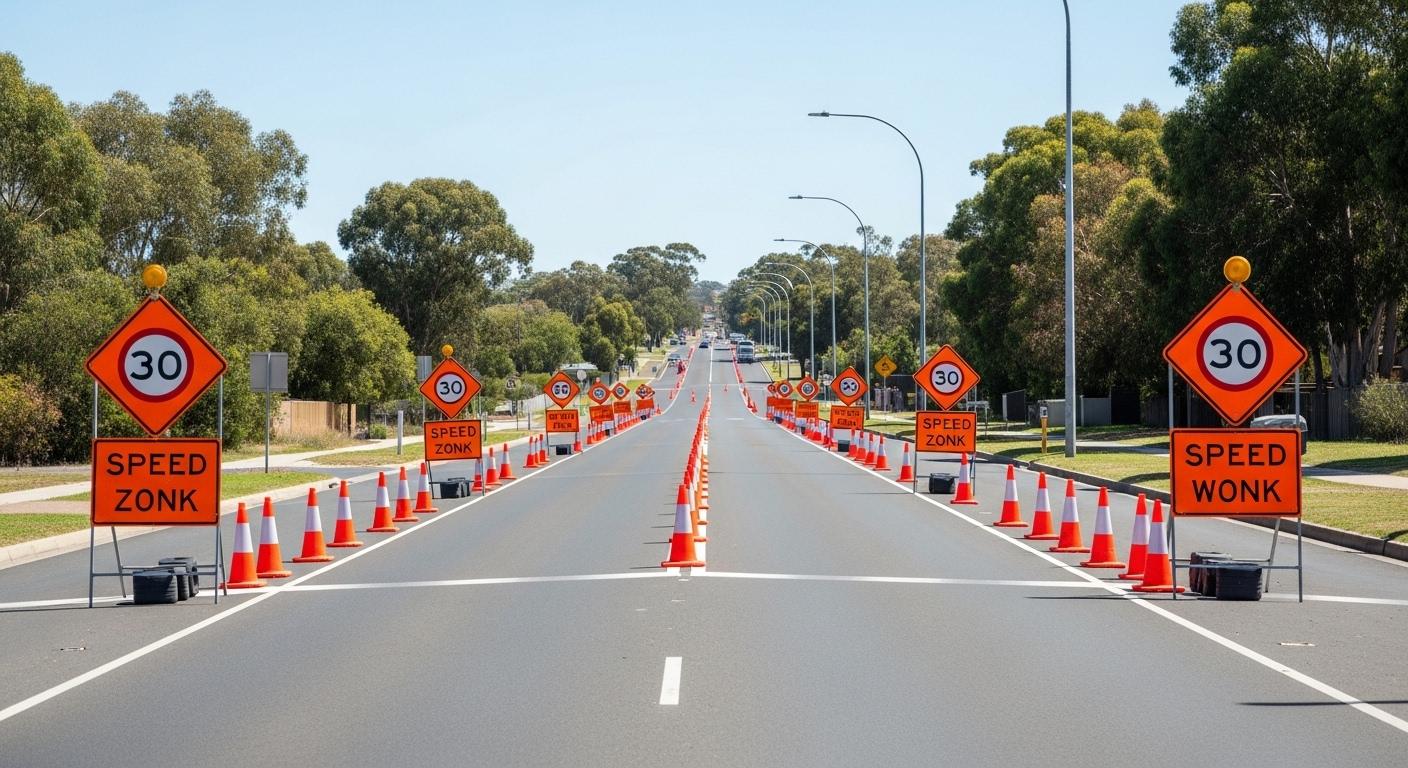
Roadwork speed limits catch out thousands of drivers who assume the limit only applies when workers are visible. In most states, the reduced limit is enforced whether or not anyone is on site. From 1 July 2026, New South Wales adjusted its approach so temporary limits are removed outside work hours when it's safe to do so (NRMA, 2026).
That change sounds like a free pass, but it isn't. Signs may stay up if the road surface is loose, lanes are narrowed, or conditions are still unsafe. And in other states, the old approach continues.
Quick tip: The rule that never changes is simple. If a temporary speed sign is up, that's your legal limit, full stop. Don't guess based on whether you can see a worker.
What Are the Most Common Mobile Phone Mistakes?
Touching your phone at the wheel is one of the fastest ways to lose money and demerit points. For a first offence, fines run from about $404 in Tasmania to ~$1,295 in Queensland, with New South Wales around ~$434 and Victoria near $611 (NRMA, 2025). On top of the cash penalty, each offence strips demerit points directly from your licence — New South Wales takes five for a first offence, while Queensland and Victoria each take four (see the table below for a full state breakdown). These figures move with annual indexation, so treat them as a guide and confirm the current amount with your state. The most common mistake is assuming a red light makes it fine — it doesn't. You're still in control of the vehicle, so touching or holding your phone counts as an offence in every state, whether the car is moving or stopped at an intersection. AI-powered detection cameras now operate in New South Wales, Victoria and Queensland, so there's often no officer in sight when the fine is issued.
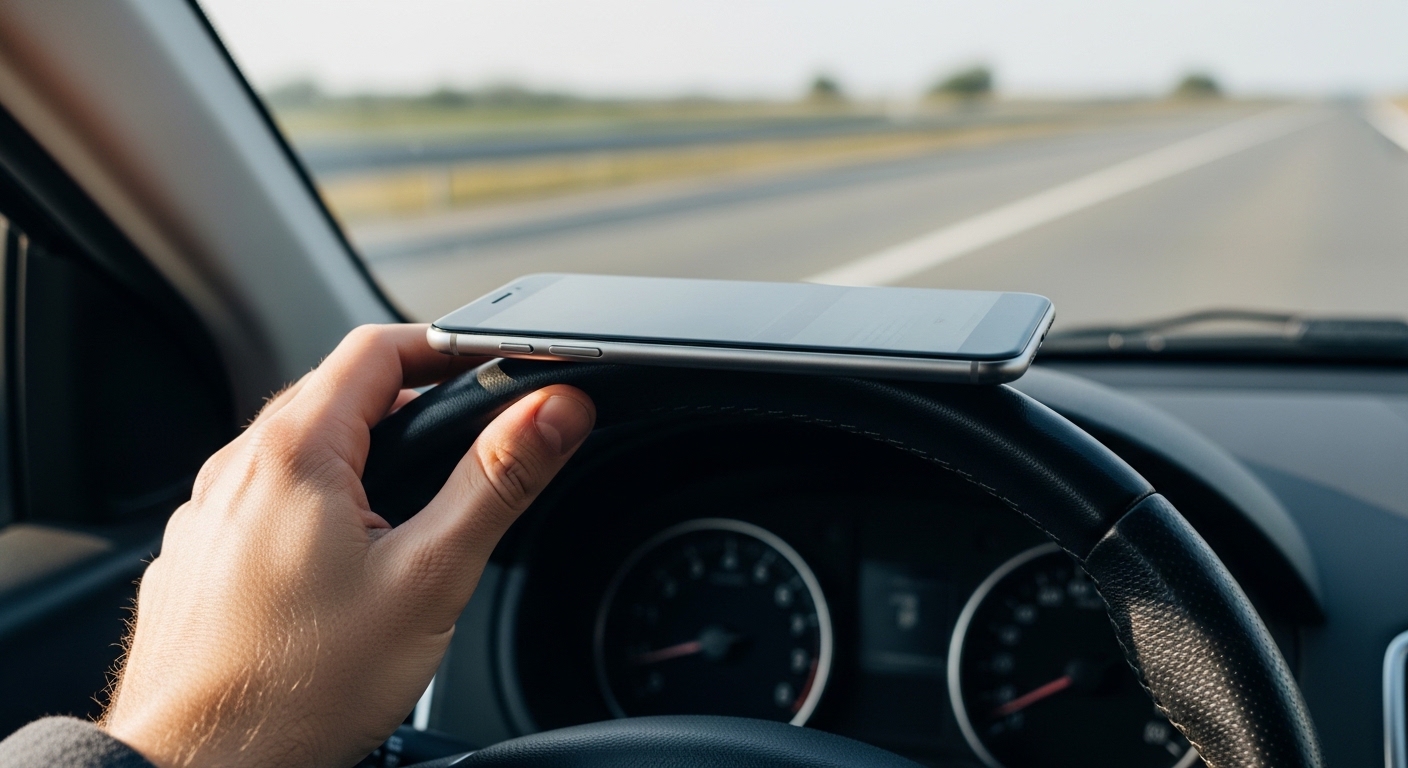 Touching your phone at the wheel, even at a red light, can cost hundreds of dollars and several demerit points.
Here's roughly where the states sit for a first mobile phone offence. Amounts and points can change, so confirm before you rely on them.
| State/Territory | Approx. fine | Demerit points |
|---|---|---|
| QLD | ~$1,295 | 4 |
| VIC | ~$611 | 4 |
| SA | ~$658 | 3 |
| ACT | ~$548–$674 | 3–4 |
| WA | ~$500–$1,000 | 3–4 |
| NSW | ~$434 | 5 |
| TAS | ~$404 | 3 |
Source: NRMA, 2025.
A March 2026 upgrade in New South Wales added bi-directional coverage to the AI-powered detection cameras (Carma, 2026). If you need the phone for navigation, mount it in a cradle and set your route before you move.
What Seatbelt Mistakes Do Drivers and Passengers Make?
Seatbelt offences are increasingly caught by camera rather than by a roadside officer, and the fines are serious. Penalties range from around $387 in New South Wales to as much as $1,295 in Queensland, with camera enforcement active across several states since 2024 (CarExpert, 2026). Drivers can also be penalised for unrestrained passengers — not just themselves. The mistakes that get people caught are often subtle: wearing the belt under your arm, behind your back, or with the strap twisted counts as "not properly worn," which is treated the same as no belt at all. Even a shoulder strap that slips down for comfort can trigger a fine if a camera captures it. The key rule is straightforward — everyone in the car clicks in properly, belt flat across the shoulder and low across the hips, before the car moves.
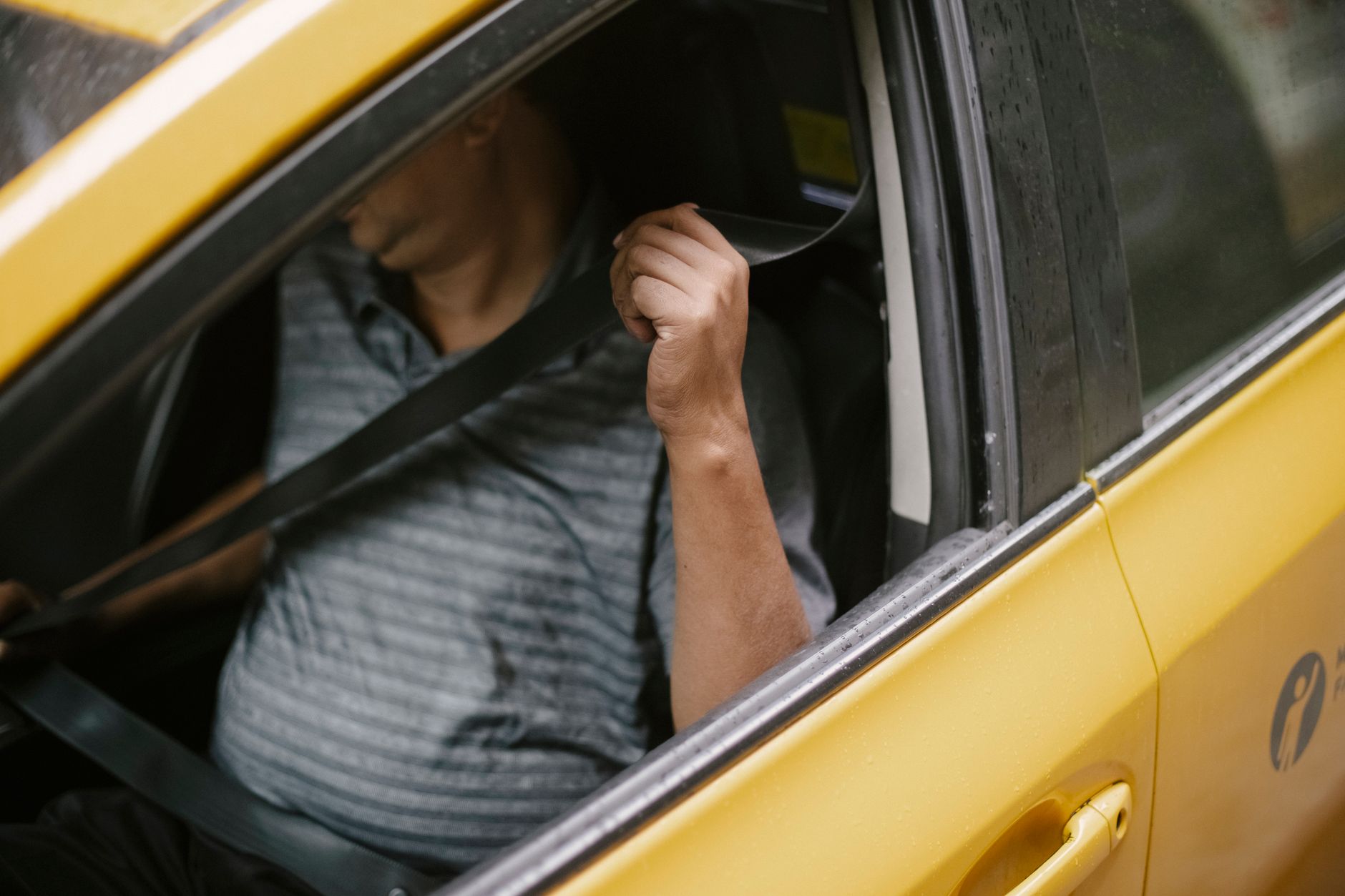 A correctly worn seatbelt, over the shoulder and across the lap, is now checked by detection cameras in most states.
Cameras don't care about intent. Here's where seatbelt detection cameras are active as of 2026.
| State/Territory | Mobile phone cameras | Seatbelt cameras |
|---|---|---|
| NSW | Yes (upgraded March 2026) | Yes |
| VIC | Yes | Yes |
| QLD | Yes | Yes |
| WA | Yes | Yes |
| TAS | Yes | Yes |
| ACT | Yes | Yes |
| SA | Yes | Not yet |
| NT | Exploring | Not yet |
Source: CarExpert and Carma, 2026.
Why Are E-Bike and E-Scooter Rules Becoming Stricter?
E-bike and e-scooter rules are tightening fast, and the penalties can be brutal. In Queensland, from 1 July 2026 police can seize and even destroy non-compliant devices, with a fine of around $621, while drink-riding penalties reach into the thousands (Queensland Government, 2026). These are not toys in the eyes of the law.
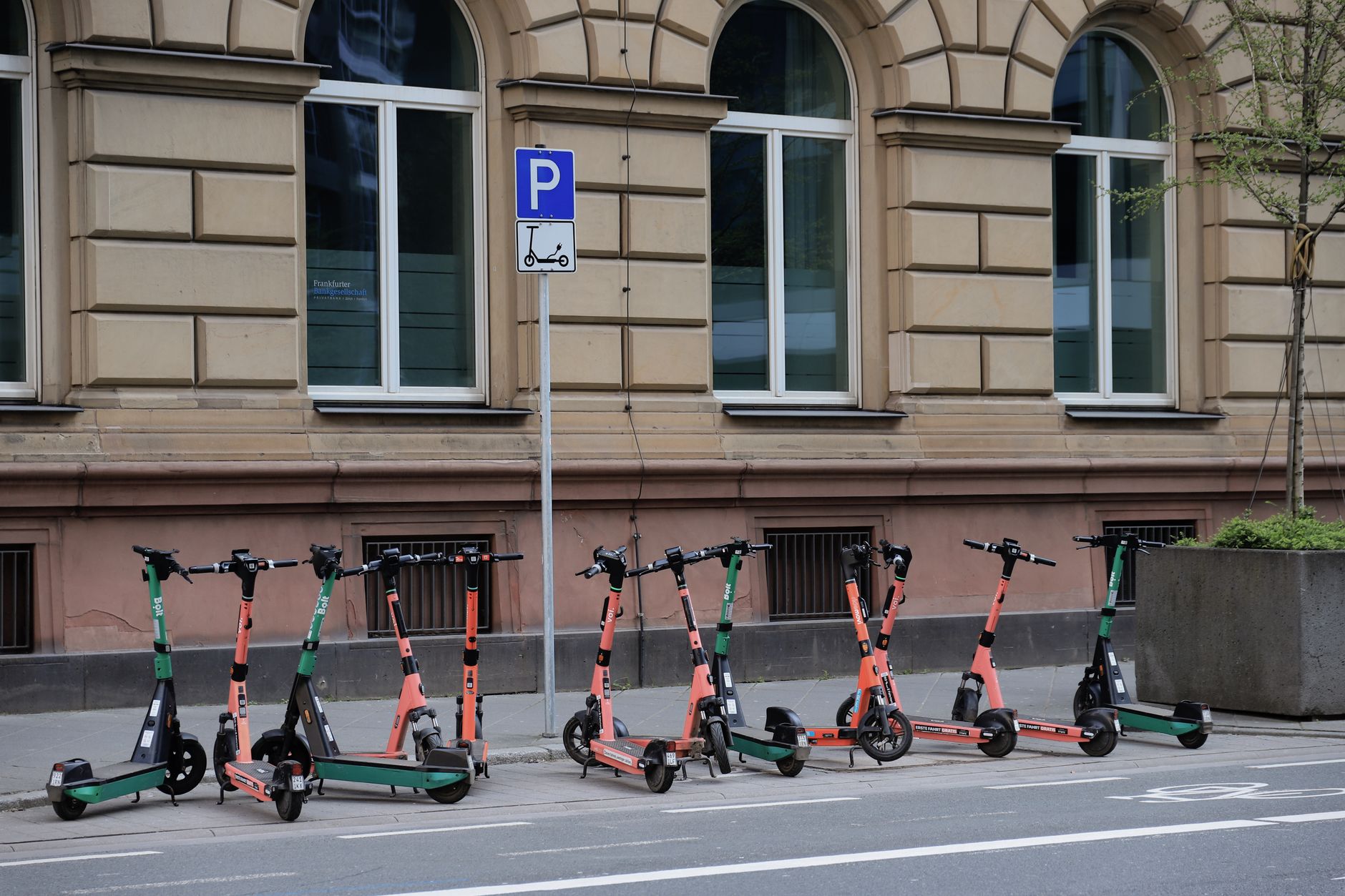 E-bike and e-scooter rules are tightening, with power limits, helmet rules and age requirements varying by state.
The rules differ sharply by state, so a device that's legal in one place may not be in another. A few of the bigger shifts worth knowing:
- New South Wales repealed its 500-watt e-bike exemption in March 2026, and police can now seize non-compliant e-bikes using roadside testing units (NRMA, 2026).
- Queensland adds age and licence rules from 31 August 2026: riders must be 16 or older and hold at least a learner licence — the entry-level stage of Australia's graduated licensing system that allows supervised riding on public roads.
- Helmets and speed limits apply everywhere, and skipping a helmet in Queensland carries a fine of around $518.
If you or your kids ride one, check your state's rules on power output, footpath use and age. The device might be fine to buy, yet still illegal to ride where you live.
What Should You Know About School Zone Speed Limits?
School zones are a classic trap because neither the speed limit nor the active hours are consistent across Australia. A school zone is a designated stretch of road near a school where a reduced speed limit applies during set periods — and getting it wrong can cost thousands in fines. Most states drop to 40km/h during set morning and afternoon windows, but South Australia uses 25km/h whenever children are present, with no fixed hours attached (NRMA, 2025). That SA limit surprises a lot of interstate visitors: it's not just active at school drop-off and pick-up times — it applies any time kids are visible near the road. The hours and limits below are a rough guide for each state, but the sign in front of you is always the legal authority.
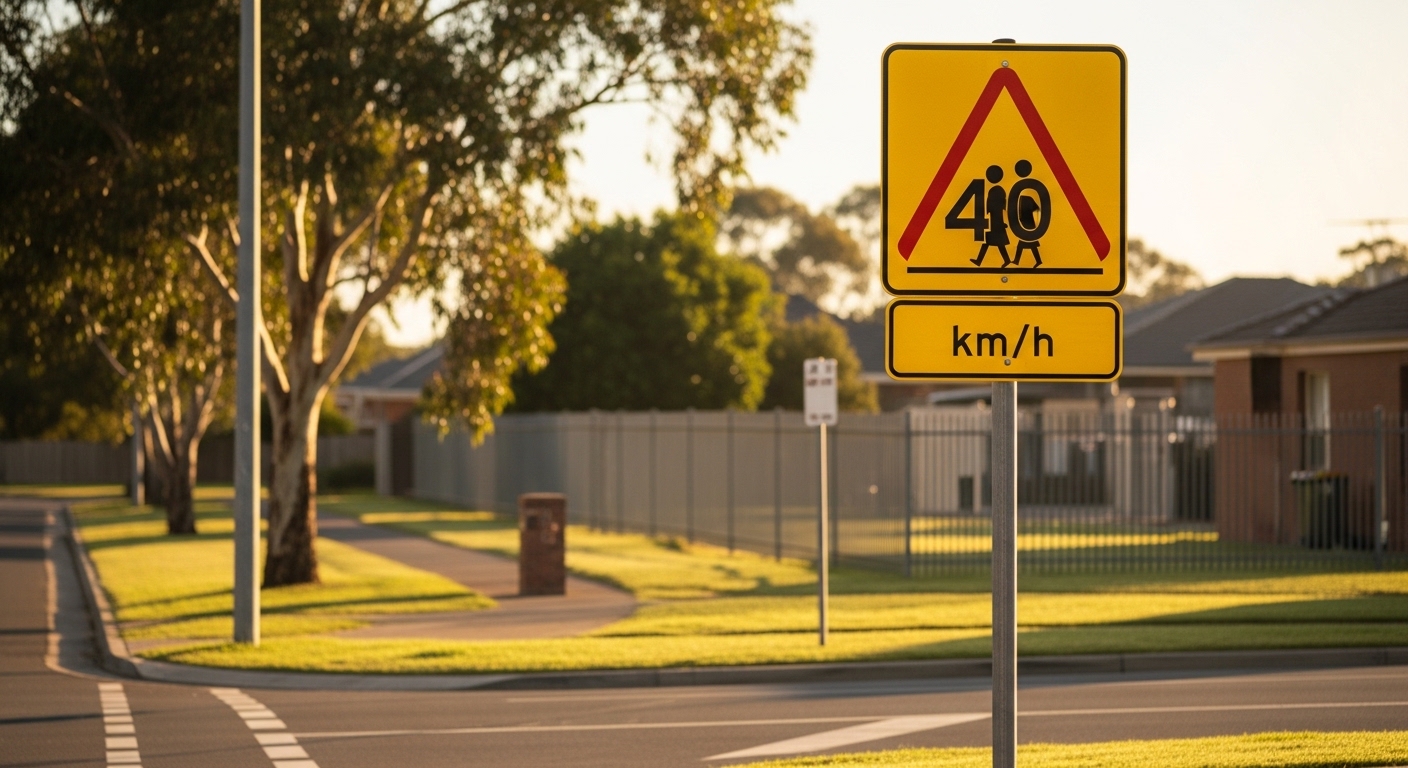 School zone speed limits and hours differ by state, so the posted sign is always the rule to follow.
Here's a rough guide, though you should always trust the sign in front of you.
| State/Territory | Limit | Typical hours |
|---|---|---|
| NSW | 40km/h | 8:00–9:30am & 2:30–4:00pm (school days) |
| VIC | 40km/h | 8:00–9:30am & 2:30–4:00pm (school days) |
| QLD | 40km/h | 7:00–9:00am & 2:00–4:00pm (school days) |
| WA | 40km/h | 7:30am–3:30pm (school days) |
| ACT | 40km/h | 8:00am–4:00pm (school days) |
| NT | 40km/h | 7:00am–5:00pm (school days) |
| SA | 25km/h | Any time children are present |
Source: NRMA, 2025.
What Do Drivers Get Wrong at U-Turns and Intersections?
Intersection rules catch out drivers because the defaults differ by state, and the gap between what seems right and what is actually legal can be expensive. The most misunderstood rule is U-turns at traffic lights. Victoria is the only state that allows them by default; everywhere else you need a sign that reads "U-turn permitted" to do it legally (RACV, 2026). If there's no sign, assume you can't. Give-way rules at intersections are equally misunderstood. At an unmarked T-intersection, the vehicle on the terminating road gives way to traffic on the continuing road. When turning, you give way to oncoming traffic and to any pedestrians crossing the road you're entering. At roundabouts, signal your intention on entry, give way to vehicles already inside the roundabout, and indicate left as you exit. These habits keep you legal and, more importantly, keep everyone safe.
How Much Can Speeding Cost You in Fines and Demerit Points?
Speeding penalties are climbing, and South Australia's July 2026 update shows how fast they scale. A fine for less than 10km/h over starts at $215, but travelling more than 45km/h over now costs $2,018, up from $1,954 (NRMA, 2026). Other states run their own schedules, so the same speed can cost very different amounts.
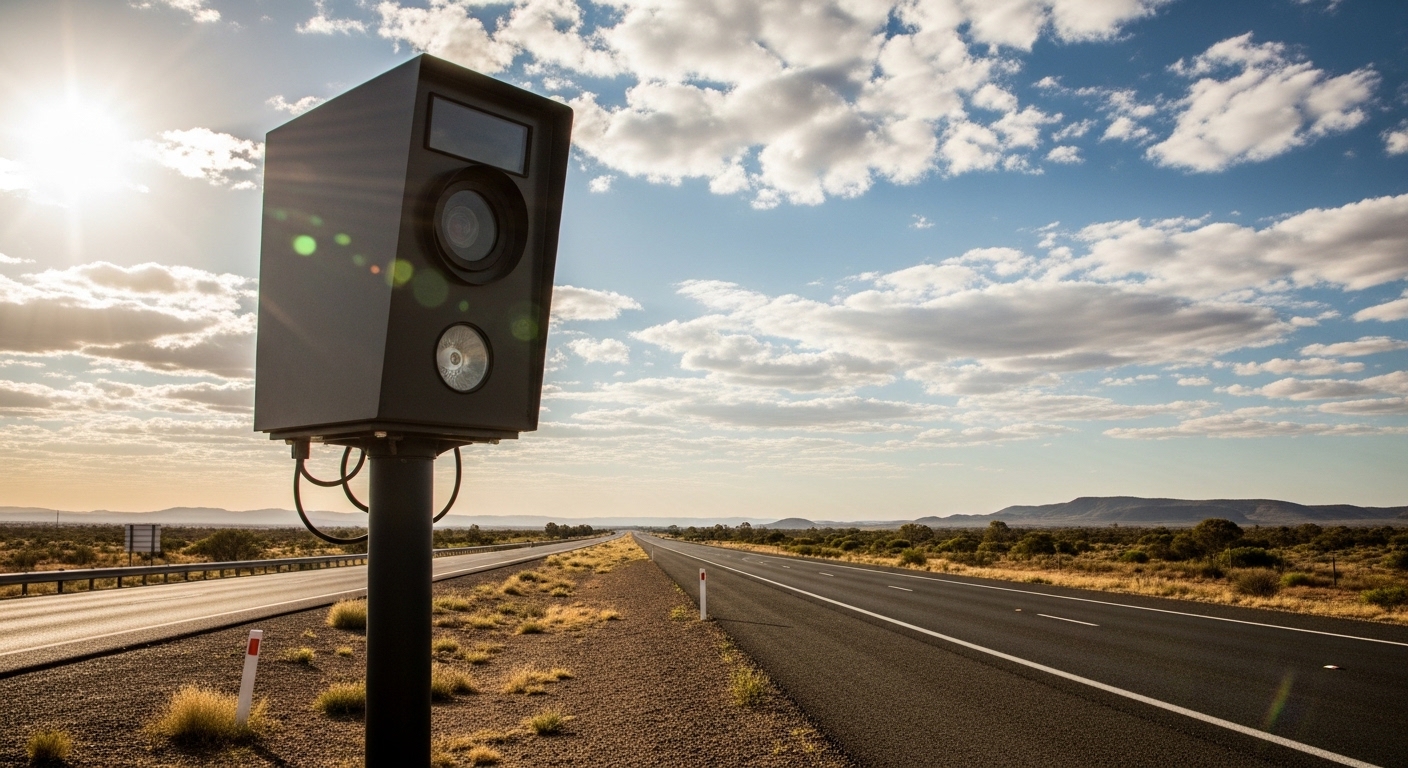 Automated cameras now catch speeding, phone use and seatbelt offences, often without any officer present.
South Australia's revised schedule gives a clear sense of how quickly it adds up.
| Speed over limit | Previous fine | New fine (July 2026) |
|---|---|---|
| Under 10km/h | $208 | $215 |
| 10–20km/h | $469 | $484 |
| 20–30km/h | $995 | $998 |
| 30–45km/h | $1,736 | $1,793 |
| Over 45km/h | $1,954 | $2,018 |
Source: NRMA, 2026.
Fixed, mobile and average-speed cameras are all in play — average-speed units measure your pace across a set distance between two fixed points, so braking for one camera and accelerating again doesn't help. None of them need an officer present. Watch double-demerit periods too: designated dates, typically long weekends and school holidays, when traffic authorities double the demerit points applied to any offence. A single mistake during these windows can double the cost to your licence.
What Should Drivers Do Before Travelling Interstate?
Before a big interstate trip, spend ten minutes checking the road rules for every state you'll pass through. Fines, school zone hours and even U-turn rules change at the border. Suspensions transfer nationally under the shared licensing scheme too (NRMA, 2025), so a ban issued in one state applies everywhere. A holiday is a bad time to learn a new rule the hard way.
A short pre-trip check saves a lot of grief. Look up speed limits, school zone times, mobile phone rules and anything specific to that state. If you're planning a longer journey, our broader driving and ownership guides on the Carbarn blog are a handy starting point.
Remember that enforcement methods differ too. A state you visit may use average-speed cameras or seatbelt cameras that your home state doesn't. Drive to the local rules, not the ones you're used to.
What Are the Most Common Road Rule Myths in Australia?
Plenty of "rules" passed around at the servo simply aren't true, and believing them can cost you. Let's clear up the ones that catch people out most often.
Myth 1: You can use your phone at a red light. False. You're still in control of the car, so it's an offence in every state.
Myth 2: A seatbelt under your arm is fine. No. A belt worn incorrectly is treated the same as no belt at all.
Myth 3: Roadwork limits only apply when workers are present. In most states they apply regardless. Follow the sign.
Myth 4: You can always do a U-turn at the lights. Only Victoria allows this by default. Everywhere else you need a sign.
Myth 5: Demerit points reset the moment you cross a border. Suspensions and disqualifications carry across states, though how individual points are counted can vary when you transfer a licence.
Myth 6: Cameras always warn you first. Many are unsigned, mobile, or measure average speed over a distance. Don't count on a warning.
Final Checklist for Drivers
Run through this quick list to stay on the right side of the rules, wherever you drive.
- Phone mounted in a cradle, route set before you move.
- Everyone belted in properly, flat across the shoulder and hips.
- Obey every posted sign, especially in roadwork and school zones.
- Slow right down near schools and check the local limit and hours.
- Only do a U-turn at lights where a sign allows it.
- Watch for double-demerit periods on long weekends.
- Check e-bike and e-scooter rules before you or the kids ride.
- Look up the road rules for any state you're travelling to.
- Keep an eye out for mobile, seatbelt and average-speed cameras.
- Remember fines and points can change, so verify before you rely on old figures.
Staying Informed With Carbarn
Owning a car in Australia is about more than the purchase. It's about running it safely and staying across the rules that affect you every day. At Carbarn, we help Australian buyers make informed, practical decisions, from choosing the right vehicle to understanding real-world ownership.
If you're weighing up your next car, you can browse a range of locally available used cars or explore fuel-efficient hybrid options that suit day-to-day driving. If you have a specific model in mind, we can also help you source a vehicle from Japan.
For more practical guidance on driving and ownership, keep an eye on our ownership guides. Staying informed is the simplest way to avoid the mistakes that could cost you.