



Ready to Hit the Road in Style?
Save money and reduce emissions with vehicles designed to deliver exceptional mileage. Visit our inventory and find a car that fits your lifestyle.
Ready to Hit the Road in Style?
Save money and reduce emissions with vehicles designed to deliver exceptional mileage. Visit our inventory and find a car that fits your lifestyle.
A lot of supercars are easy to admire and hard to actually live with. That is why the Audi R8 4S still matters. In 2024, Audi said the final R8 rolled off the line in March after total production of 45,949 units, which gives the 4S a proper end-of-era feel, not just used-car curiosity (Audi, "Audi R8 (2006-2024)", 2024). This guide is for Australian buyers trying to work out whether the R8 4S is worth shortlisting, how usable it really is, and what you should check before committing.
Quick Answer
- The 4S pairs a 5.2-litre V10 with rare day-to-day usability.
- Later performance quattro cars reached 620 PS and 580 Nm (Audi technical data, 2023).
- Audi listed 112L up front and 226L behind the seats.
- Buy history and condition first, flashy spec second.
If you're already comparing eligible examples, auction-grade sourcing or compliance suitability, check the Rover approval details carefully: current 4S approvals are limited to 05/2015-03/2016 vehicles under SEV-000752 and SEV-000753. This guide stays focused on ownership, buyer fit and what to check before you commit.
The best way to judge an R8 4S is pretty simple: look at the drivetrain, check whether you can actually live with it, then inspect the history with a cold eye. Specs vary by year, market, trim and drivetrain, so always confirm the exact vehicle file before you buy.
| Variant | Drivetrain | Output | Character | Best for | Main watch-out |
|---|---|---|---|---|---|
| Early V10 quattro | AWD | 540 PS | Cleanest early 4S formula | Buyers who want the base V10 experience | Condition matters more than options |
| Early V10 plus quattro | AWD | 610 PS | Sharper, faster, more serious | Buyers who want the harder edge | Higher consumable spend if neglected |
| V10 RWS | RWD | 5.2 V10 | Lighter, rarer, more playful | Purists and collectors | Confirm exact market and history |
| Later performance RWD | RWD | 570 PS / 550 Nm | Purer rear-drive feel | Confident road drivers | Less forgiving in poor conditions |
| Later performance quattro | AWD | 620 PS / 580 Nm | Full late-model 4S brief | Best all-round benchmark | Tyres, brakes and service history |
| 2020 V10 Performance quattro | AWD | 620 PS / 580 Nm | Strong benchmark example | Buyers who want the full 4S experience | Don't overpay for options over paperwork |
Why does the Audi R8 4S still appeal to enthusiasts?
In 2024, Audi's model-history page said the final R8 left the line in March after 45,949 units, which answers the question neatly: the 4S still appeals because it is one of the last modern supercars to mix a naturally aspirated V10 with genuine everyday manners (Audi, "Audi R8 (2006-2024)", 2024).
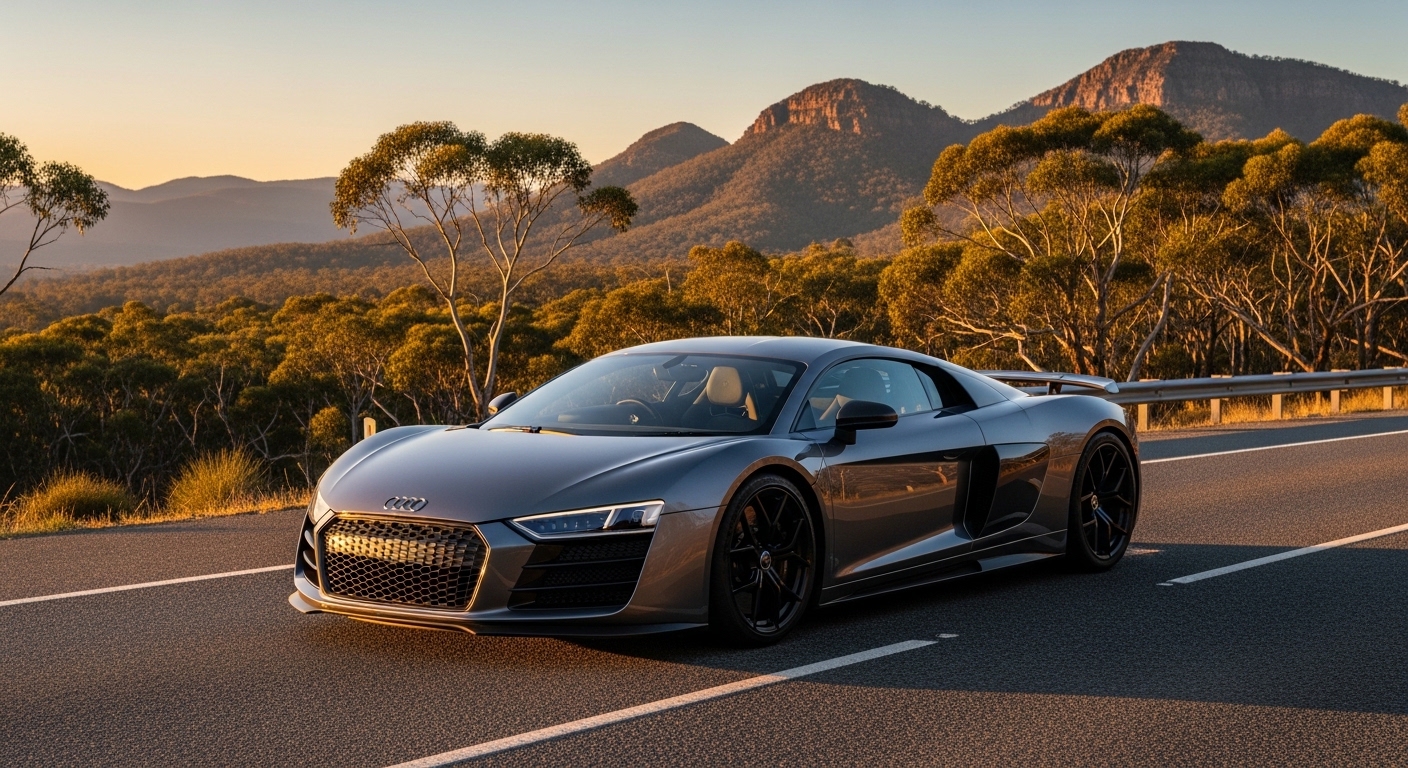 Gray Audi R8 on a scenic mountain highway at golden hour.
The sharper buyer question is not whether the R8 is fast. Of course it is. The better question is whether you want a supercar that encourages you to use it. That is where the 4S keeps winning people over, especially in Australia, where real roads, driveways and mixed weather matter more than a forum argument.
Its design has aged well too. The 4S still looks low, wide and properly exotic, but it does not try too hard. That helps. Some rivals feel more theatrical, yet also more demanding. The R8 has road presence without shouting at everyone in the next lane.
According to Audi's 2024 model-history summary, the R8 ended production in March 2024 after 45,949 units, which turned the 4S into a clear end-of-era V10 car rather than just another used coupe (Audi, "Audi R8 (2006-2024)", 2024). That rarity is a real part of the appeal.
[CHART: Timeline strip - 2015 second-generation 4S launch, 2018 RWS arrives, 2019 facelift with 570 and 620 metric horsepower, March 2024 production ends - Sources: Audi model history 2024; Audi basic information 2019]
What makes the 4S generation different from earlier R8s?
In 2023, Audi technical data for the R8 Coupé V10 performance RWD listed a 5,204 cc V10 and dimensions of 4,429 mm long, 1,940 mm wide and 2,650 mm wheelbase, which sums up the 4S well: it is compact for a supercar, but still wide, serious and more focused than the first-generation car (Audi technical data, "R8 Coupé V10 performance RWD", 2023).
The biggest shift was philosophical. The 4S launched V10-only, dropped the old V8 entry point, and leaned harder into proper supercar territory. It also paired that with the seven-speed S tronic, so the whole car felt faster, tighter and more modern from the outset (Audi, "The Audi R8: a captivating legend", 2024). Want something softer and older-school? You would usually look at the first generation instead.
Audi's own documents also show why the 4S feels more mature inside. The digital cockpit, cleaner cabin layout and more driver-focused controls give it a much newer feel than the original R8. Park one next to an earlier car and the difference is obvious in seconds.
Audi's 2023 technical data lists the late 4S at 4,429 mm long, 1,940 mm wide and 2,650 mm between the axles, which explains why it feels compact enough to place confidently yet still asks for care in tight car parks (Audi technical data, "R8 Coupé V10 performance RWD", 2023).
[CHART: Specs card - 5,204 cc naturally aspirated V10, 4,429 mm length, 1,940 mm width, 2,650 mm wheelbase - Source: Audi technical data 2023]
Should you choose quattro or rear-wheel drive?
In 2018, Audi's R8 V10 RWS press information said the RWS run was limited to 999 cars worldwide and the Coupé was 50 kg lighter than the comparable quattro, which gives the short answer straight away: quattro is the safer all-rounder, while RWD suits buyers chasing a lighter, looser and more playful version (Audi press information, "Audi R8 V10 RWS", 2018).
For most Australian buyers, quattro makes more sense. It is the easier fast-road car, the calmer wet-weather car, and the version that asks a little less of you when roads are dirty, damp or imperfect. If you want the R8 for real use, not just sunny-morning theatrics, that counts for a lot.
RWS and later RWD cars are for a different buyer. They are not better in every situation. They are just more specific. You choose them because you want a purer rear-drive feel and you accept the trade-offs. Does that sound like you, or do you simply like the idea of it?
| Choice | What the numbers say | What it feels like | Best fit |
|---|---|---|---|
| quattro | Full all-round traction, later cars up to 620 PS | More planted, more forgiving, more confidence-inspiring | Mixed-road use, fast touring, first-time supercar buyers |
| RWS / RWD | RWS limited to 999 cars, 50 kg lighter in Coupé form | More playful, lighter-footed, more rear-driven character | Purists, collectors, confident drivers who know what they want |
According to Audi's 2018 RWS release, the limited-run RWS changed the R8's personality more than many buyers expect, because losing 50 kg and driving only the rear axle altered both the feel and the collectability story at once (Audi press information, "Audi R8 V10 RWS", 2018).
Is the Audi R8 4S actually usable day to day?
In 2019, Audi's official interior page listed 112L under the front lid and 226L behind the seats, which is enough to answer the usability question honestly: yes, the R8 4S is more usable than most supercars, but it is still low, wide and expensive to wear out (Audi, "Interior", 2019).
The cabin is one of the car's strongest cards. Audi's interior material describes the virtual cockpit, supportive seats and a clear driver focus, and in practice that means the R8 feels less intimidating than some mid-engine alternatives. You do not sit wondering where everything is. You just get in and drive.
That matters around town. The R8 still needs care over steep driveways, harsh speed bumps and tight parking ramps, especially without a front-lift system. But it is not the sort of supercar that makes a simple coffee run feel like an event management exercise. Isn't that part of the point?
Audi's 2019 interior page states that the R8 offers 112L in the front luggage compartment and 226L behind the seats, which is enough for a short weekend away and far better than many buyers assume from a mid-engine layout (Audi, "Interior", 2019).
[CHART: Horizontal bar chart - 112L front luggage versus 226L behind-seat stowage - Source: Audi interior page 2019]
Audi R8 4S
In 2016, Audi Australia said the second-generation R8 arrived locally with a 5.2-litre V10 as standard, with 397 kW and 540 Nm in the regular V10 and 449 kW and 560 Nm in the V10 plus, which explains the whole car's appeal: the core formula already felt special before you even got to rare trims or option packs (Audi Magazine Australia, "New R8 arrives Down Under", 2016).
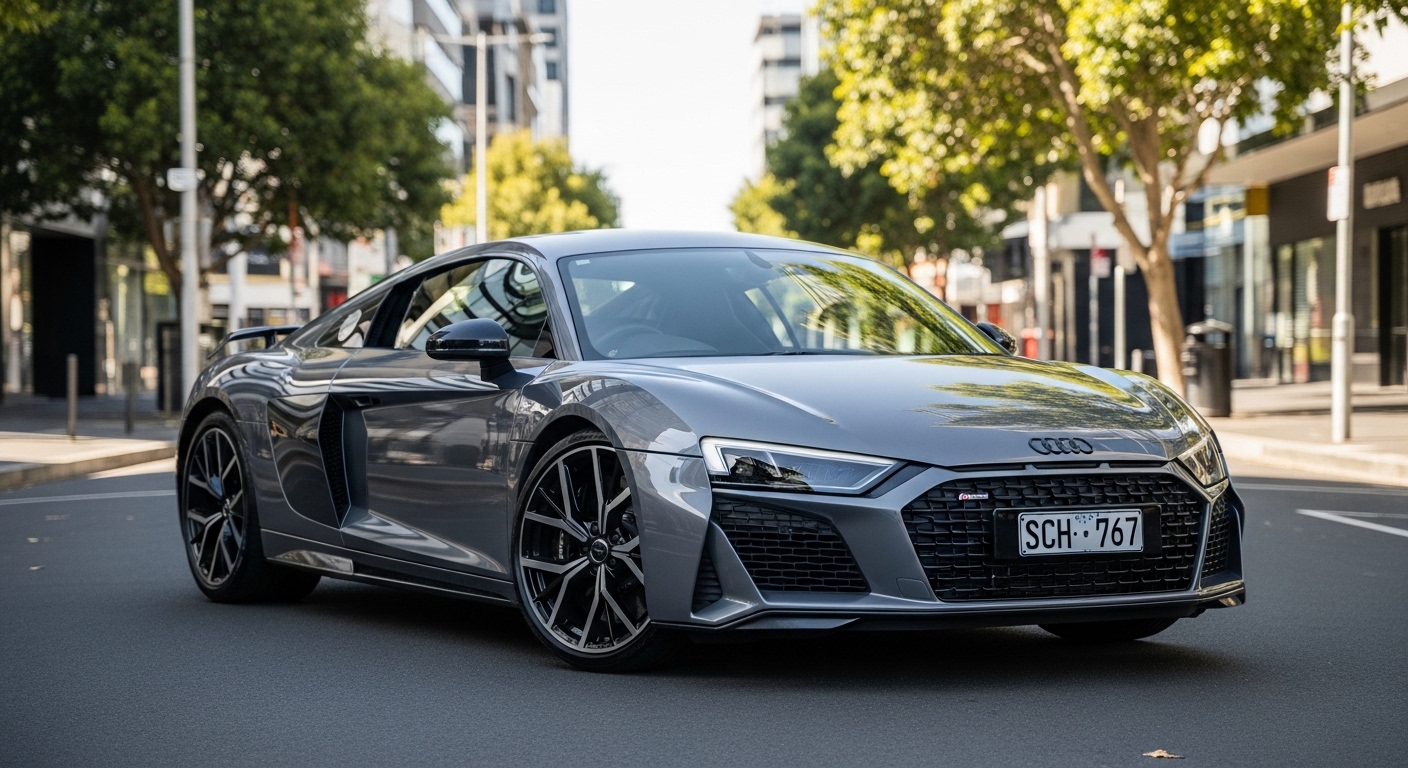 2020 Audi R8 V10 Performance quattro
The Audi R8 4S makes the most sense when you judge it as a usable V10 supercar, not just as a cheaper exotic. Audi Australia quoted 0-100 km/h in 3.2 seconds for the early V10 plus, while Audi's model-history page lists a 330 km/h top speed, but the more important part is the way the engine responds, cleanly, instantly and without turbo lag (Audi Magazine Australia, "New R8 arrives Down Under", 2016; Audi, "The Audi R8: a captivating legend", 2024).
That naturally aspirated feel is the heart of the car. Power builds linearly, the noise sharpens as the revs rise, and the whole thing feels honest in a way many newer performance cars do not. If you want huge torque at low revs, look elsewhere. If you want theatre with control, the R8 still makes a lot of sense.
2020 Audi R8 V10 Performance quattro
In 2023, Audi technical data for the later R8 Coupé V10 performance quattro quoted 620 PS and 580 Nm, which makes a 2020-performance-era car the cleanest benchmark for Australian buyers who want the full late-4S brief in one package (Audi technical data, "R8 Coupé V10 performance quattro", 2023).
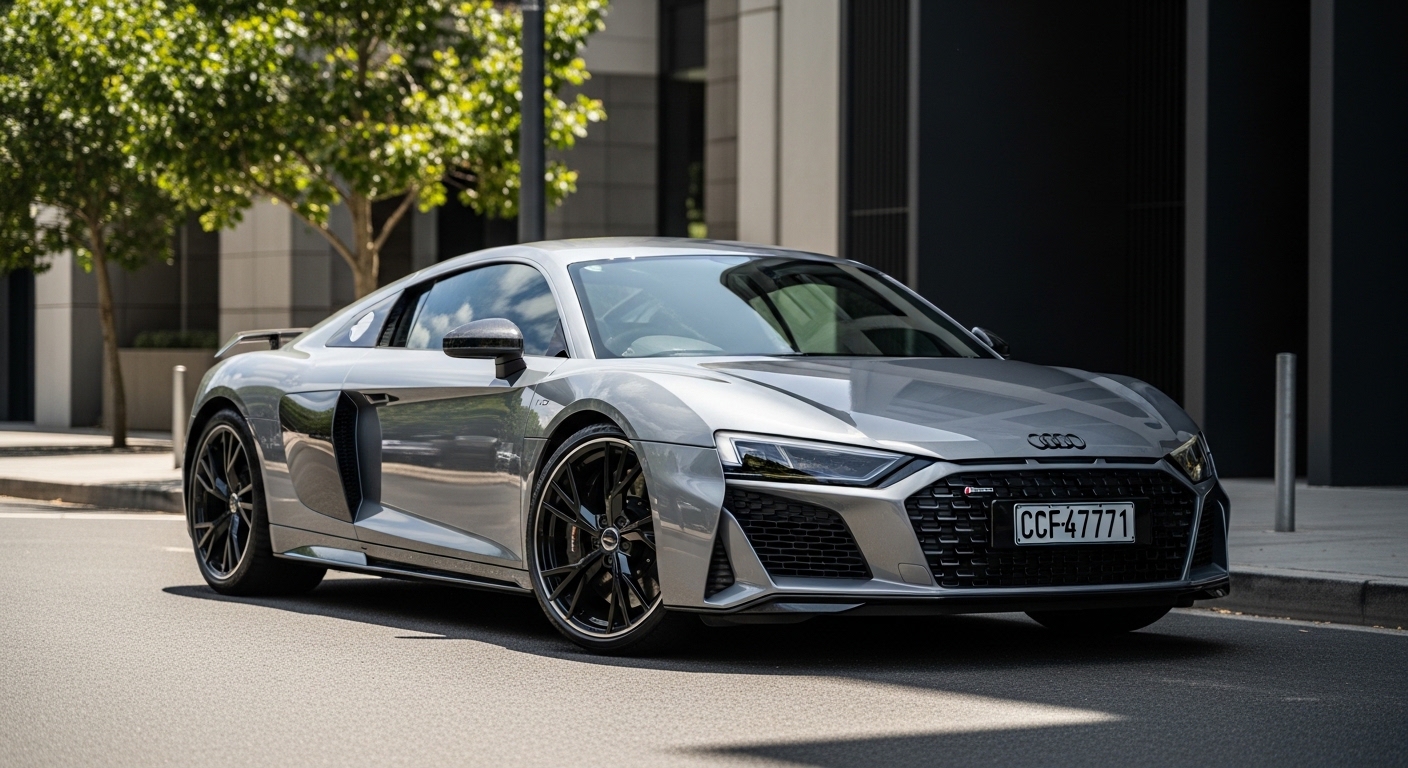 2020 Audi R8 V10 Performance quattro
The Audi R8 V10 Performance quattro is the version many buyers will naturally benchmark because it combines the strongest late-model output with the security of all-wheel drive. If you need broader Audi import process and sourcing options, start there. On paper it is the headline car. In reality, it is also the version most likely to tempt buyers into paying for badges and options instead of condition.
That is the trap to avoid. A perfect service file, clean inspection result and honest history matter far more than a louder exhaust or the flashiest wheel design. Audi's later technical data also sits alongside the 570 PS, 550 Nm performance RWD figures, which is a good reminder that the spec sheet matters, but not as much as the individual car you are standing in front of (Audi technical data, "R8 Coupé V10 performance RWD", 2023).
[CHART: Grouped bar chart - early 540 PS V10, early 610 PS V10 plus, later 570 PS performance RWD, later 620 PS performance quattro - Sources: Audi model history 2024; Audi technical data 2023]
What should buyers check, and is the Audi R8 4S expensive to maintain?
In 2024, Audi's public R8 Coupé V10 performance page listed combined fuel use at 12.9 L/100km, which gives the short answer on ownership costs: yes, an R8 4S is expensive to run, but the real budget killer is deferred maintenance, not fuel alone (Audi, "Audi R8 Coupé V10 performance", 2024).
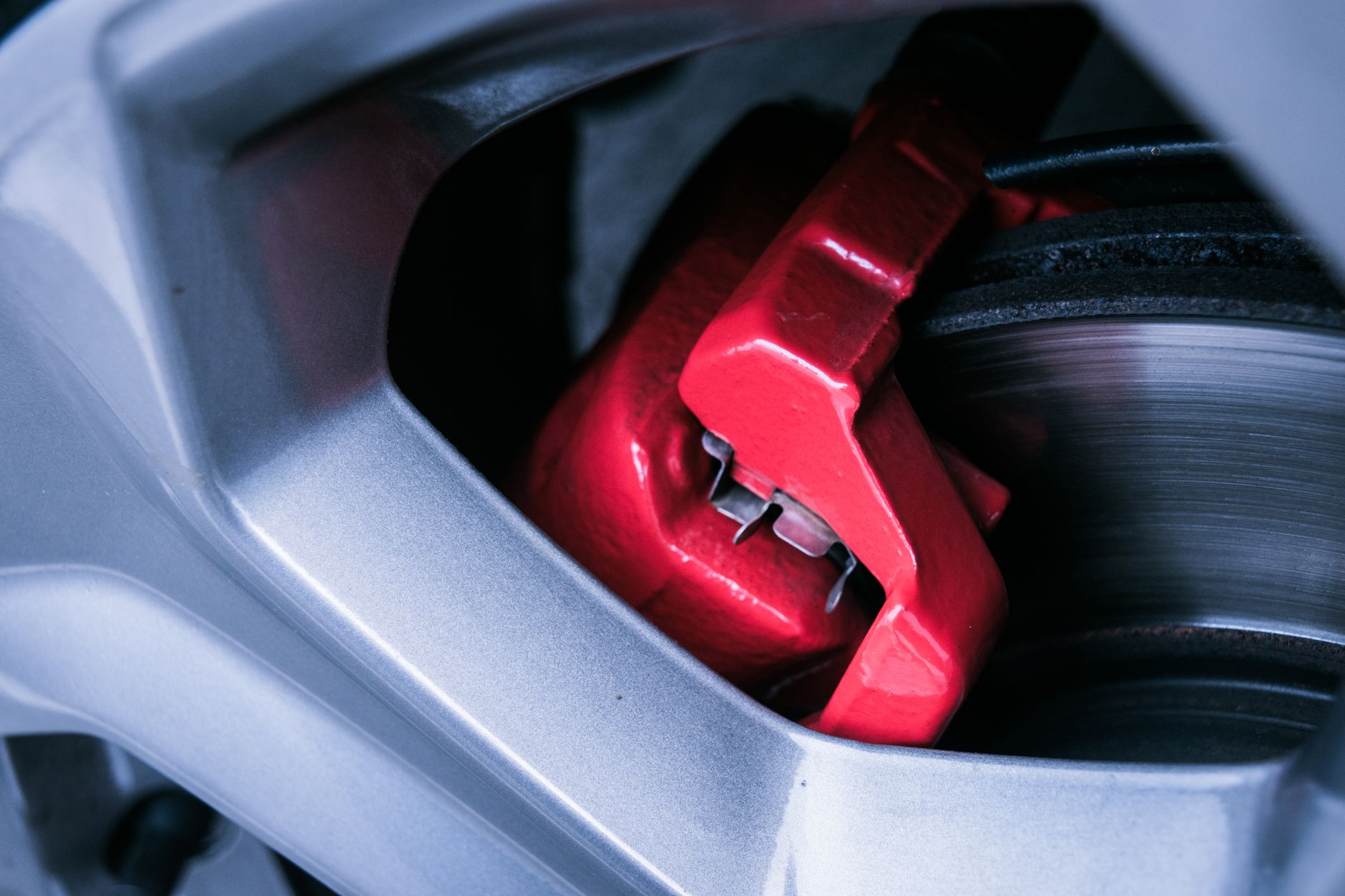 Red brake caliper and brake disc seen through a silver alloy wheel
In 2018, Australia's REC-000028 recall covered 175 affected 2015-2017 R8s for possible gearbox-breather oil leakage under extreme racetrack use, so recall completion belongs on your checklist beside tyre age, brake wear and underbody condition (Vehicle Recalls Australia, "REC-000028", 2018). That is not a reason to panic. It is a reason to inspect properly.
Start with the paperwork. Verify service history, accident history, VIN consistency, odometer records and any auction-grade notes on imported examples. If you want a refresher on mileage red flags, read why odometer checks matter. Then move to the mechanicals: tyres, brakes, suspension, transmission behaviour, electronics, HVAC, wheel damage, body repairs and any clues the car has done serious track work.
What to verify on an imported example
- Auction grade and original auction sheet
- Odometer evidence and export records
- Prior damage notes or repaint history
- Compliance suitability and recall completion
- Exact year, market, trim and drivetrain specification
This is also where running costs become clearer. Routine servicing, quality tyres, brake consumables, fluids and specialist labour are predictable. Carbon-ceramic brakes, neglected suspension, deferred gearbox work or a cheap car with patchy history are the nasty surprises. Audi's Germany-market technical information also shows a service-interval ceiling of 30,000 km or 2 years on some files, but harder use can bring shorter intervals, so always confirm the actual service book for the individual car (Audi technical information, "Technische info R8 Coupé performance", 2019).
Who should buy one? If you want V10 theatre without the most punishing supercar compromises, the R8 4S is a strong option. If you want the loosest, purest experience, chase RWD. If you want confidence, touring ability and a safer all-round bet, go quattro.
If you want help with a Japan-sourced example, Carbarn is a licensed NSW motor dealer with a Sydney workshop. It can shortlist eligible cars, arrange pre-bid inspection where possible, manage bidding approval, shipping, customs, compliance, AVV inspection, RAV entry, finance, warranty options and door delivery. If you're at that stage, see Audi R8 4S import eligibility and sourcing options, but note that current 4S Rover approvals cover 05/2015-03/2016 vehicles under SEV-000752 and SEV-000753.